What Happened
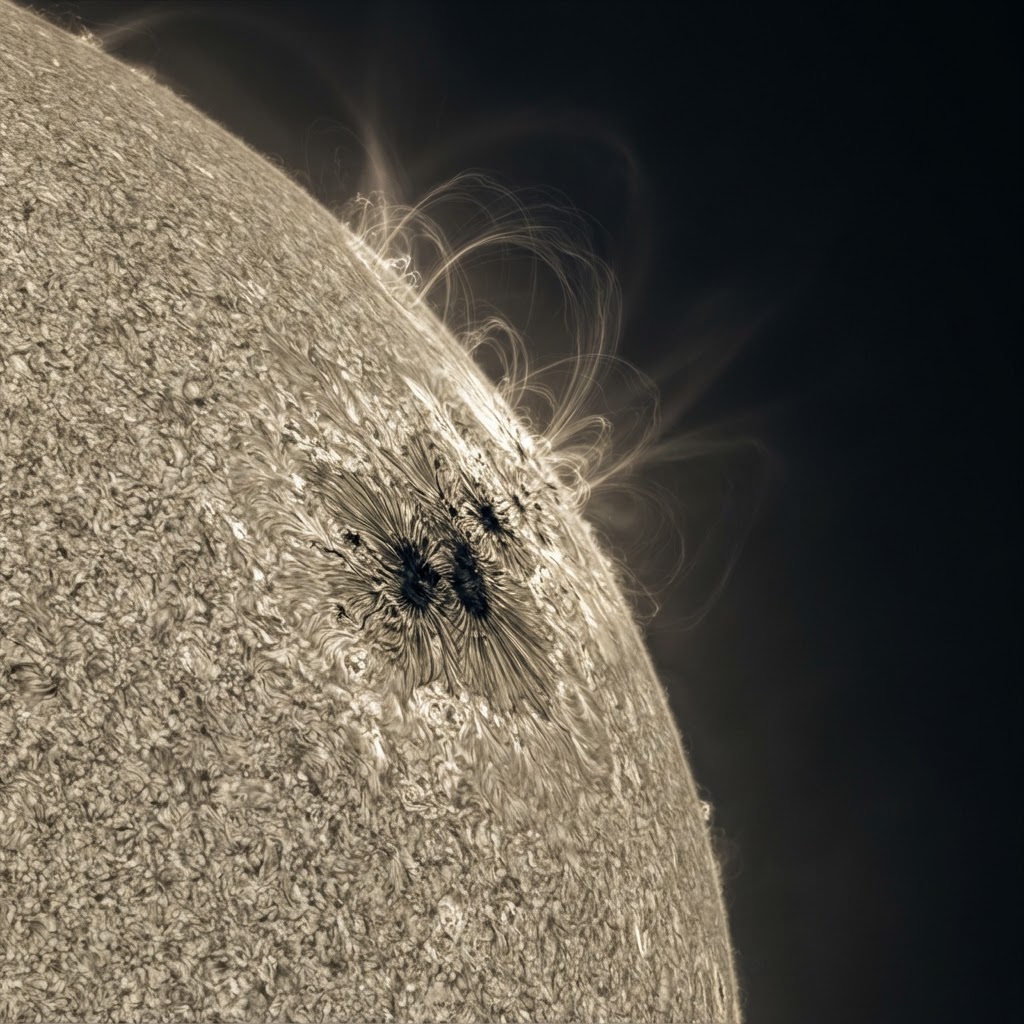
On the evening of October 23, real-time solar monitoring described Active Region 4560 building a delta: two fields of opposite polarity pressed into one footprint, the shape most associated with major flares. The region had grown with unusual speed all week, from four spots on October 18 to twenty-two by October 23, while rotating across the Earth-facing disk. The Sun's X-ray voice held at B-level through that growth, and twenty-four hours passed without a single radio blackout.
The next daily Solar Region Summary, however, classified the group beta-gamma, no delta. Either the configuration assembled and dissolved between daily snapshots, or the evening reports read complexity the official classification never confirmed. Both possibilities carry the same close: the stored opposition never released. As of October 24 the region holds fifteen spots at N13W72, near the western limb, rotating off the disk without having fired.
The Region Changed, Then Answered
The growth was the week's real event: area 10 to 180 in six days, McIntosh class rising C to E to F, a handful of C-class flares along the way — three on October 22, three on October 23, one on October 24. The stored shape, however it is classified, never became a release. The spring assembled, held, and is leaving without springing.
What the Flare Did Not Do
No M-class flare. No X-class flare. No radio blackout. No Earth-directed CME from this region. A region can carry real complexity and hand the disk back unchanged, and that is not a failed forecast — it is the Sun's ordinary week, reported honestly.
The Quiet Update, Verified
Today's receipts, all confirmed against the primary products: R1-R2 radio blackout probability eased from the one-in-five carried on October 23 to ten percent in the October 24 forecast (R3-plus at one percent); GOES measured a B-class background, peak 5.2e-07 at 15:37 UTC October 24; the geomagnetic index touched Kp 4 in the past 24 hours and the forecast peak through October 26 is 3.67, expected on the 25th — active levels, below NOAA storm thresholds.
What the Lights Will Do
The read depends on where you stand. Under the auroral oval — Alaska, Iceland, northern Scandinavia — Kp 4 means the sky has already been performing, and the long nights continue. At the middle latitudes, the sky reads mostly still tonight, and October 25 carries the week's bump: a fast stream from a negative-polarity coronal hole, possibly joined by the glancing arrival of plasma that left the Sun on October 21. If the numbers rise first and the lights follow, they read low on the northern horizon, a green breath at the edge of sight.
What We Are Watching
The region exits stage west. The watch now rides the October 25 combined arrival: whether the stream delivers its forecast bump, and whether the glancing plasma joins it. Either way the instruments hold it, hour by hour, and so does the watch.
This article is the companion to Solar Watch Episode 4, which carried the same read in two voices as it happened. The region's story finished after the episode aired: the quiet held. Both readings stand as the record of a week that assembled a loaded spring and never sprang it.