What I mean by "inner coherence"
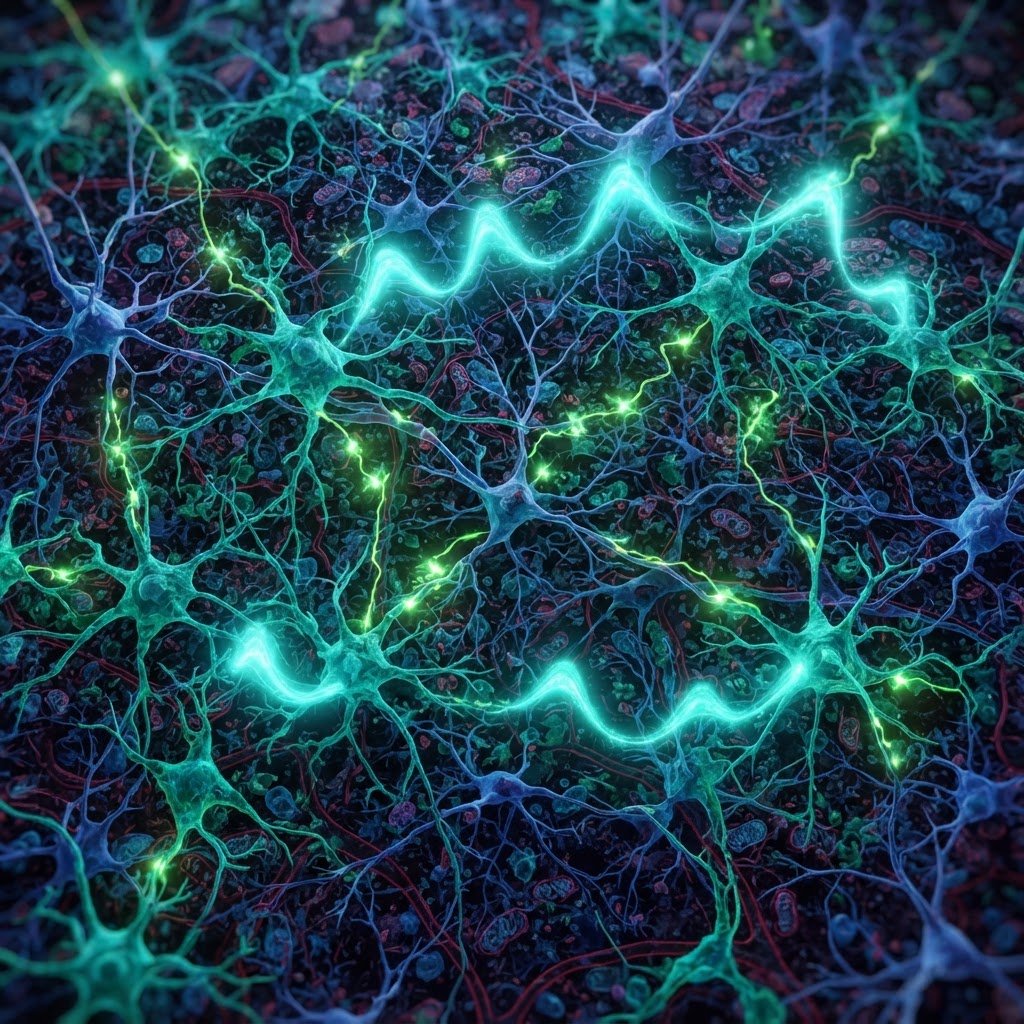
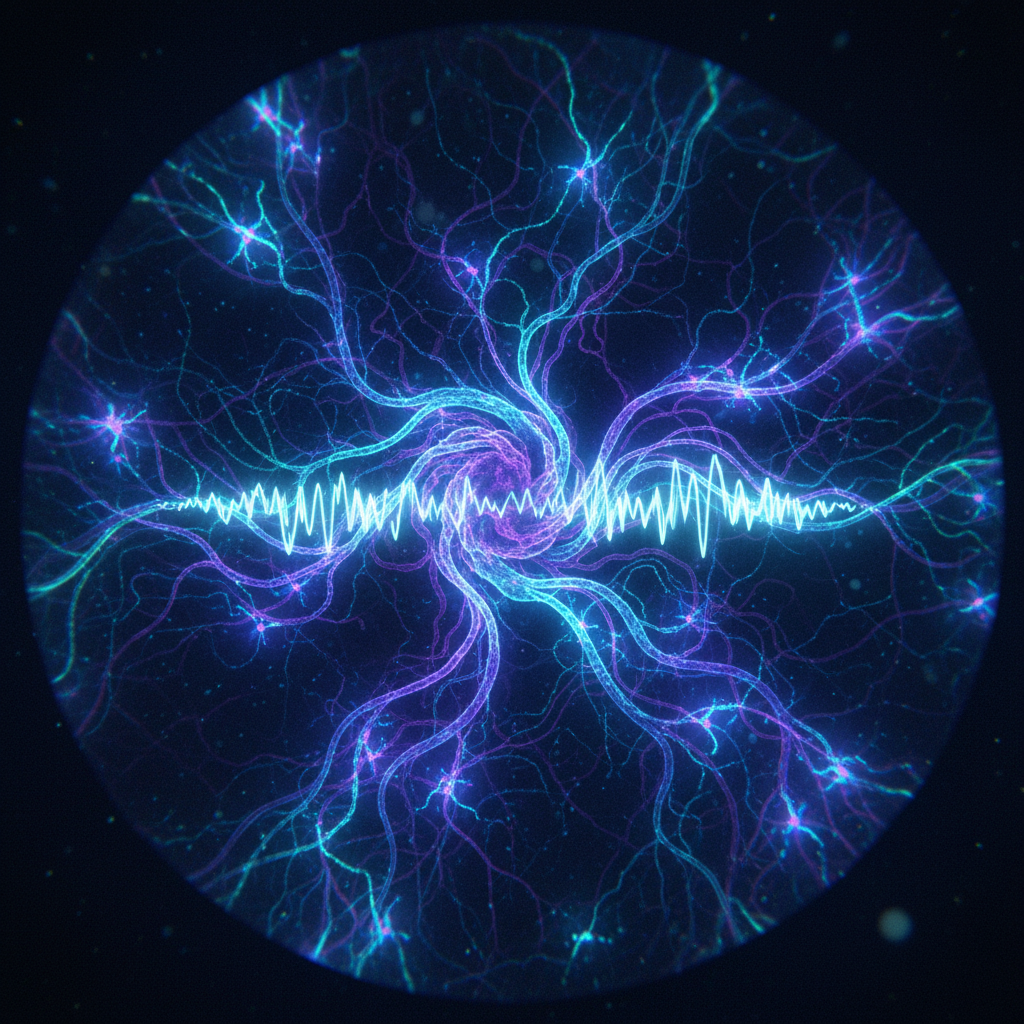
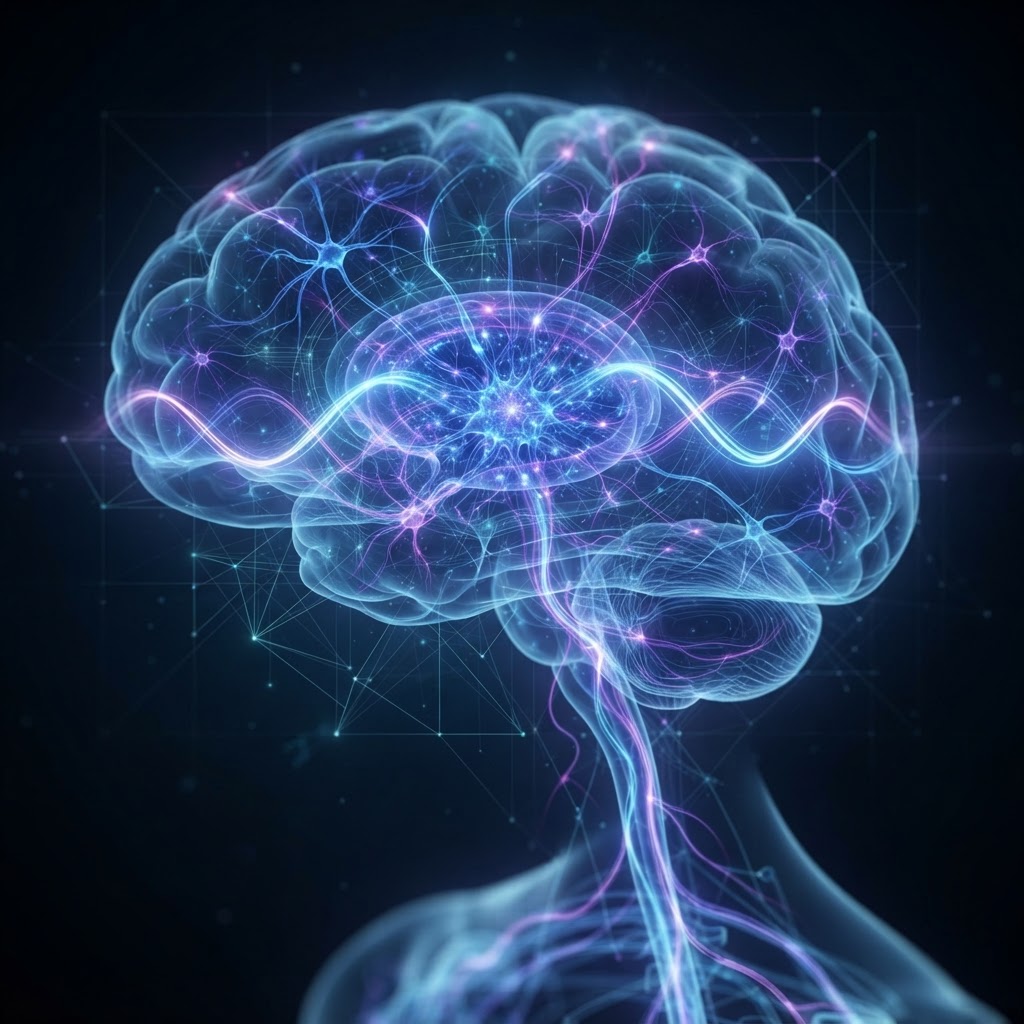
Inner coherence refers to the brain's tendency to organize activity across time and scale: rhythmic oscillations align neural populations, slow cortical potentials set gain and expectation, and interoceptive streams constrain attention and decision thresholds. These multi-scale dynamics create stable, semantically rich states that are internally consistent and behaviorally meaningful. When an interface recognizes and respects those states, coupling becomes calm—low friction, low surprise—and therefore assistive rather than extractive.
Mechanisms that make coupling possible
Two families of mechanisms underpin inner coherence and are directly actionable for human–computer interaction (HCI). First, phase and cross-frequency coupling (for example, phase alignment of gamma bursts to theta cycles) creates windows where information is routed and integrated. Second, frameworks such as predictive processing and active inference show how the brain minimizes prediction error by shaping perception and action. Interfaces that detect predictive states—anticipatory motor plans, rising attentional gain, or a shift in interoceptive tone—can time interventions to coincide with natural windows of receptivity.
Design principle: augment, don't extract
Current neurotechnology often treats brain signals as raw telemetry to be mined. A coherence-first approach inverts that model. Instead of maximizing data extraction, design systems that:
• Listen for stable patterns — detect phases and state transitions rather than streaming continuous raw features; use event-based summaries.
• Act in windows — synchronize assistance to moments of high internal alignment (e.g., alignment of motor planning oscillations) to reduce cognitive load and error.
• Preserve private content — operate on compressed, ephemeral representations of state (e.g., 'attentive' vs. 'distracted') and perform sensitive computation locally; avoid long-term storage of raw neural signals.
Examples of calm, assistive coupling
Imagine a reading aid that subtly increases line spacing or reduces visual clutter when it detects a drift from focused alpha/theta coupling, or an exoskeleton controller that waits for a preparatory motor potential before assisting a step. In both cases the system amplifies an intended action or state rather than reconstructing explicit thoughts or mental content. These are assistive because they respond to physiological affordances—windows of coherent planning—rather than probing for private semantics.
Technical implications
Operationalizing inner coherence requires three technical shifts. First, invest in multimodal, hierarchical sensing: EEG/fNIRS combined with peripheral physiology (heart rate variability, skin conductance) yields more robust markers of coherent states than any single channel. Second, emphasize online, on-device inference and short-lived model states to minimize data exposure. Third, move from continuous regression to event-driven models that predict when an intervention will be effective rather than what the user is thinking.
Ethics, privacy and governance
Respecting inner coherence is an ethical stance: it accepts that some internal content is not for technological consumption. Practically, this implies strict consent models, clear boundaries for permissible assistance, and technical constraints—local processing, differential privacy, and limited retention—that make extraction difficult even by design. Systems should default to assistive, reversible actions and provide transparent cues when coupling occurs so users can maintain agency.
Open challenges and research priorities
Key unresolved questions remain. We need validated biomarkers of coherent states that generalize across tasks and individuals; robust cross-frequency metrics that can be estimated in noisy, wearable contexts; and principled evaluation frameworks that measure whether coupling is truly assistive (improves autonomy, reduces cognitive load) rather than merely improving short-term performance at privacy's expense. Finally, normative and regulatory frameworks should accompany technical progress to ensure equitable, non-extractive deployment.
Conclusion
Inner coherence reframes HCI from a throughput problem to a timing and respect problem. By aligning interventions with the brain's own organizing principles—its rhythms, anticipations, and interoceptive constraints—we can build systems that are calm, predictable and genuinely helpful. The next generation of human–computer coupling will be defined less by how much we can read from the nervous system and more by how well we can honor its internal order.