What’s new
Over the past decade — and with renewed emphasis in the last few years — astrophysical, gravitational‑wave and laboratory experiments have closed large classes of proposed violations of Lorentz invariance (LI) at energies approaching the Planck scale. By combining high‑energy photons, polarized light, neutrinos and the precise timing of gravitational waves with terrestrial clock and cavity experiments, teams have placed stringent bounds on the energy dependence, birefringence and sector‑dependent couplings that many quantum‑gravity heuristics predict.
How the constraints are obtained
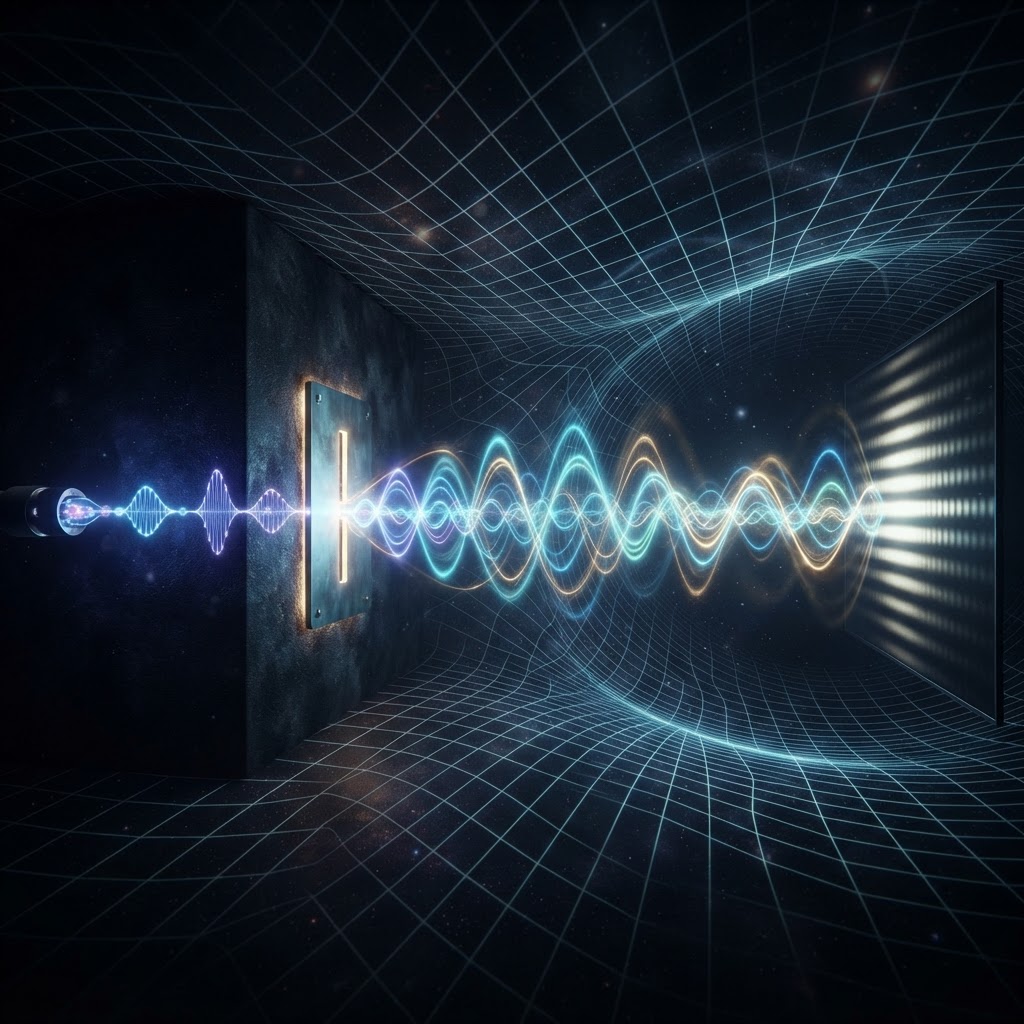
Dispersion tests: Some quantum‑gravity models predict that the vacuum behaves like a dispersive medium: photon speed acquires tiny energy dependence scaling as (E/M)^n, where M is a high mass scale (often associated with the Planck mass). Short, bright gamma‑ray bursts (GRBs) and rapid blazar flares provide time tags for high‑energy photons that should be delayed (or advanced) if such dispersion exists. Analyses of Fermi‑LAT bursts and follow‑up studies have pushed the allowed scale for simple linear (n=1) modifications to or beyond Planckian energies under straightforward assumptions about emission timing.
Birefringence and polarization: Lorentz‑violating operators can split polarizations, causing energy‑dependent rotation of linear polarization (cosmic birefringence). Deep polarization measurements of distant GRB afterglows, optical/UV polarization of cosmological sources, and radio polarization surveys have failed to reveal the expected signatures, producing very tight limits on CPT‑odd birefringent operators.
Multi‑messenger timing: The binary neutron star merger GW170817 and its prompt gamma‑ray counterpart tightened limits on speed differences between gravitational waves and photons to parts in 10^15, excluding many modified‑gravity and Lorentz‑violating coupling schemes that would produce order‑unity deviations.
Laboratory and neutrino tests: Precision atomic clocks, resonant cavities and long‑baseline neutrino timing add complementary bounds, targeting sector‑specific SME (Standard‑Model Extension) coefficients and flavor‑dependent effects that astrophysics is less sensitive to.
What this means
These experimental advances do not prove that quantum gravity respects exact Lorentz symmetry in every conceivable formulation. Rather, they progressively eliminate broad, simple possibilities — for example, models predicting unsuppressed linear dispersion or large birefringence at Planck energies. In the effective‑field‑theory language of the SME, the newest bounds shrink the allowed parameter space for low‑dimension Lorentz‑violating operators by many orders of magnitude.
Crucially, the remaining theoretical freedom concentrates in three domains: higher‑dimension operators that are strongly suppressed at accessible energies, flavor‑ or sector‑dependent couplings (affecting neutrinos or gravity but not photons), and nonperturbative or emergent mechanisms that evade the EFT parametrizations experiments target.
Where to look next
- Higher‑precision polarimetry across UV–X‑ray bands (to test ever smaller birefringence),
- more high‑energy GRB and blazar statistics from CTA and future gamma observatories (to extend dispersion sensitivity),
- next‑generation neutrino detectors and gravitational‑wave observatories (to probe flavor and gravity sectors),
- continued improvement of terrestrial clock and cavity experiments to squeeze SME coefficients in the laboratory.
Bottom line: The experimental noose around simple, Planck‑scale Lorentz violation is tightening. Any surviving effect will have to be subtle — highly suppressed, sector‑selective, or outside the standard EFT frameworks — and that sharpened focus is already reshaping how theorists construct viable quantum‑gravity phenomenology.