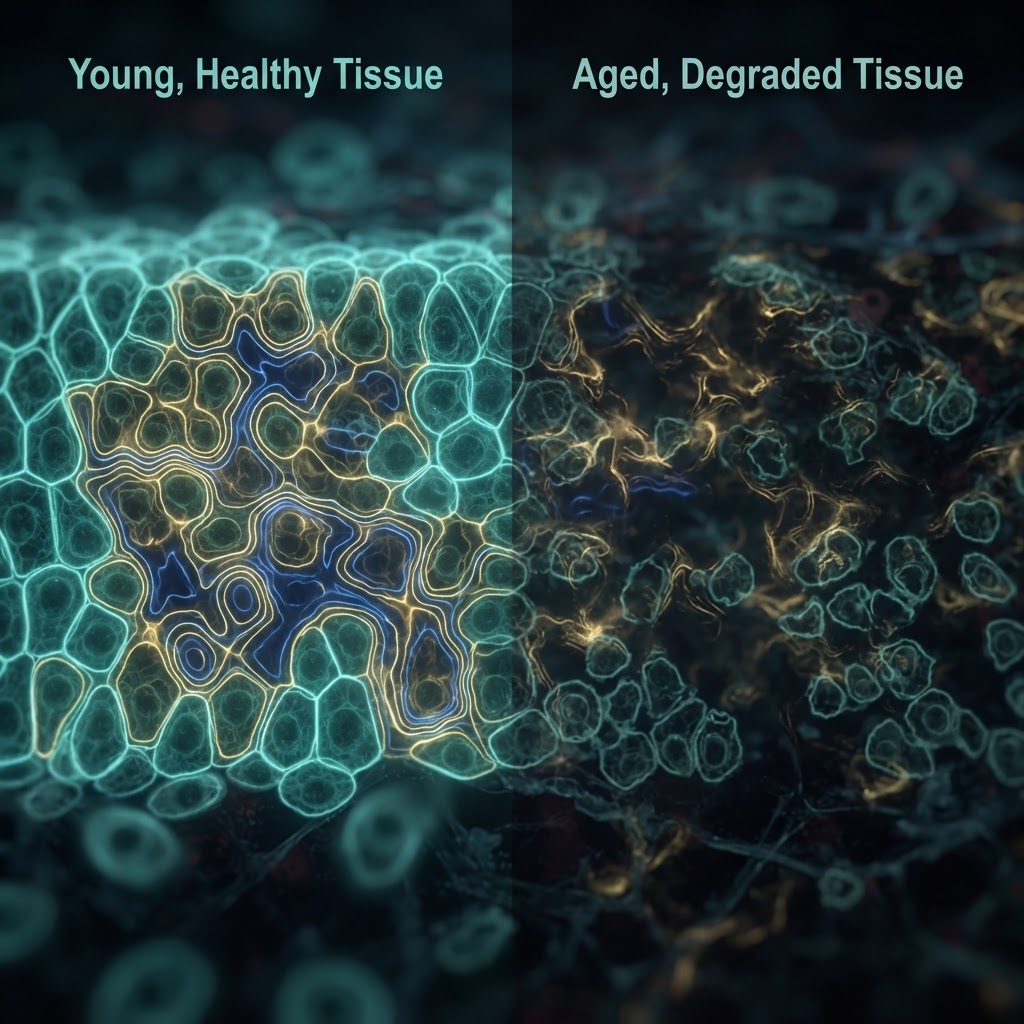
Memory is usually treated as a property of nervous systems: neurons change their connections, and those changes help an animal learn. But a growing body of research is expanding the idea of memory beyond synapses. In several non-neural organisms, patterns of electrical voltage across cell membranes can persist long enough to influence future development, regeneration, and body organization.
This field, often called bioelectricity or developmental bioelectricity, does not claim that a planarian or embryo thinks in the human sense. It asks a narrower, testable question: can living tissues store information in physiological states, and can that information later guide what the organism builds?
A voltage pattern that outlasts injury
Some of the clearest evidence comes from planarian flatworms. These animals can regenerate an entire body from a fragment. Research led by Michael Levin and colleagues showed that transient disruption of gap junctions—channels that allow cells to share small molecules and electrical states—could cause amputated planarian tissue to regenerate heads with altered positional identities. In some experiments, the altered pattern persisted through later rounds of regeneration, even after the original pharmacological treatment had ended.
The result suggested that anatomy can be influenced by a bioelectric memory: a stable physiological configuration that helps cells determine whether a wound should produce a head, a tail, or another structure. The memory was not encoded solely in DNA sequence. Instead, it appeared to involve interactions among membrane potentials, cell-to-cell communication, gene regulation, and tissue geometry.
Not a hidden brain
It is important not to overstate the finding. These voltage patterns are not evidence that non-neural organisms possess conscious recollection. They are better understood as distributed information-processing states. A tissue can detect damage, compare local conditions with broader electrical and chemical patterns, and alter gene expression accordingly.
Ion channels and pumps establish membrane voltage in virtually every living cell. Those voltages affect calcium signaling, cell proliferation, migration, and the activity of genes involved in development. Because cells are electrically coupled, local changes can spread across a tissue and form larger-scale patterns. Such patterns may act as instructive signals, rather than merely reflecting what cells are already doing.
Beyond flatworms
Related work in frog embryos has shown that bioelectric states can help specify structures such as the face and nervous system before conventional anatomical features are visible. In other studies, manipulating ion transport altered the formation of eyes or induced eye-like structures in unusual locations. These experiments point to a general principle: developmental outcomes may be controlled partly by physiological information distributed across cell networks.
Recent computational and experimental work is also treating these systems as collective decision-makers. Individual cells need not contain a complete blueprint. Instead, groups of cells can maintain attractor-like electrical states—stable configurations toward which the tissue returns after disturbance. This framework helps explain why regeneration can be robust despite noise, injury, and substantial variation among cells.
The unresolved challenge
The central debate is whether “memory” is the right word. It is useful if it highlights persistence, information storage, and effects across time. It becomes misleading if it implies cognition or a brain-like archive. Researchers still need to identify the molecular components that maintain long-lived bioelectric states, determine how those states interface with DNA-based regulatory networks, and establish how broadly the mechanism operates across species.
The practical stakes are substantial. If scientists can learn to read and rewrite tissue-level electrical patterns, regenerative medicine may eventually move beyond stimulating isolated cell types toward directing whole structures. The immediate lesson is more fundamental: biological information is not stored in genes alone. In living tissues, voltage can function as a durable—and sometimes surprisingly changeable—memory of what the organism is becoming.