The Hardware vs. The Software of Life
For decades, the biological consensus has treated aging as a mechanical inevitability. The prevailing theories—often grouped under the "hallmarks of aging"—focus on the accumulation of molecular and cellular damage: telomere attrition, genomic instability, mitochondrial dysfunction, and cellular senescence. In this view, the body is a machine whose hardware slowly rusts and breaks down over time. However, a paradigm-shifting framework is emerging from the intersection of biophysics and developmental biology. What if aging is not primarily a hardware problem, but a software glitch?
Recent theoretical and empirical work proposes that aging is fundamentally a loss of information—specifically, a failure of the endogenous bioelectric networks that coordinate cellular behavior. According to a landmark 2024 review, Aging as a loss of morphostatic information: A developmental bioelectricity perspective, aging can be understood as a "morphostasis defect." In this model, the biophysical prepatterns that encode our anatomical setpoints degrade, causing cells to lose their collective spatial memory and drift into dysfunction.
Morphostasis: The Body's Bioelectric Blueprint
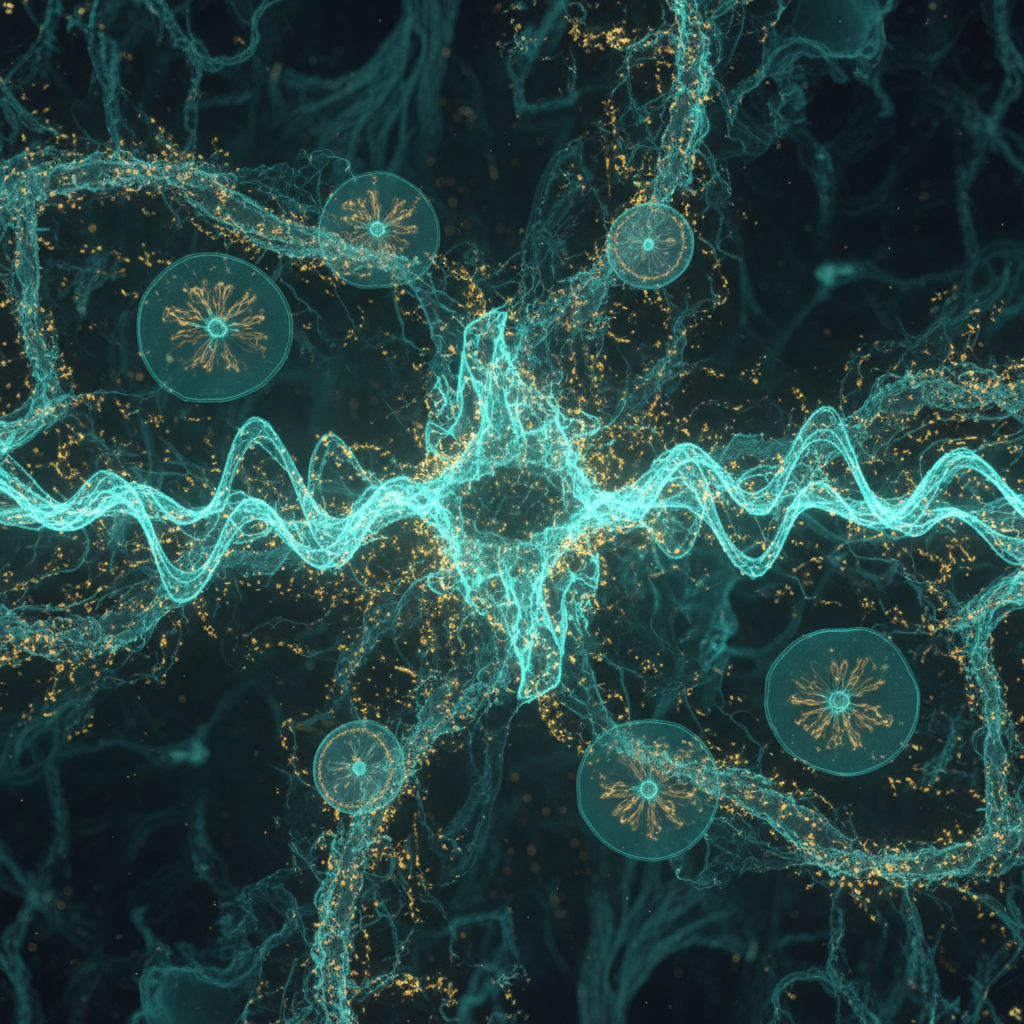
To understand morphostasis, we must first look at how the body builds itself. During embryonic development, cells do not merely follow a hardcoded genetic script; they communicate via endogenous bioelectricity. Ion channels on cell membranes create voltage gradients (resting potentials, or Vmem) that form complex, tissue-wide electrical circuits. These bioelectric patterns act as a high-level blueprint, guiding cellular collectives through "morphospace"—the latent space of potential geometric configurations—until they reach the correct target anatomy.
Crucially, this process does not stop at birth. Maintaining the adult form against the constant onslaught of entropy, injury, and cellular turnover requires active, continuous computation. This maintenance is known as morphostasis. As detailed in Bistability of somatic pattern memories: stochastic outcomes in bioelectric circuits underlying regeneration - PMC, organisms like planarian flatworms utilize these bioelectric circuits to store "pattern memories." When a planarian is cut into pieces, the bioelectric network dictates exactly where a new head or tail should grow, demonstrating that anatomical goals are stored electrically. In humans, this same system works to keep tissues organized and functional, suppressing chaotic behaviors like cancer.
Aging as a Drift in Morphospace
If bioelectricity is the software that keeps our anatomy intact, what happens when the code gets corrupted? The "loss of morphostatic information" theory posits that aging is the progressive blurring of these instructive bioelectric patterns. Over time, environmental stress, genetic mutations, and metabolic noise disrupt the function of ion channels. The sharp, distinct voltage gradients that once told a cell exactly where it was and what it should be doing begin to fade.
When this spatial map degrades, individual cells—even if they are newly generated and genetically pristine—can no longer take on their appropriate system-level roles. They become disconnected from the collective. This disconnection manifests as the classic signs of aging: tissues lose their architecture, organs fail, and cells, lacking top-down bioelectric suppression, may revert to selfish, single-celled behaviors, leading to oncogenesis. Aging, therefore, is a drift away from the optimal region of morphospace, driven by the erosion of the body's electrical memory.
Empirical Evidence: The Keratinocyte Breakdown
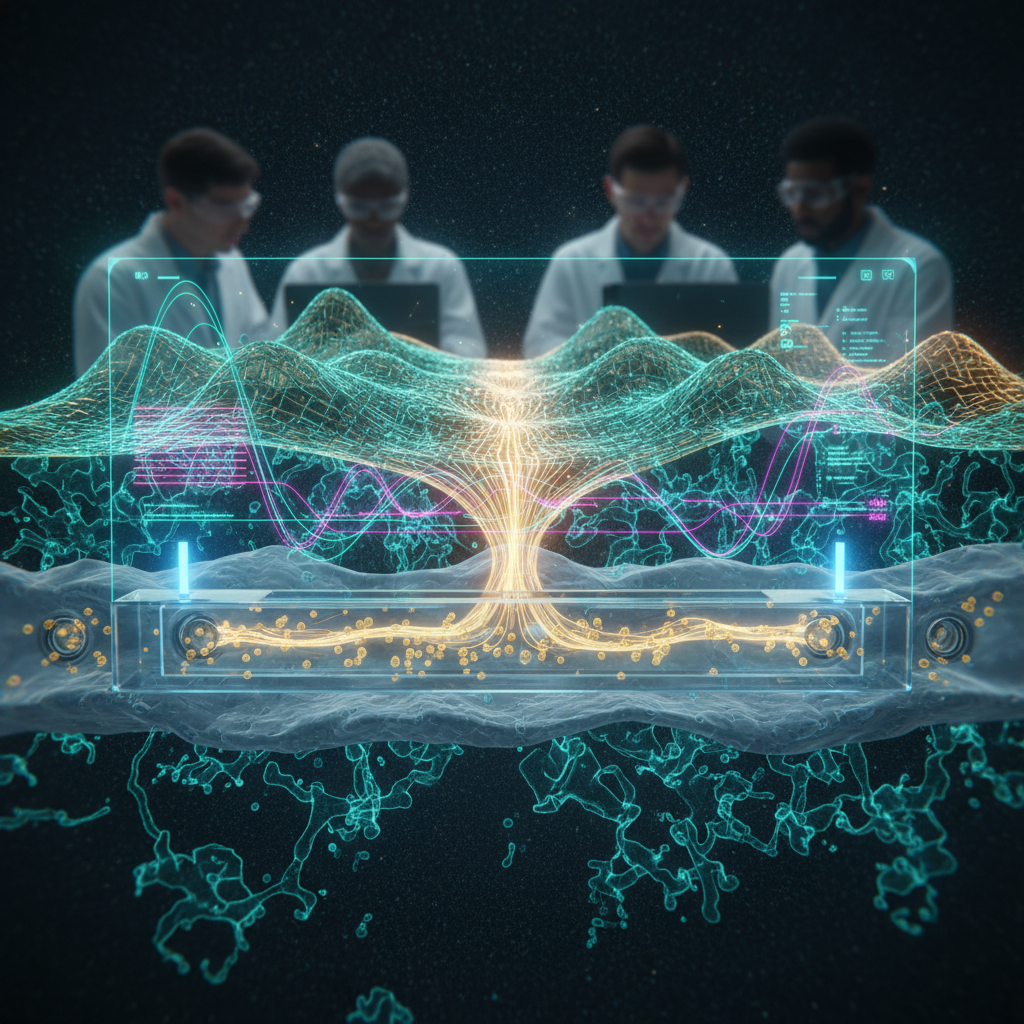
While theoretically elegant, this framework requires empirical validation. A critical breakthrough arrived with a 2025 study, Bioelectric characterization of senescing human keratinocytes: iScience, which directly tested the predictions of the morphostatic information loss theory. Researchers isolated human keratinocytes from neonatal epidermis and tracked their bioelectric properties as they underwent cellular senescence in culture.
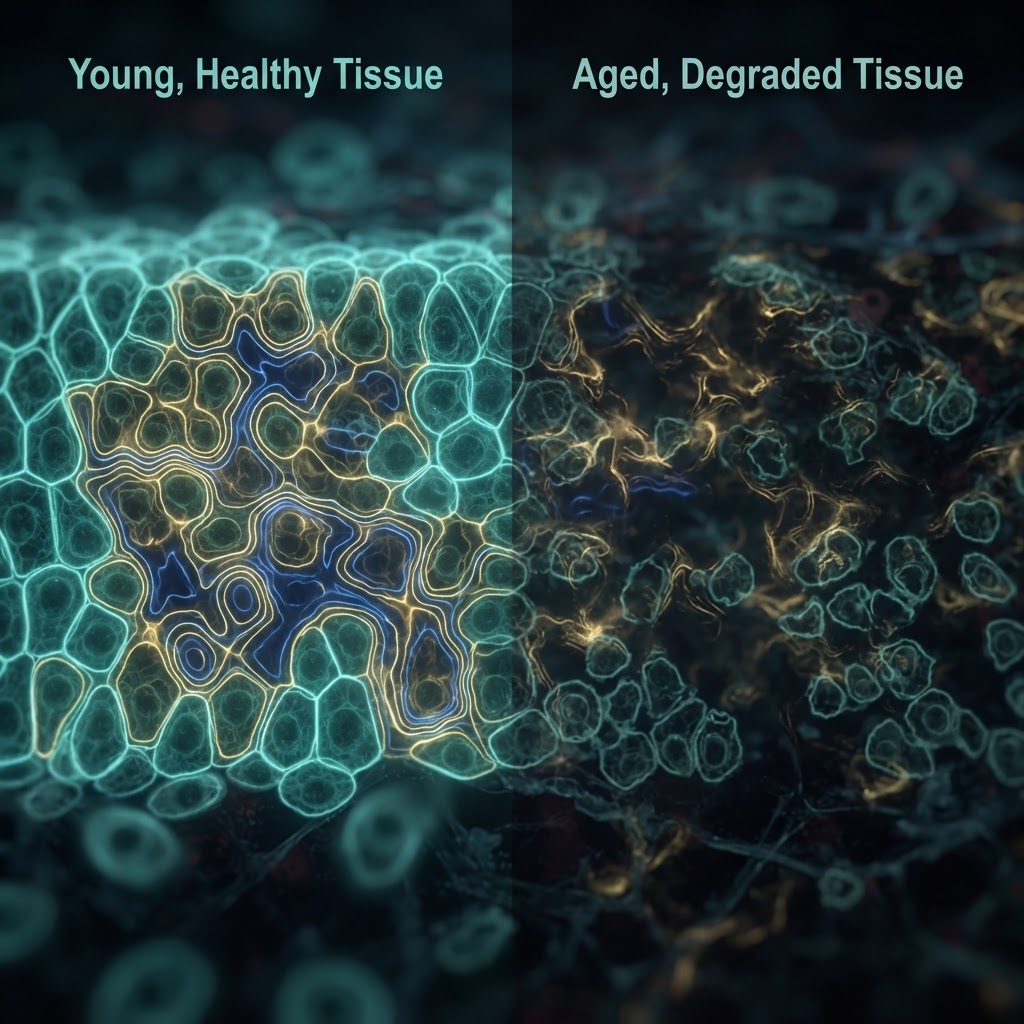
The findings were striking and aligned perfectly with the theoretical predictions. As the cells aged, they exhibited a culture time-dependent shift toward depolarization (a less negative resting membrane potential). More importantly, the researchers observed a severe reduction in spatial organization. The distinct domains of resting potential that characterize healthy, communicating tissue became blurred and chaotic. Furthermore, the senescing cells showed diminished responsiveness to bioelectric modulation and a loss of "bioelectric resilience"—the ability to return to equilibrium after a perturbation. This study provides concrete biophysical evidence that the coordinated electrical signaling underpinning tissue-level homeostasis breaks down as we age.
Morphoceuticals: Reprogramming the Aging Code
Reframing aging as a loss of morphostatic information opens up radically new avenues for intervention. If aging is driven by the degradation of bioelectric software, then the solution is not merely to patch the hardware (e.g., clearing senescent cells or repairing DNA), but to rewrite the code. This gives rise to the concept of "morphoceuticals"—interventions designed to target and restore the body's anatomical control mechanisms.
By modulating specific ion channels using existing drugs (many of which are already FDA-approved for other conditions), it may be possible to artificially restore the sharp bioelectric gradients of youth. If we can force tissues back into their correct bioelectric states, we might be able to re-impose morphostasis, effectively reminding the cells of their proper anatomical shape and function. While significant open questions remain—such as how these bioelectric patterns interface with epigenetic markers of aging—the potential is staggering. We are moving toward a future where aging is treated not as an inevitable mechanical decay, but as a reversible state of cellular amnesia.