The Navigation Problem
Every autumn, the Eurasian reed warbler (Acrocephalus scirpaceus) departs its European breeding grounds and travels thousands of kilometers to sub-Saharan Africa, navigating at night with a precision that embarrasses the best dead-reckoning algorithms humans have devised. It does so without GPS, without landmarks in the dark, and — crucially — without any obvious magnetic structure that could act as a compass needle in the conventional sense. The question of how it achieves this has occupied biologists, physicists, and chemists for more than half a century. The most provocative answer now on the table is that the bird is exploiting quantum mechanics — specifically, the spin dynamics of transient radical pairs generated inside a class of flavoproteins called cryptochromes.
This is not fringe speculation. The radical-pair mechanism (RPM) for avian magnetoreception has accumulated enough experimental, behavioral, and structural support that it now commands serious attention from quantum biologists and mainstream biophysicists alike. But it remains unproven in the strict experimental sense, and the path to proof is technically brutal.
Historical Arc: From Behavioral Curiosity to Quantum Hypothesis
The story begins with behavioral experiments in the 1960s. Wolfgang Wiltschko demonstrated that European robins (Erithacus rubecula) possess an inclination compass — sensitive to the angle of the magnetic field relative to gravity, not its polarity. This was the first hint that avian magnetoreception was mechanistically exotic: classical magnetite-based compasses are polarity-sensitive, but the robin's compass is not. Further behavioral work established that the avian magnetic sense is light-dependent, particularly in the blue-green portion of the spectrum, and can be disrupted by weak oscillating radiofrequency (RF) fields — a hallmark that would later become central to the quantum hypothesis.
The theoretical framework for radical-pair magnetoreception was articulated by Klaus Schulten and colleagues in a landmark 1978 paper. Schulten proposed that photochemically generated radical pairs, whose singlet-triplet interconversion rate is sensitive to external magnetic fields via hyperfine coupling, could in principle serve as a biological magnetometer. For decades the idea was theoretically elegant but biologically homeless — until the discovery that cryptochromes, already known as blue-light photoreceptors and circadian clock components in plants and animals, are expressed in the retinae of migratory birds at high levels, particularly in a cone-cell subpopulation.
The Radical-Pair Mechanism: Quantum Mechanics in Molecular Detail
When cryptochrome absorbs a blue photon, it initiates a cascade of electron transfers along a chain of tryptophan residues, ultimately generating a spin-correlated radical pair — typically involving the flavin adenine dinucleotide (FAD) cofactor and a terminal tryptophan. The two unpaired electrons are born in a quantum-mechanically defined singlet state: their spins are anti-correlated, summing to zero.
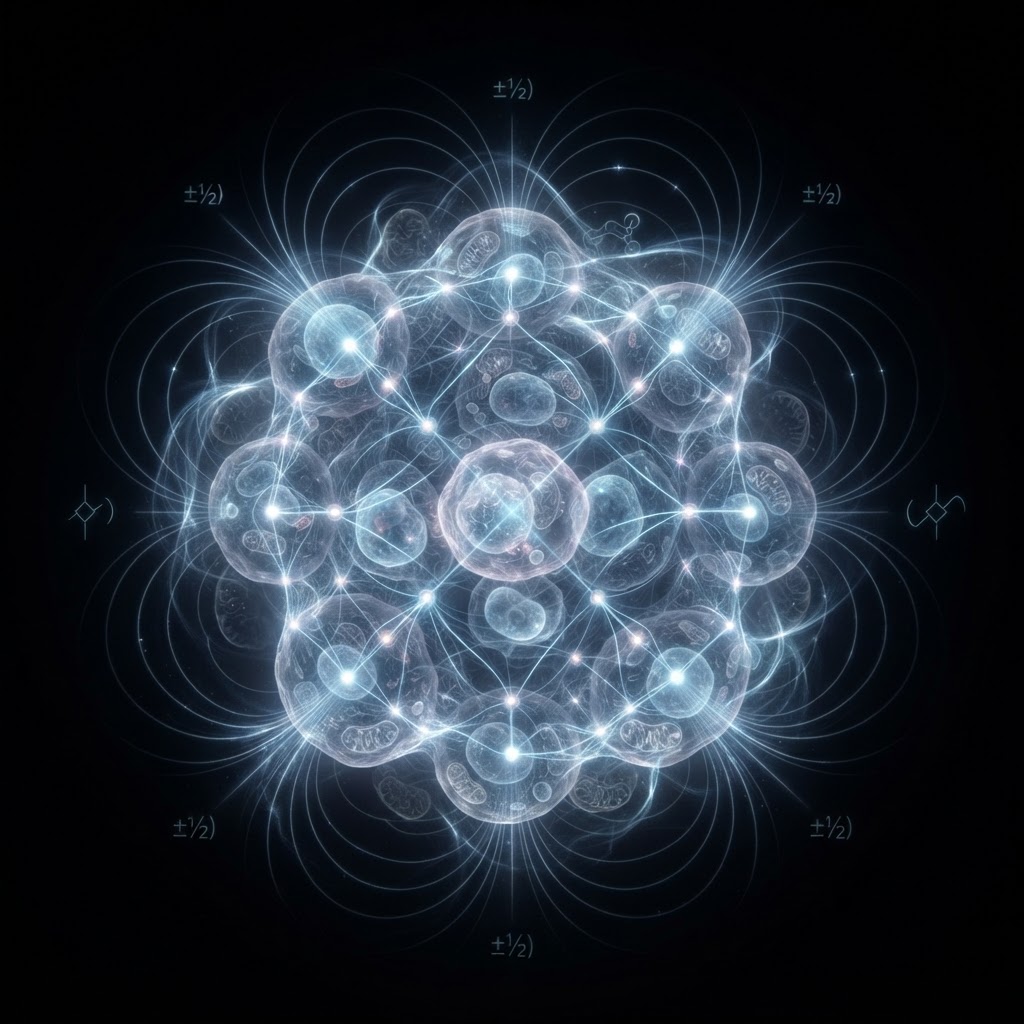
Here is where the physics becomes remarkable. The singlet state is not stationary. Hyperfine interactions — the coupling between each unpaired electron's spin and the magnetic moments of neighboring atomic nuclei, particularly 1H and 14N — drive coherent oscillation between the singlet and triplet manifolds. The rate of this interconversion depends on the orientation of the radical pair relative to an external magnetic field. Earth's geomagnetic field (~50 μT) is weak by laboratory standards, but it is sufficient to modulate the singlet-triplet mixing because the Zeeman splitting it imposes is comparable in magnitude to the hyperfine couplings present in the FAD-tryptophan system.
The chemical consequence is that the singlet and triplet states yield distinct downstream products — different protonation states of the flavin, for instance — in field-dependent ratios. If those products differentially activate or inhibit a signaling cascade, the bird effectively has a chemical readout of magnetic field orientation embedded in its retinal photochemistry. Critically, because the mechanism depends on projection of the field onto the radical-pair axis rather than field polarity, it naturally produces an inclination compass — precisely what the behavioral data demand.
The sensitivity requirements are severe but not obviously impossible. Theoretical modeling by Ritz, Schulten, and collaborators showed that for the mechanism to resolve the ~50 μT geomagnetic field against thermal noise, the radical pair must maintain spin coherence on timescales of at least ~1 μs. This is unusually long for a warm, wet biological environment — quantum coherence is notoriously fragile — but not unprecedented in flavoprotein radical chemistry, where measured lifetimes in the low-microsecond range have been reported.
Experimental Evidence: What the Data Actually Show
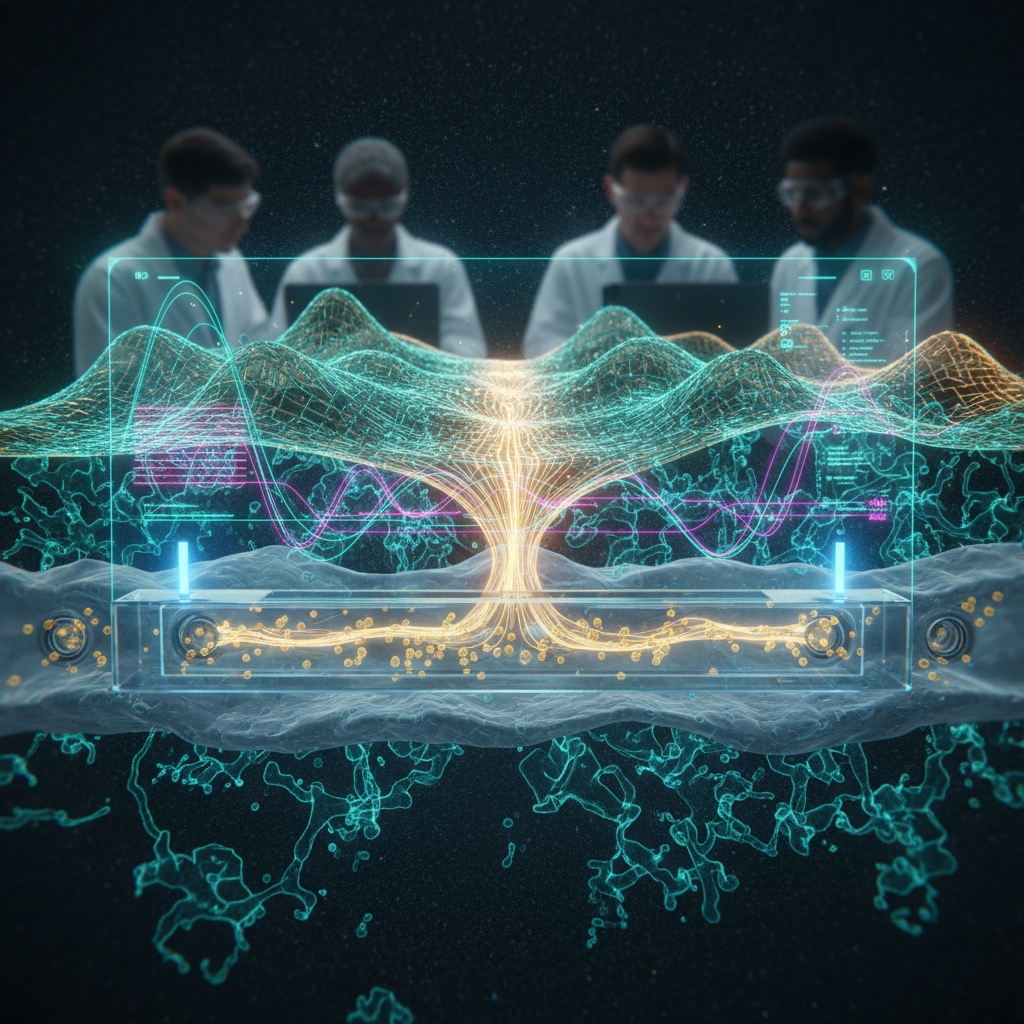
The most provocative experimental support comes from RF disruption studies. Oscillating magnetic fields in the MHz range, tuned to match electron Larmor precession frequencies, are predicted to collapse radical-pair spin coherence and thereby impair magnetoreception. Ritz and colleagues demonstrated in 2004 that exactly such fields — at intensities a thousand times below any known thermal effect threshold — disrupt the migratory orientation of European robins. The disruption is frequency-specific and disappears when the RF field is aligned parallel to Earth's field, consistent with the angular dependence predicted by RPM theory. These results have been replicated in multiple species and are difficult to explain by any classical mechanism.
On the molecular side, cryptochrome 4 (CRY4) has emerged as the leading candidate. In 2021, Xu et al. reported in Nature that night-migratory European robin CRY4 generates flavin-tryptophan radical pairs with magnetic field effects measurably larger than those from non-migratory species' CRY4 orthologs — a tantalizing correlation between molecular physics and behavioral ecology. The robin CRY4 radical pair showed anisotropic magnetic field sensitivity consistent with compass function, and structural modeling identified a fourth tryptophan in the electron-transfer chain unique to the migratory variant.
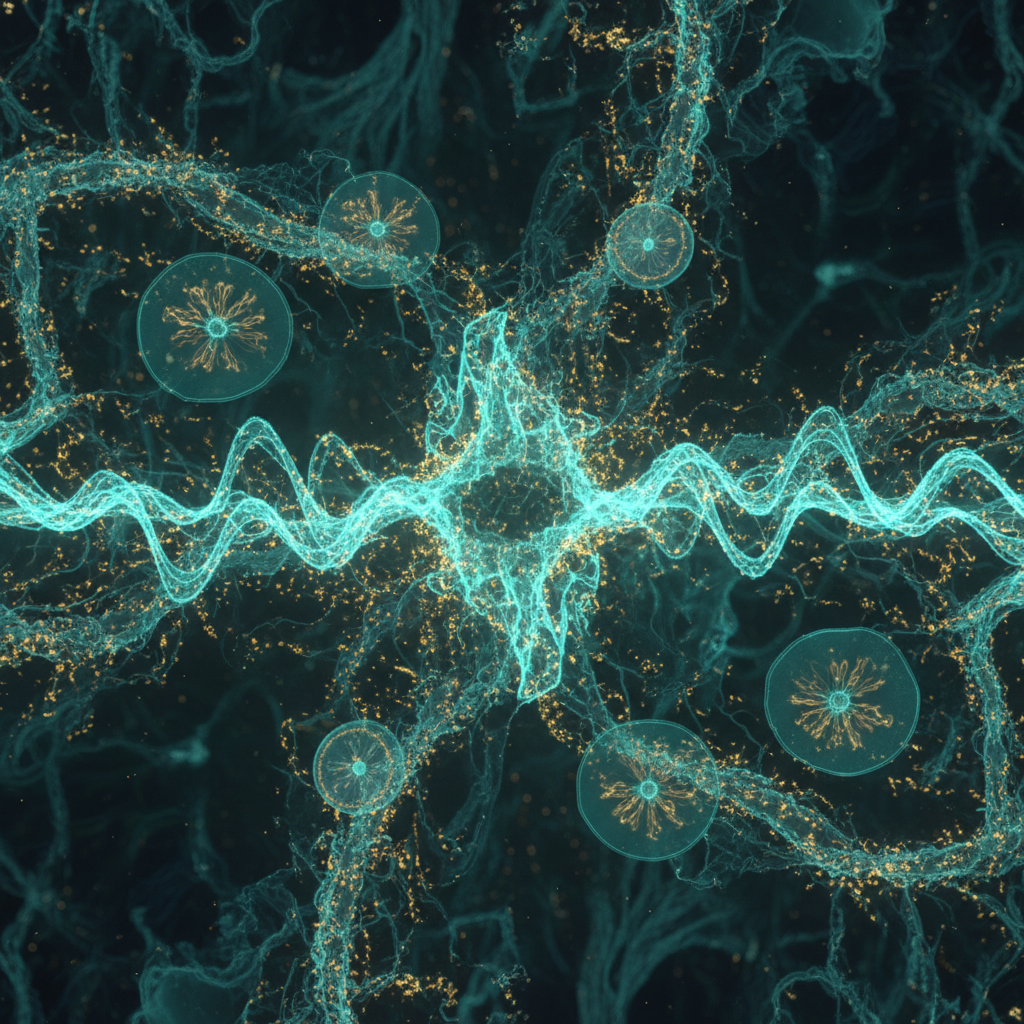
Complementary evidence comes from immunohistochemistry showing CRY4 concentrated in UV/violet-sensitive cone photoreceptors in the bird retina — a cell type whose spatial distribution could in principle encode directional information as a modulated pattern across the visual field, allowing the bird to literally see the magnetic field as a visual overlay.
Competing Hypotheses and the Magnetite Question
Radical-pair cryptochrome is not the only magnetoreception mechanism proposed for birds. Iron-mineral-based magnetoreception — via magnetite (Fe3O4) nanoparticles or superparamagnetic clusters — has long been championed as an alternative or complementary system. Magnetite deposits have been identified in the upper beak of several species, and single-domain magnetite crystals have been reported in hair cells of the lagena in pigeons. A magnetite-based system could, in principle, provide polarity sensitivity and map-sense information that the inclination compass lacks.
The two mechanisms are not mutually exclusive, and current consensus leans toward a dual-system model: cryptochrome-based radical pairs for the inclination compass (the directional component), and magnetite-based receptors for map sense (positional information derived from field intensity and inclination gradient). However, the magnetite evidence in birds has proven frustratingly inconsistent across studies and species, and the identity of the magnetite-containing cells remains contested following a 2012 reanalysis by Treiber et al. that attributed much of the previously reported iron signal to macrophages rather than sensory neurons.
Open Questions and the Road to Proof
Despite its elegance and growing empirical support, the radical-pair hypothesis has not been definitively proven. Several hard problems remain:
- Signal transduction: How does the chemical output of the radical pair — a change in flavin redox state or protonation — couple to a neural signal? No downstream signaling partner for magnetically modulated CRY4 has been identified.
- In vivo coherence times: Microsecond spin coherence has been measured in purified cryptochrome preparations, but the intracellular environment is orders of magnitude more complex. Whether coherence persists long enough in living retinal cells remains unmeasured.
- Spatial encoding: For the bird to extract directional information from retinal CRY4, the activation pattern across the retina must be spatially decoded. The neural architecture for this remains unknown.
- Cryptochrome knockout behavior: Definitive behavioral testing of CRY4-null migratory birds has not been reported, in part because generating such birds without disrupting circadian function — CRY4's other role — is technically demanding.
The field is moving rapidly toward optogenetic and cryo-EM approaches to resolve these questions. Spin-selective fluorescence reporters capable of detecting radical-pair dynamics in living cells are under development. If any of these tools succeed in demonstrating field-dependent CRY4 signaling in intact retinal tissue, the case for quantum magnetoreception will shift from compelling to conclusive.
The broader implication is profound. If a quantum coherent process is not merely tolerated but functionally optimized inside a warm biological system — and is subject to natural selection — it rewrites what we consider the possible interface between quantum physics and life. The migratory songbird may be the most elegant argument yet that evolution has learned to exploit the deep structure of the universe.