From metaphor to mechanism
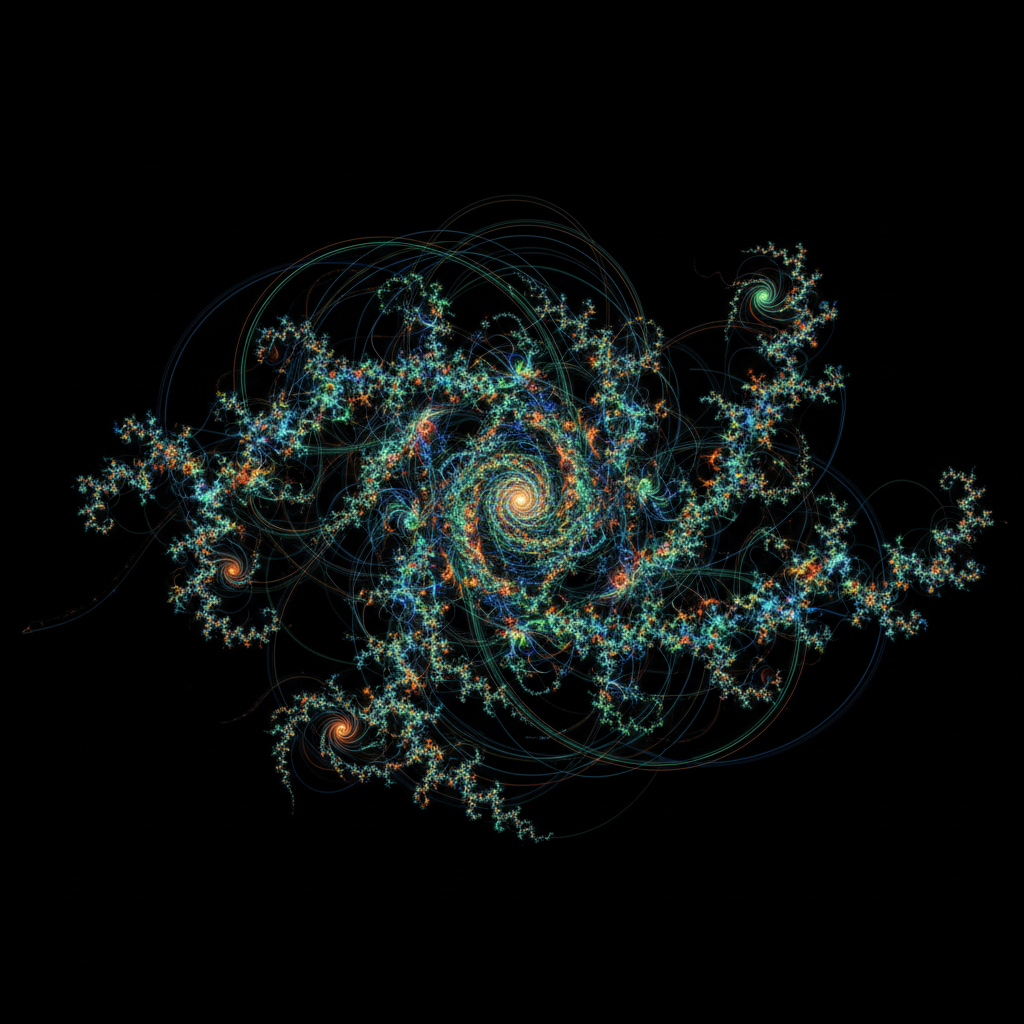
Nearly half a century after Ilya Prigogine popularized the term, the notion that ordered patterns can emerge in systems maintained far from thermodynamic equilibrium — dissipative structures — is being remade from a conceptual flourish into measurable biology. Recent experimental advances in active matter, quantitative imaging of embryos, and nonequilibrium statistical theory are converging to show how steady dissipation of energy scaffolds form and function across scales, from cytoskeletal flows to tissue patterning.
Concrete examples, concrete measurements
Biologists see dissipative structures wherever energy fluxes sustain organized dynamics that would collapse at equilibrium. Two classes of contemporary work illustrate the point.
- Active-matter condensates: Reconstituted systems of microtubules and kinesin or actin and myosin generate self-organized asters, vortices and travelling bands that persist only while ATP is hydrolyzed. These are textbook dissipative structures: continuous energy turnover maintains macroscopic order and steady-state flows that can be tuned by motor activity and filament concentration.
- Developmental pattern formation: Reaction–diffusion and mechano-chemical models have moved beyond hand-waving to quantitative fits against live imaging. Classic Turing-like instabilities now have empirical anchors in pigment patterning, somitogenesis and the spacing of hair follicles, where molecular production and degradation rates — and hence dissipation — determine wavelength and robustness.
Why the revival matters
There are three practical payoffs. First, casting patterns as dissipative structures forces explicit accounting of energy flows, which turns qualitative narratives into testable predictions: change ATP flux, change pattern. Second, modern thermodynamic tools permit direct estimates of entropy production in model systems and, increasingly, in living cells — providing a quantitative bridge between microscopic kinetics and macroscopic organization. Third, engineering synthetic dissipative assemblies gives a pathway to programmable matter and living materials that maintain function through continuous turnover.
Where arguments sharpen and stalls remain
Debates persist on two fronts. Some researchers stress that ‘‘dissipation explains everything,’’ whereas others caution that thermodynamic bookkeeping alone cannot account for functional specificity or evolvability. Practically, measuring entropy production in vivo remains challenging: accessible observables are limited and coarse-graining hides microscopic dissipation. The other hard problem is selection — understanding how evolutionary pressures act on systems whose stability depends on steady energy throughput rather than conserved free-energy minima.
Near-term directions
Progress will come from three linked strategies: (1) rigorous experiments that modulate energy supply while tracking emergent structure and entropy production; (2) hybrid theoretical models that couple chemical reaction networks with active matter mechanics; and (3) synthetic-biology platforms that instantiate dissipative motifs with tunable lifetimes. Taken together these efforts will move dissipative structures from a unifying metaphor into a practical toolkit for both explaining biological form and designing out-of-equilibrium materials.
Bottom line: The idea that sustained dissipation creates and maintains ordered structures is no longer merely historical lore — it is a working framework now being quantified and deployed across biology. The remaining challenge is to link dissipation to function and evolution, not just to pattern.