What the Data Shows
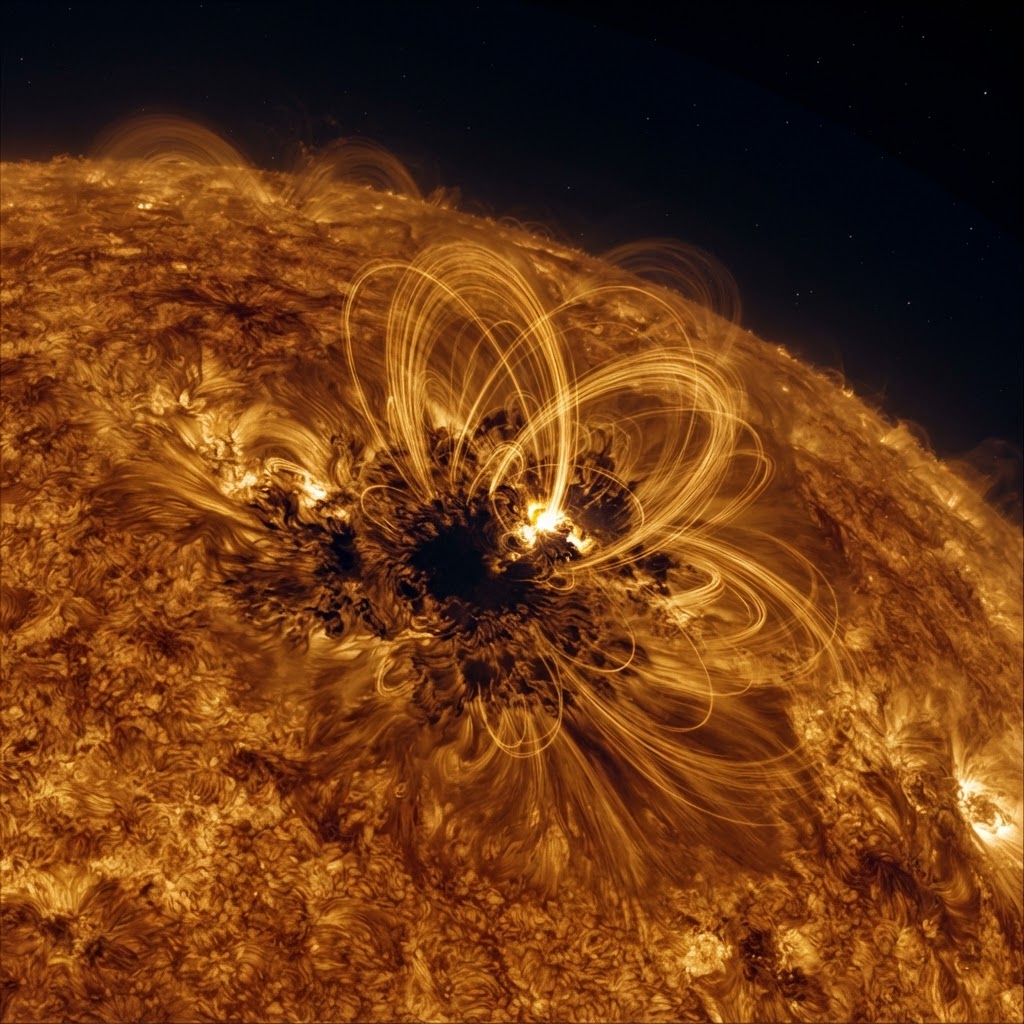
As of October 18, 2026, NOAA's Space Weather Prediction Center is tracking Active Region 4551, a large sunspot group currently positioned at S15W06, which places it almost dead-center on the solar disk, directly facing Earth.
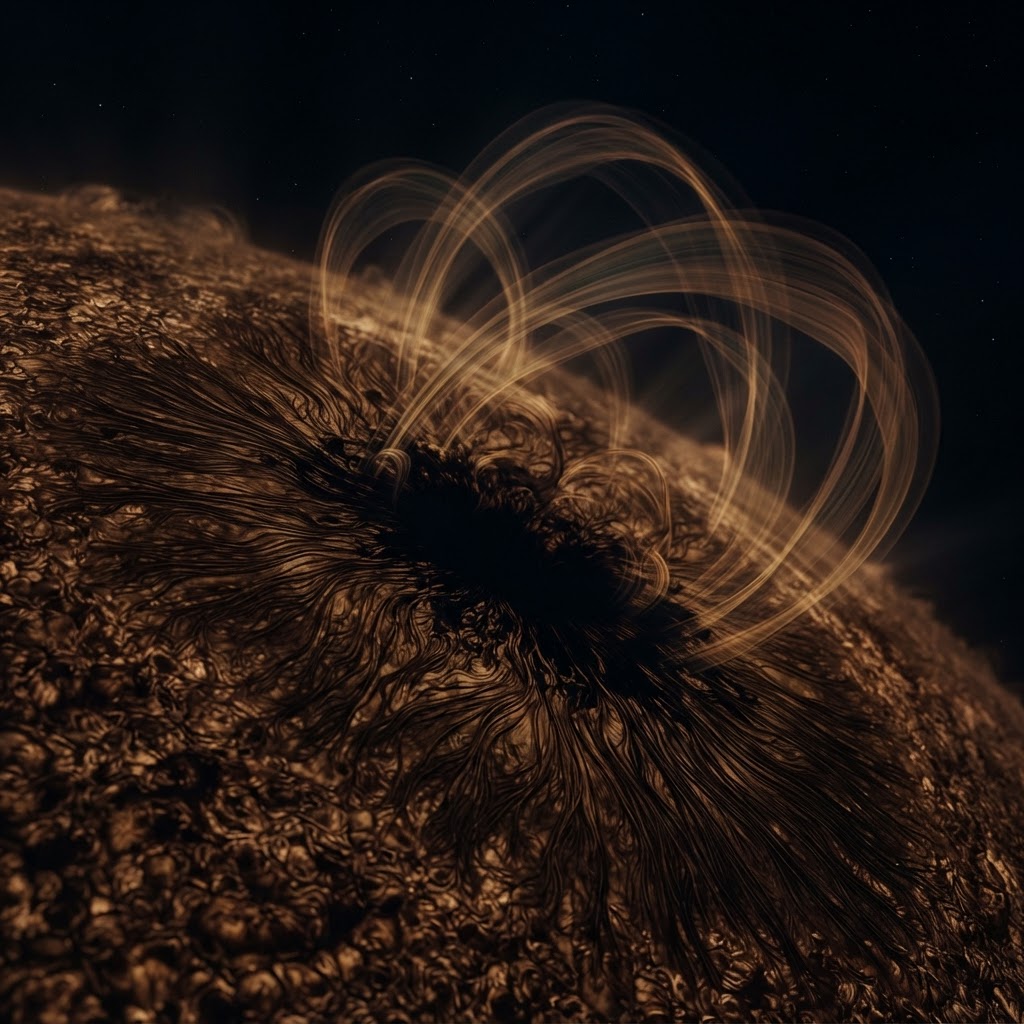
The region carries a magnetic classification of BGD, or Beta-Gamma-Delta. This is the most magnetically complex configuration NOAA assigns. The delta component, specifically, indicates that umbrae of opposite magnetic polarity are sharing a single penumbra, a condition strongly associated with the production of major solar flares.
The region spans roughly 620 millionths of a solar hemisphere and contains 32 visible sunspots, making it one of the larger and more structurally complex active regions currently on the Earth-facing disk.
NOAA's Flare Probabilities
NOAA's own probabilistic models, derived from historical flare rates for regions of comparable magnetic complexity and area, assign Active Region 4551 the following flare probabilities for the next 24 hours:
- C-class flare: 85%
- M-class flare: 25%
- X-class flare: 10%
A 10% probability of an X-class event is a genuine signal. It is not a certainty, and it is not a warning. It is NOAA's quantitative assessment that, based on everything known about regions of this class, roughly one in ten comparable configurations will produce an X-class flare within a day. The other nine will not.
The Geomagnetic Forecast Has Shifted
The geomagnetic picture has changed since this region first rotated into view. NOAA's most recent forecast discussion, issued October 19 at 0030 UTC, now predicts G1 (Minor) geomagnetic storm levels on October 19 and 20, driven not by Region 4551 itself but by a positive-polarity coronal hole high-speed stream (CH HSS) expected to arrive late on October 19 and persist through October 21.
The three-day Kp index forecast now peaks at Kp 4.67, brushing the G1 threshold. NOAA's geomagnetic storm probabilities for October 19 through 21 are 40% / 40% / 25% for minor storm levels, with a 10% / 10% / 5% chance of moderate storm conditions.
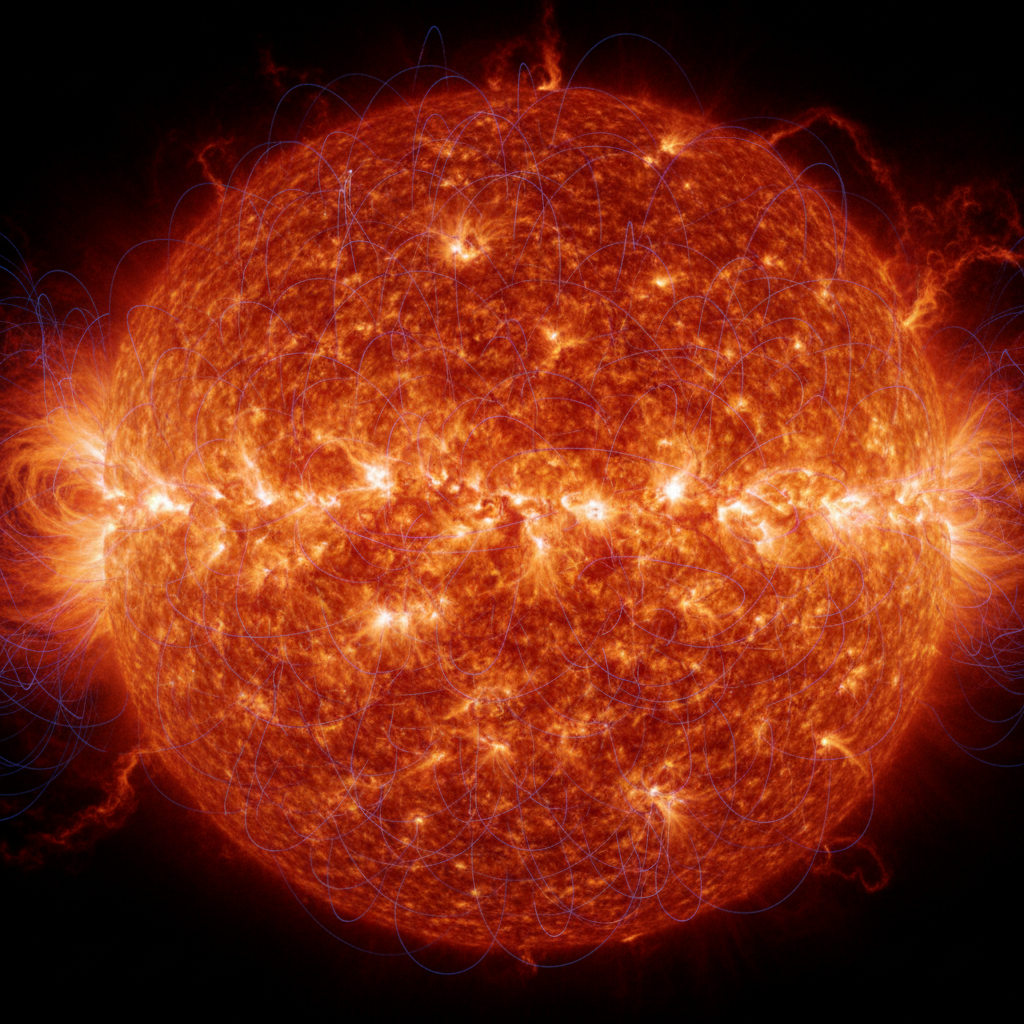
This means two separate phenomena are now in play simultaneously: the flare potential of Region 4551, and an independent geomagnetic disturbance from the coronal hole stream. A flare, by itself, does not cause a geomagnetic storm. But the coronal hole stream is a separate driver that can produce aurora and geomagnetic activity regardless of what Region 4551 does.
Why the Position Matters
The S15W06 coordinates are significant for a simple geometric reason. Solar flares emit electromagnetic radiation, which travels at the speed of light and reaches Earth in about eight minutes regardless of where on the disk the flare occurs. But CMEs, if one is produced, travel outward in a direction strongly influenced by the location of the source region on the solar disk.
A region near the central meridian, as 4551 is now, is optimally positioned to launch any CME it produces directly along the Sun-Earth line. This does not guarantee an Earth-directed CME, but it raises the probability that one, if produced, would have a geoeffective component.
What We Are Watching
The coherent signal is this: a large, magnetically complex, Earth-facing sunspot group with elevated flare probabilities, now layered with an independently forecast G1 geomagnetic storm from a coronal hole high-speed stream. The two phenomena are unrelated but concurrent.
Over the next 24 to 48 hours, the relevant observations are whether Region 4551 produces an M-class or X-class flare, whether any such flare is accompanied by a CME, whether that CME carries an Earth-directed component, and whether the coronal hole stream delivers the predicted G1 storm levels. The region will also rotate westward over the coming days, gradually reducing its Earth-facing geometry.
We will continue to monitor NOAA's telemetry and report any significant change.