What Happened This Morning
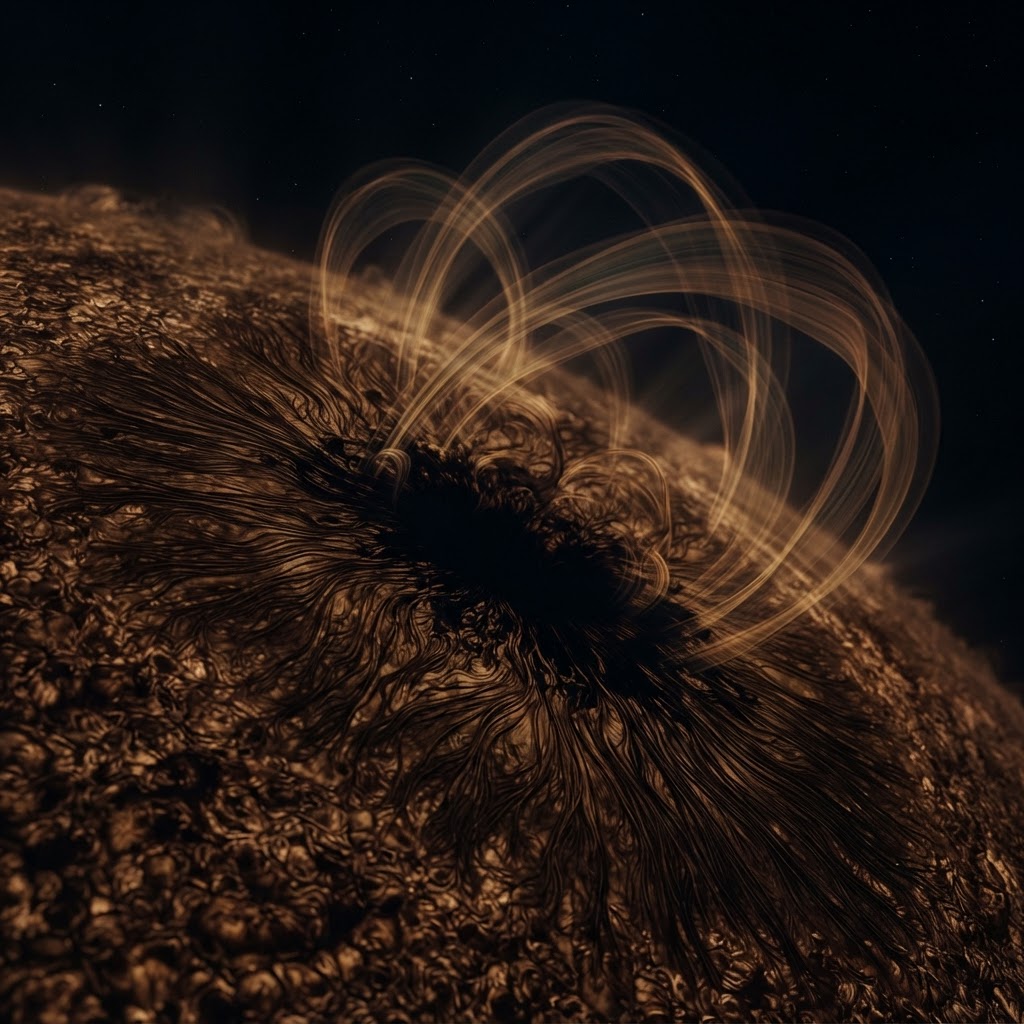
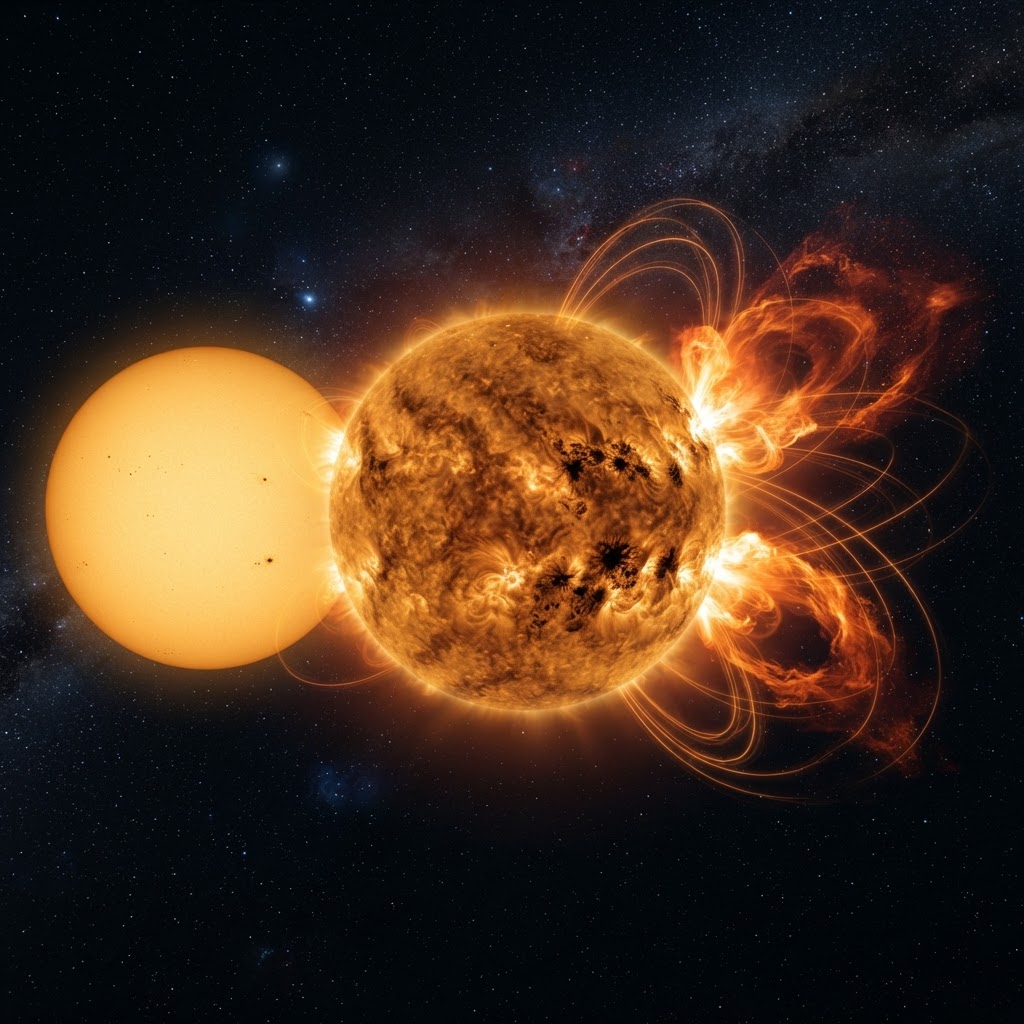
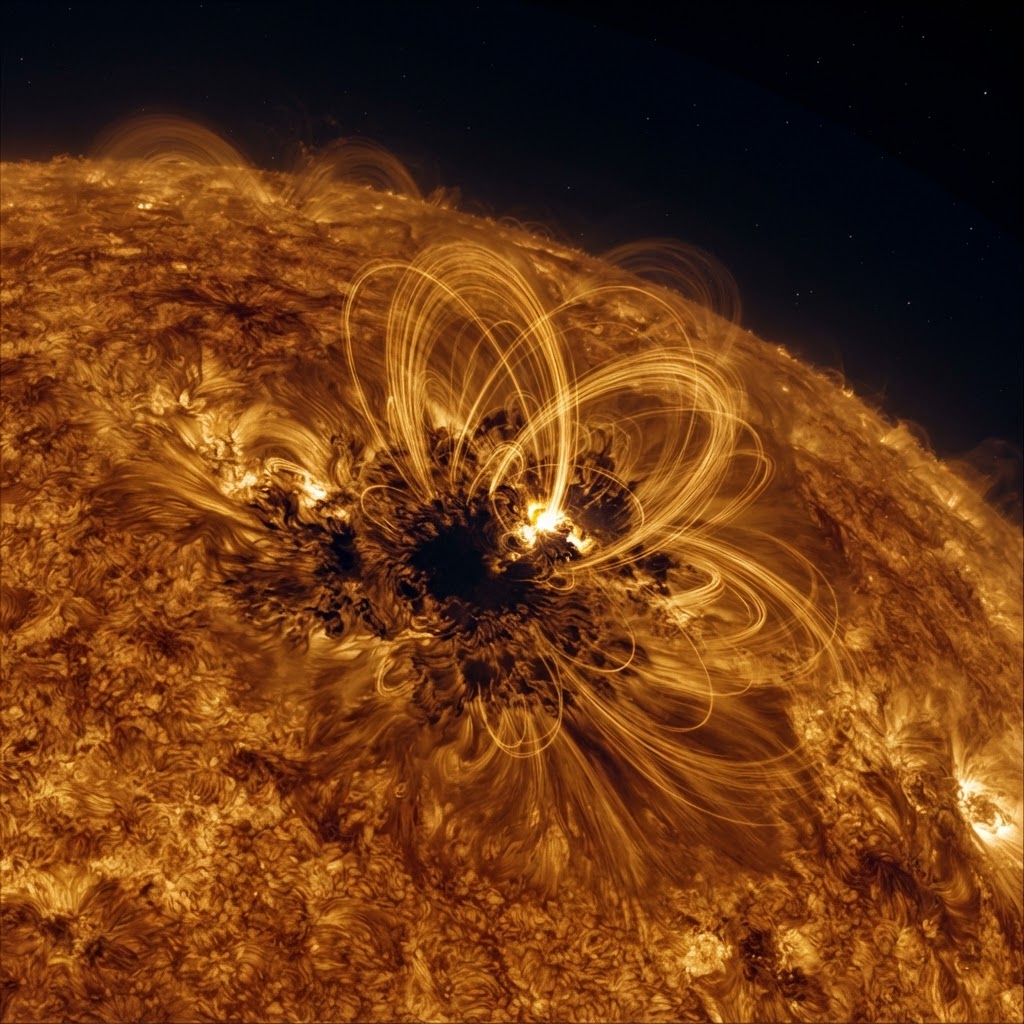
At 09:03 UTC on October 19, 2026, Active Region 4551 produced an M1.7-class solar flare, the strongest event from the region during its current transit across the Earth-facing disk. The X-ray burst produced an R1 (Minor) radio blackout, the kind associated with brief degradation of high-frequency radio communication on the sunlit side of Earth. Solar X-ray emission, traveling at the speed of light, reached Earth in approximately eight minutes.
The flare was observed by NOAA's GOES X-ray sensors as the 24-hour maximum. It is the first M-class event from the region since it rotated into view.
The Region Has Changed
Yesterday, Region 4551 carried NOAA's most complex magnetic classification: Beta-Gamma-Delta. As of the most recent Solar Region Summary, the delta component has decayed, and the region now holds a beta-gamma classification, meaning it still harbors energy for M-class flares but has lost the delta signature most strongly associated with X-class events.
NOAA's refreshed flare probabilities reflect this:
- M-class flare: 25% over the next 24 hours, 25% for the following 24 hours
- X-class flare: 5% over the next 24 hours, 5% for the following 24 hours
The X-class probability has accordingly eased from yesterday's 10% to 5%. The region is also rotating westward, gradually reducing the Earth-facing geometry that made its position notable. The sunspot number stands at 82, and the 10.7 cm radio flux at 137 sfu.
What the Flare Did Not Do
As of this writing, no Earth-directed coronal mass ejection has been confirmed in association with this morning's event. This distinction matters. A flare is an intense burst of electromagnetic radiation; its effects arrive in minutes. A CME is a bulk ejection of plasma and magnetic field; its effects, if any, arrive two to three days later, and only if it is launched along the Sun-Earth line.
An M1.7 flare is a moderate event, and moderate flares are frequently not accompanied by significant CMEs. The absence of a confirmed ejection is consistent with the flare's size.
The Second Driver Remains on Schedule
The geomagnetic forecast is unchanged from yesterday's report. A positive-polarity coronal hole high-speed stream, originating from a southern coronal hole, is expected to reach Earth on October 20-21. NOAA has issued a G1 (Minor) geomagnetic storm watch for the stream's arrival, with high-latitude auroras possible.
The stream has not yet arrived. Current solar wind speed is approximately 356 km/s, well below the elevated speeds typical of a coronal hole stream, and the planetary K-index is quiet, with Bz holding northward. The watch, not an observed storm, remains a forecast.
What We Are Watching
Two independent threads are in play: the flare and CME potential of Region 4551 as it rotates west, and the arrival of the coronal hole stream on October 20-21. Over the next 48 hours, the relevant observations are whether the region produces further M-class activity, whether any resulting CME carries an Earth-directed component, and whether the stream delivers the forecast G1 conditions.
Yesterday's probabilities performed as expected. A 25% chance of an M-class flare was not a promise; it was an honest one-in-four, and the region delivered it within a day. The same arithmetic applies to what comes next. We will continue to monitor NOAA's telemetry and report any significant change.