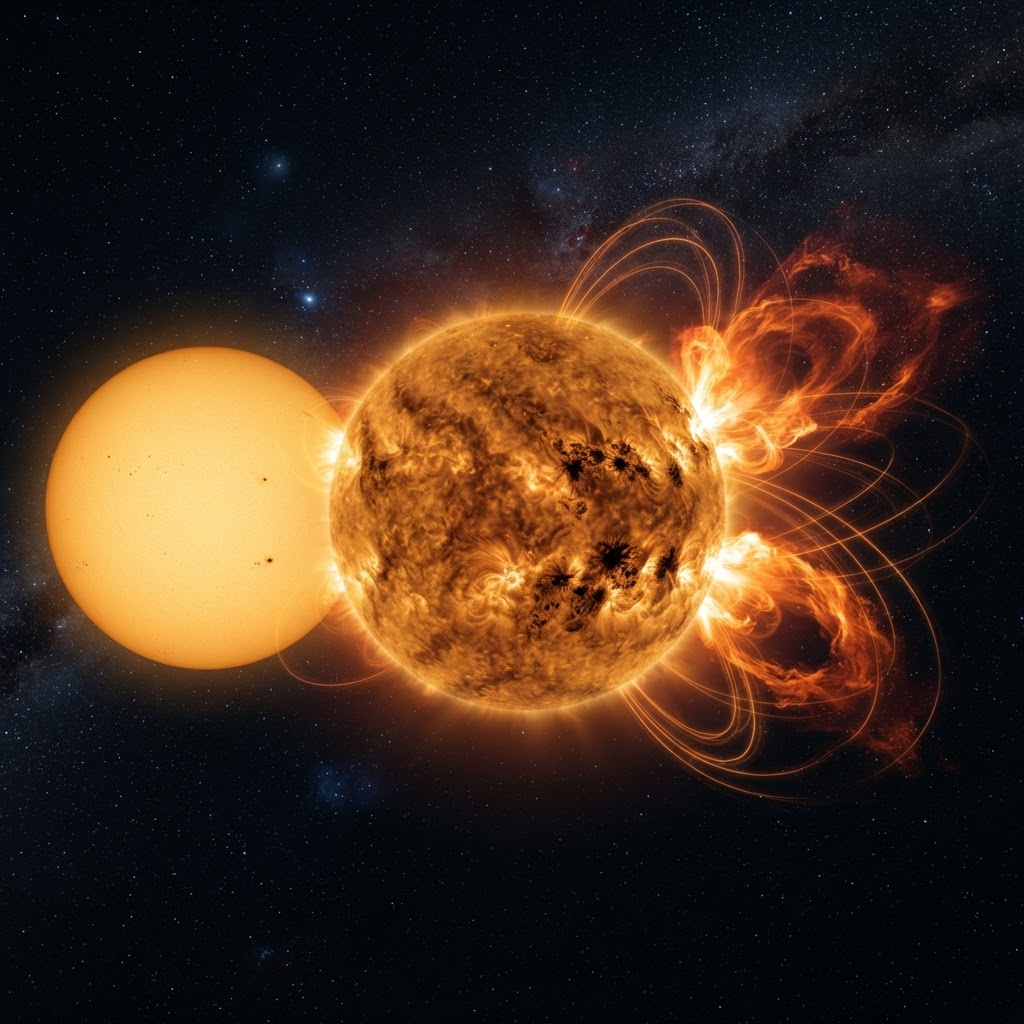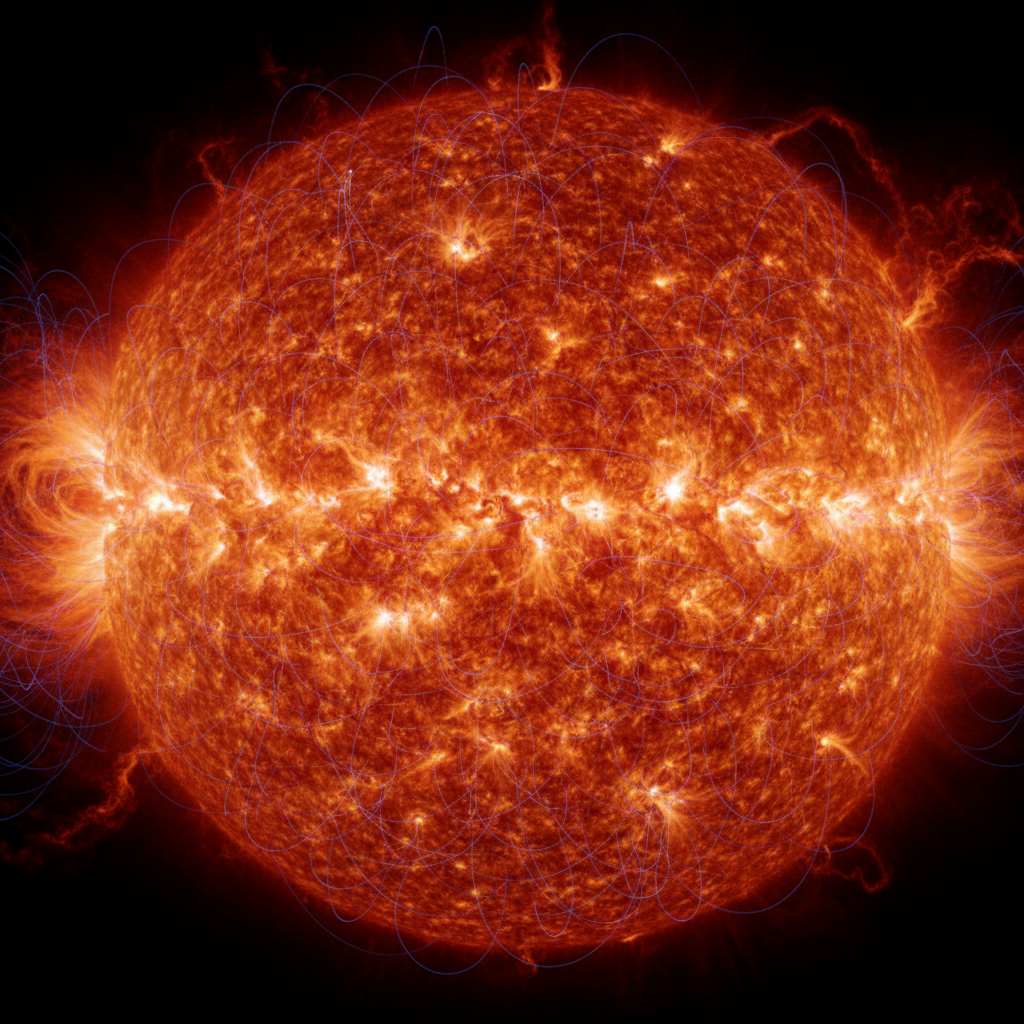
In 1843, German pharmacist and astronomer Heinrich Schwabe reported a pattern hidden in decades of solar drawings: the number of sunspots rose and fell roughly every 10 years. Later measurements refined the interval to about 11 years, and astronomers established that the full magnetic cycle lasts approximately 22 years, as the Sun’s magnetic polarity reverses and then returns to its original orientation.
That discovery remains central to space-weather forecasting. Sunspots mark regions where intense magnetic fields emerge through the photosphere. They are cooler and darker than their surroundings, but the magnetic complexity around them can store energy that is released in solar flares and coronal mass ejections (CMEs). These eruptions can produce radio blackouts, radiation storms and geomagnetic disturbances when they reach Earth.
A stronger-than-expected cycle
Solar Cycle 25 began in December 2019, according to the international Solar Cycle Prediction Panel. Early forecasts anticipated a relatively weak cycle, broadly comparable to Cycle 24. Solar activity instead accelerated more rapidly than many initial projections suggested. In October 2024, the panel and NOAA announced that the cycle had reached its maximum phase, with the highest smoothed sunspot number expected between late 2024 and early 2026.
The announcement does not mean the Sun has become predictable in detail. It describes the broad envelope of activity, not the timing or severity of individual eruptions. Sunspot counts can indicate that the probability of flares and CMEs is elevated, but they cannot reliably specify which magnetic regions will erupt, when an eruption will launch, or whether a CME will strike Earth.
From counting spots to watching magnetic fields
Modern forecasting combines long-term solar-cycle statistics with near-real-time observations. Ground-based observatories measure sunspots and magnetic fields, while spacecraft including NASA’s Solar Dynamics Observatory image the solar atmosphere in multiple wavelengths. Missions such as SOHO, STEREO and NOAA’s operational satellites track CMEs and the solar wind as they move outward.
The most difficult step is translating an eruption observed near the Sun into an impact forecast at Earth. CME speed, width and magnetic structure can change during transit. A CME may arrive in one to four days, but its geoeffectiveness depends especially on the direction of its embedded magnetic field. A prolonged southward component can couple efficiently to Earth’s northward magnetic field, driving stronger geomagnetic storms. That crucial orientation is often known only shortly before impact, when solar-wind monitors upstream of Earth provide direct measurements.
Why the forecast matters now
Space weather is not merely an astronomical curiosity. Strong geomagnetic storms can disturb high-frequency radio, degrade satellite navigation, increase drag on low-Earth-orbit spacecraft and induce currents in power infrastructure. The May 2024 storm, the strongest geomagnetic storm in two decades, demonstrated both the reach of modern monitoring and the exposure of satellite operators, communications systems and other technologies to a variable star.
Researchers are therefore pursuing models that assimilate magnetic-field observations, machine learning and physics-based simulations. The objective is not a perfect prediction of the solar cycle. It is more practical: earlier warnings, better estimates of CME arrival times and improved probabilities for regional impacts.
Schwabe’s insight supplied the calendar. It did not supply the script. The enduring challenge of Solar Cycle 25 is to determine how much the Sun’s long rhythm can tell us about its short, consequential bursts—and how much warning society can obtain before those bursts reach Earth.