The Parker Solar Probe is turning a long-standing solar mystery into a measurable plasma-physics problem: how does the Sun’s thin, million-degree corona remain vastly hotter than its visible surface?
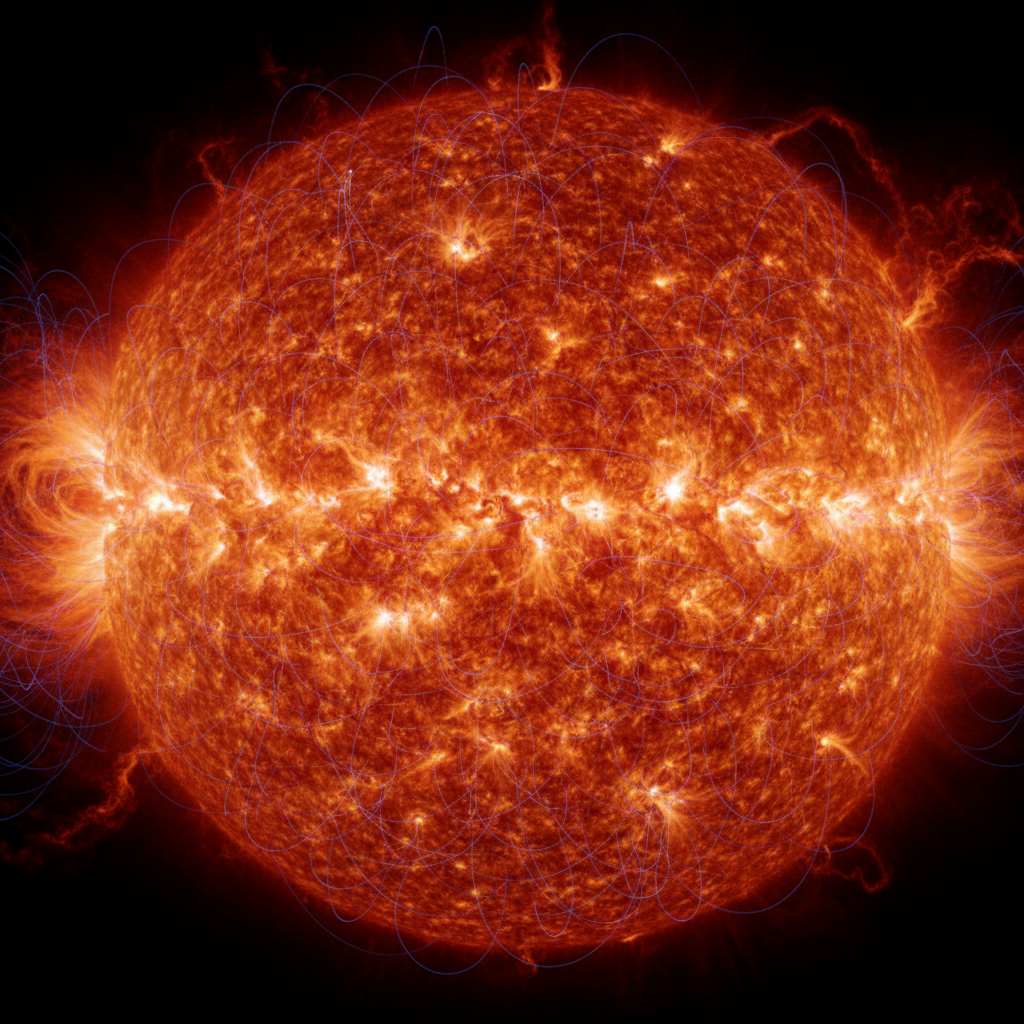
Recent analyses of measurements made close to the Sun show that Alfvén waves—oscillations that travel along magnetic-field lines—are central to the energy flow. The spacecraft has detected large-amplitude magnetic fluctuations, rapid changes in magnetic-field direction known as switchbacks, and signatures of turbulent interactions in the young solar wind. Together, these observations support a picture in which energy launched from the solar surface is progressively converted into heat.
Waves born in a magnetized atmosphere
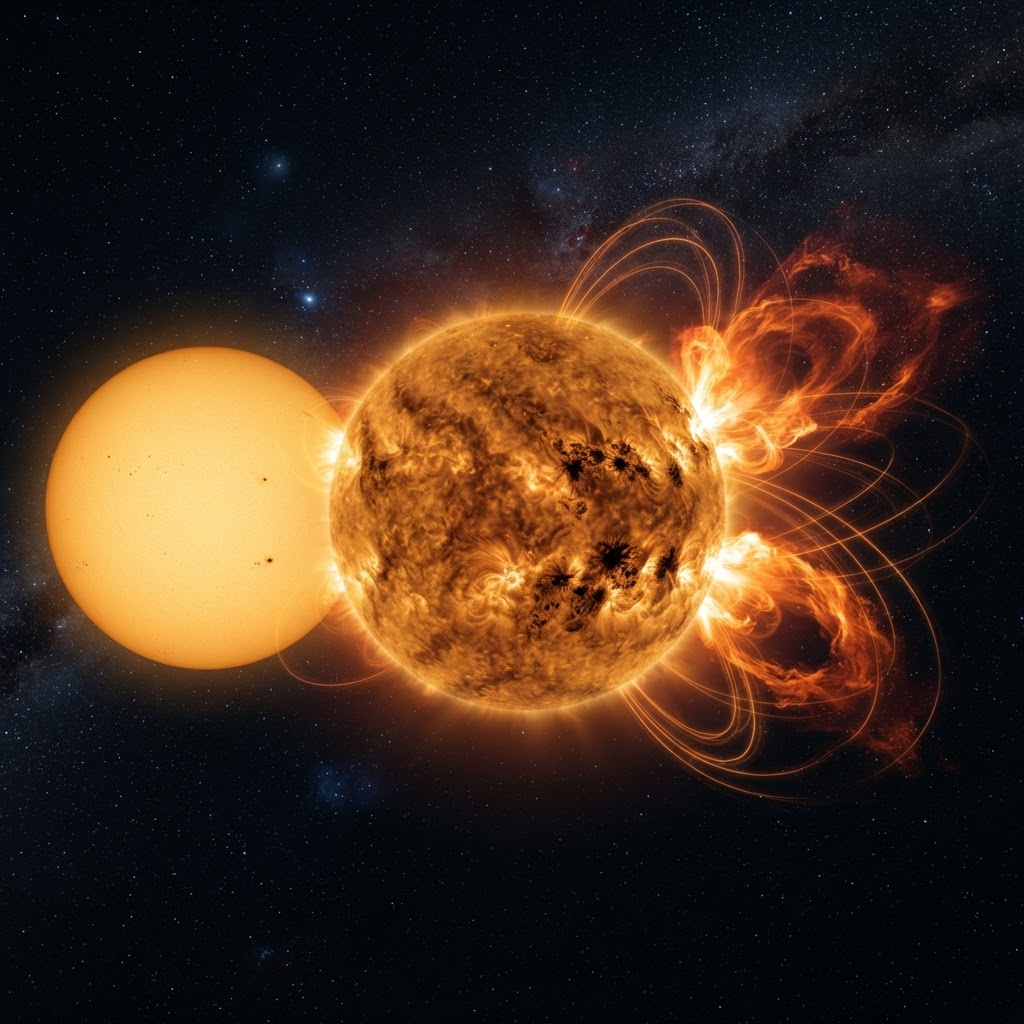
Alfvén waves arise when magnetic tension restores a displaced bundle of plasma. In the corona, they can carry energy away from the photosphere at enormous rates. In an idealized, smoothly expanding corona, however, much of that energy would simply escape into interplanetary space. Heating requires dissipation—or a turbulent cascade that transfers energy from large, organized motions to small scales where particles can absorb it.
Parker Solar Probe’s instruments have found conditions favorable to that process. Close to the Sun, outward-propagating fluctuations coexist with inward-propagating components reflected by strong gradients in density and magnetic-field strength. Counter-propagating waves interact nonlinearly, distorting one another and generating turbulence. This offers a physically plausible route from macroscopic magnetic motions to microscopic particle heating.
Switchbacks complicate—and sharpen—the story
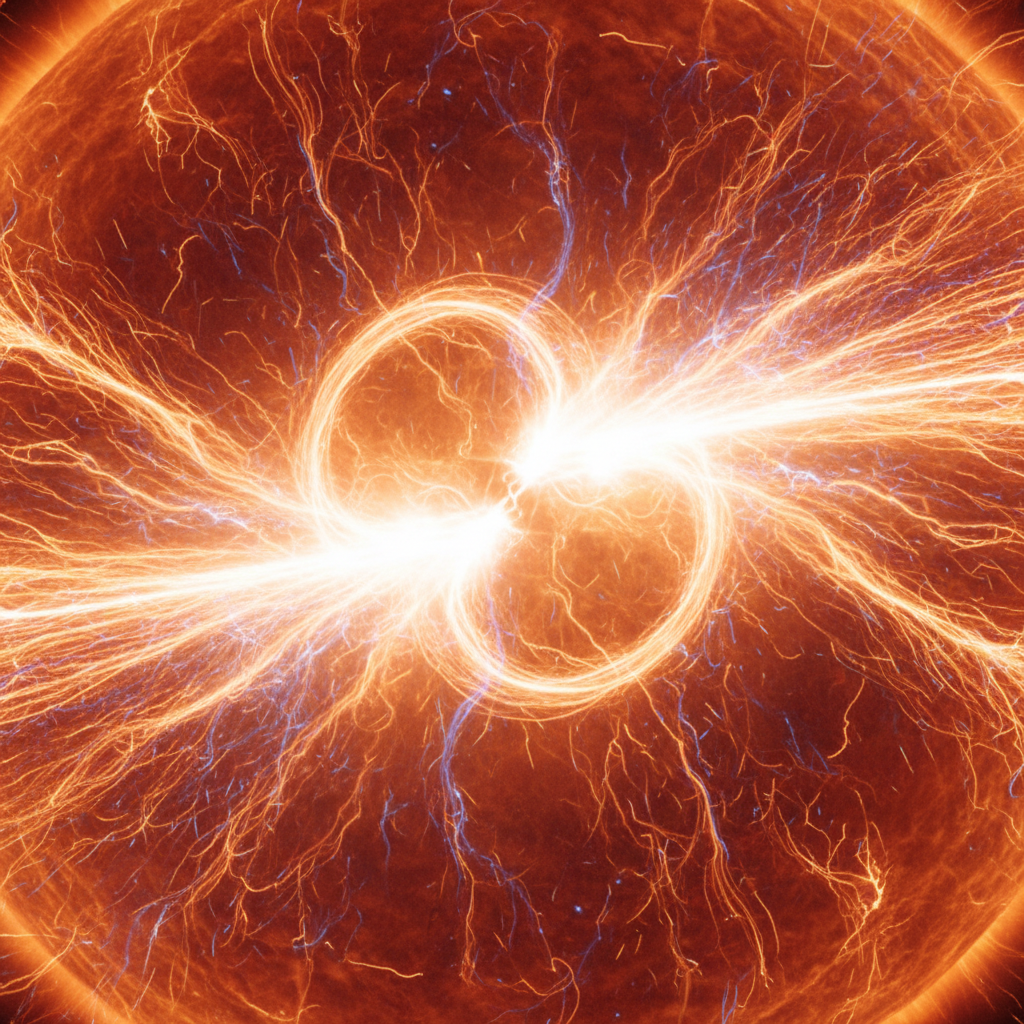
One of the mission’s most striking discoveries is the prevalence of switchbacks: brief intervals in which the magnetic field sharply folds or reverses its radial direction. Their origin remains debated, but their properties connect them to Alfvénic fluctuations. Some may form near the solar surface through magnetic reconnection or the release of stressed field lines; others may evolve as the solar wind expands.
Their importance is not merely visual. Switchbacks carry substantial magnetic and kinetic energy, and their intermittent structure may help determine where that energy is deposited. Parker Solar Probe has observed that switchbacks become less common—or appear to relax—farther from the Sun, suggesting that wave energy is transformed as the wind travels outward. The exact balance between turbulent dissipation, expansion, reconnection, and kinetic instabilities is still being worked out.
What the spacecraft has established
The mission has not identified a single universal “heater.” Instead, it has constrained the environment in which coronal heating occurs. Measurements show strong Alfvénic correlations, evolving turbulence, and particle distributions that cannot be explained by simple adiabatic expansion alone. Observations of magnetic-field geometry and plasma fluctuations also help distinguish energy carried by waves from energy stored in coherent structures.
This matters because competing heating models make different predictions about ion temperatures, electron heat flux, turbulence spectra, and the partition of energy between particles. Parker Solar Probe’s repeated close approaches—now sampling regions where the solar wind is still being accelerated—provide the first sustained opportunity to compare those predictions with local measurements rather than remote observations alone.
The question that remains
The central unresolved issue is where and how the wave energy finally dissipates. Does turbulence dominate? Do switchbacks reconnect and release their energy? Do kinetic plasma instabilities absorb energy selectively into ions or electrons? The answer may vary between coronal holes, active regions, and the sources of the slow solar wind.
As Parker Solar Probe continues its progressively closer encounters, and as its data are combined with Solar Orbiter observations and advanced kinetic simulations, the focus is shifting from whether Alfvén waves matter to precisely how they heat different parts of the corona. That is a more demanding question—and a far more testable one.