Evolution has no stated goal, yet some organisms appear better equipped than others to generate useful variation when conditions change. That capacity—evolvability—has become a major focus of evolutionary biology. The current debate is no longer whether lineages differ in their ability to evolve, but when natural selection can preserve those differences.
Variation can be an evolved property
At first glance, evolvability seems paradoxical. Natural selection acts on immediate differences in survival and reproduction, whereas evolvability concerns descendants’ future potential. A mutation that increases mutation rates, recombination, or developmental flexibility may be harmful now but beneficial later. How could selection “see” that distant payoff?
The answer is that evolvability need not be selected directly. Genetic systems that generate variation also affect present-day fitness. If a mechanism produces occasional advantageous changes while imposing tolerable costs, selection can favor it. Alternatively, selection may act on traits correlated with evolvability—such as genome architecture, replication fidelity, or the modular organization of development.
Microbes provide the clearest tests
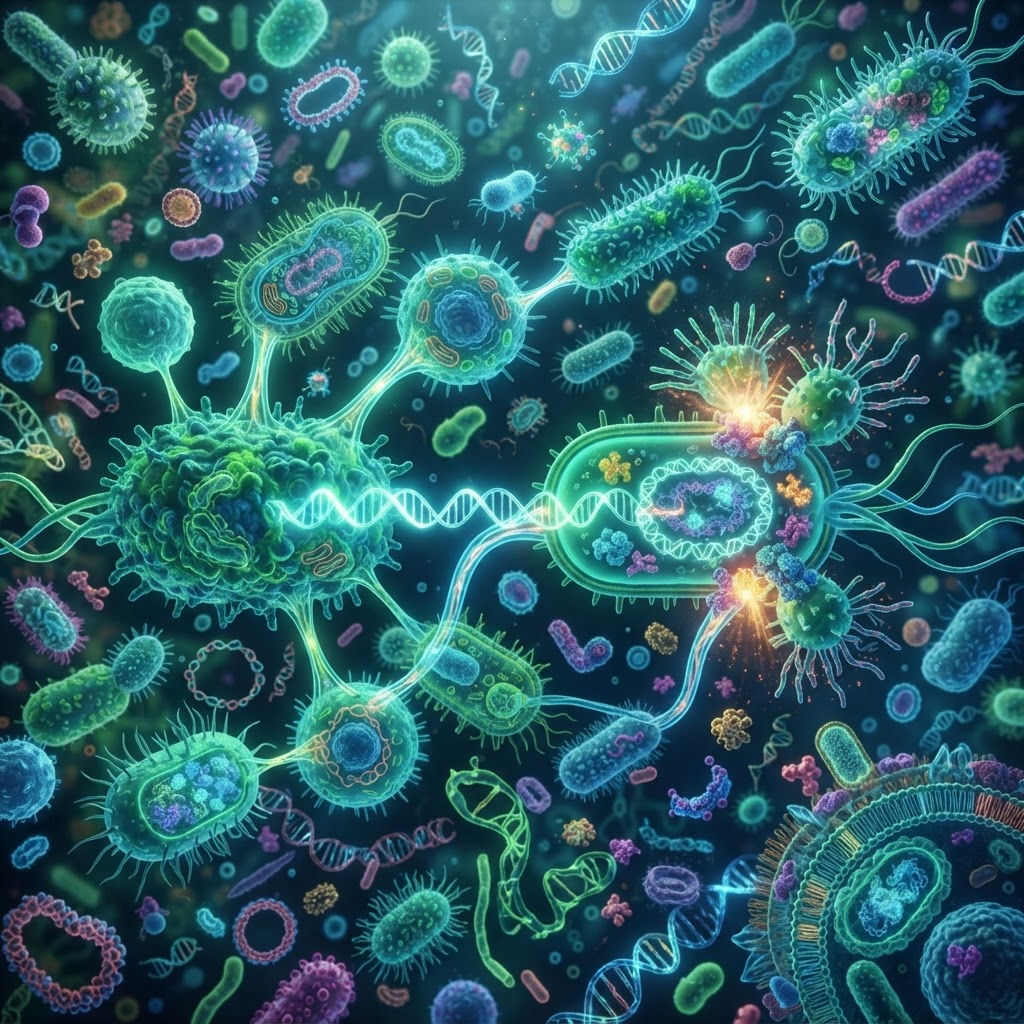
Experiments with bacteria and yeast have shown that mutation rates can evolve. In stable environments, high-fidelity replication is usually favored because most mutations are neutral or harmful. Under rapidly changing conditions, however, mutator variants can spread by producing beneficial mutations more quickly. Once adaptation is achieved, lower-mutation descendants may often replace them, preserving the benefit while reducing the ongoing genetic damage.
This pattern is sometimes described as “genetic hitchhiking”: selection favors a nearby beneficial mutation, and a mutation-increasing allele rises with it. The result can look like selection for evolvability without requiring the population to anticipate environmental change. Long-term evolution experiments with Escherichia coli have also shown that mutation-rate modifiers, DNA-repair pathways, and genome-wide mutational effects can influence how readily populations adapt to new stresses.
Mechanisms reach beyond mutation rate
Evolvability is not synonymous with mutability. Recombination can bring useful variants together; gene duplication can create redundant copies that later acquire new functions; transposable elements can reorganize genomes; and developmental plasticity can expose alternative phenotypes before genetic changes stabilize them. In immune systems and cancer, specialized or dysregulated mutation processes can generate diversity at extraordinary rates—useful to the cell or organism in some contexts, dangerous in others.
At larger evolutionary scales, modular body plans and partially independent genetic networks may make innovation less disruptive. A change in one module can produce a new function without destroying the rest of the organism. Such architectures can be maintained because they improve ordinary performance, with enhanced evolvability emerging as a consequence.
Selection is possible—but conditional
Modern theory places strict limits on the claim that evolvability is an adaptation. If environmental changes are unpredictable and the costs of generating variation are high, selection may not favor a general-purpose “evolution switch.” If changes recur or if lineages compete over long periods, however, modifiers that increase adaptive potential can spread. The outcome depends on population size, the structure of genetic trade-offs, the rate of environmental change, and whether beneficial mutations are accessible.
The most defensible conclusion is therefore nuanced: evolvability can be heritable, can vary among lineages, and can be shaped by selection, but it is usually built from mechanisms with immediate effects rather than from foresight. The open challenge is to identify how often natural selection favors evolvability itself, rather than merely capturing it as a by-product of adaptations selected for other reasons.