Today, every major space-weather forecast rests on a fact that was once considered almost absurd: the Sun is continuously streaming charged particles into space. This flow, now called the solar wind, was predicted by American astrophysicist Eugene Parker in 1958 and directly confirmed a few years later.
A radical idea about an apparently empty space
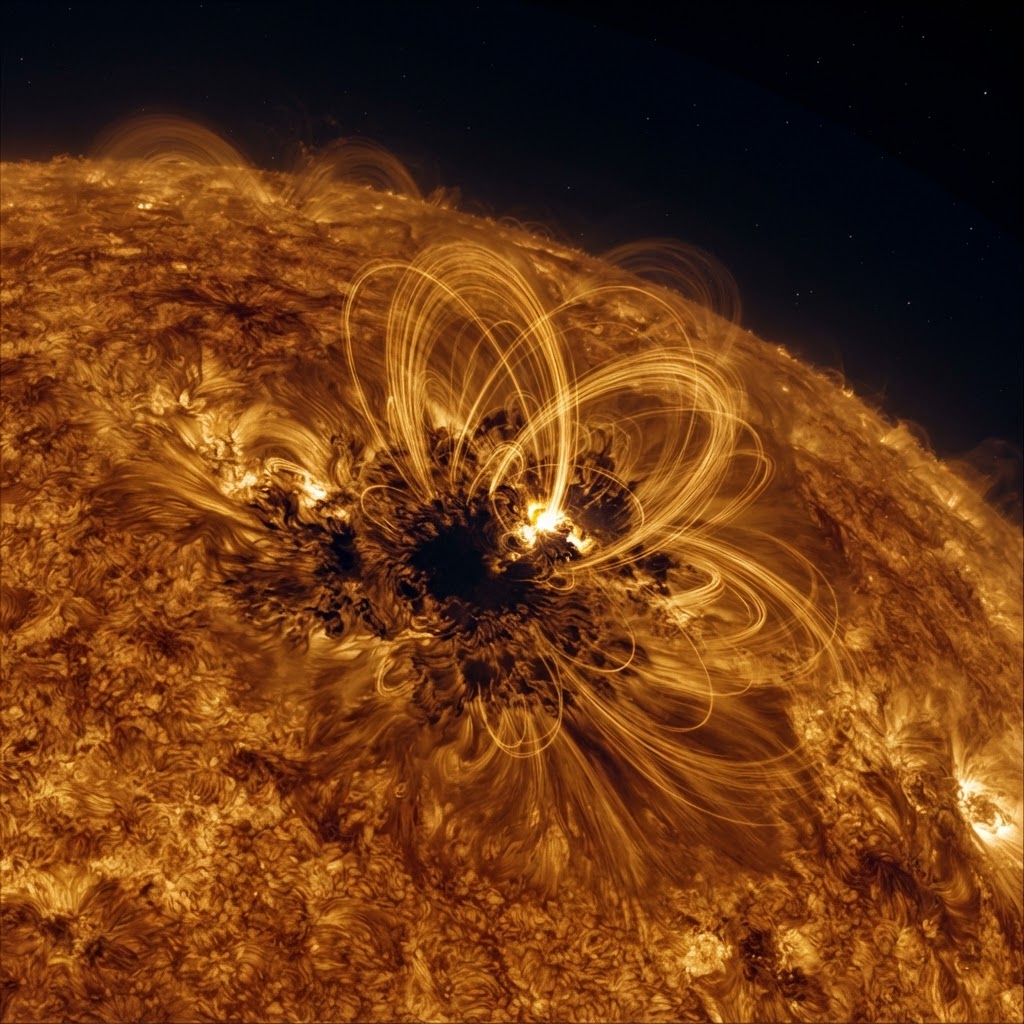
Before Parker’s work, many scientists pictured the solar corona—the Sun’s million-degree outer atmosphere—as largely static. The prevailing assumption was that gravity should hold the tenuous coronal gas near the Sun. But Parker recognized that a gas heated to such extreme temperatures would not remain confined so neatly.
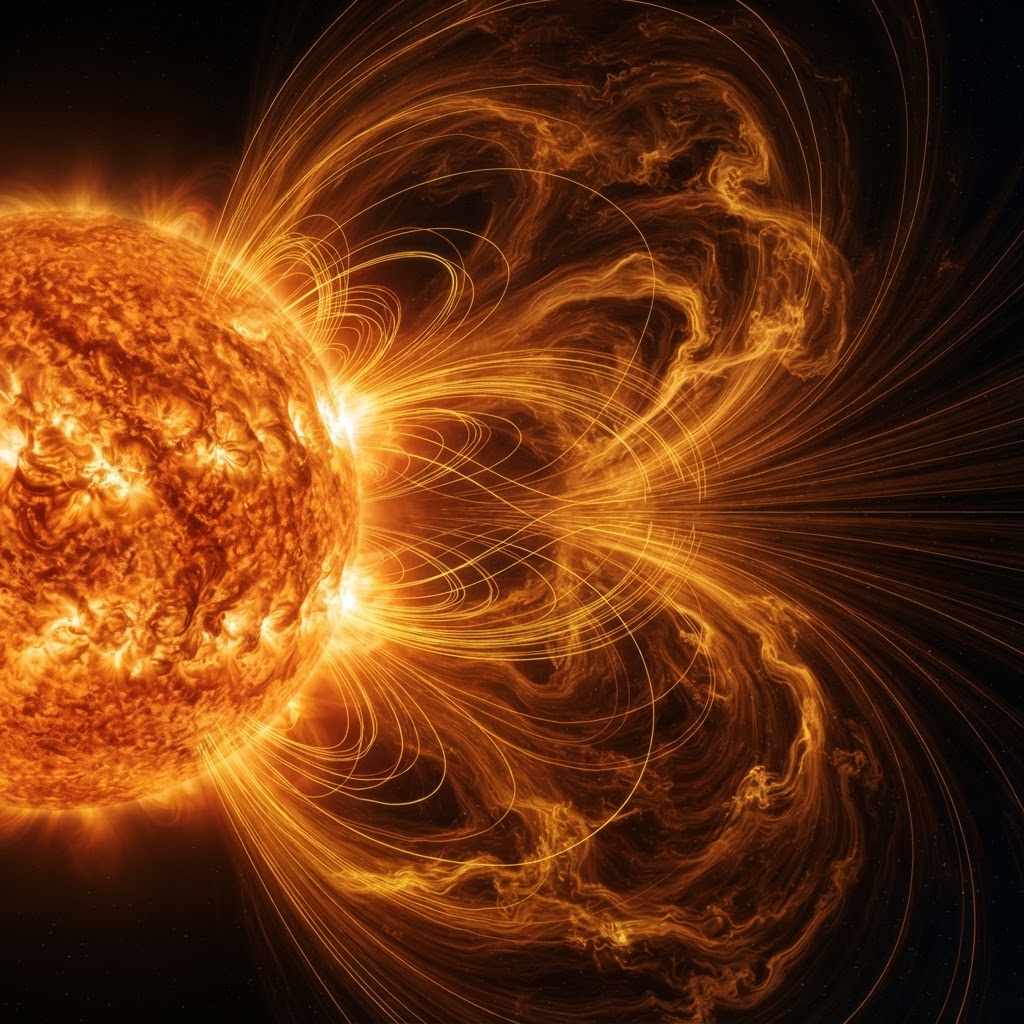
Using equations describing the corona as a fluid, Parker found that the gas should expand outward. More importantly, the expansion could accelerate from subsonic speeds near the Sun to supersonic speeds farther away. The result was not a gentle atmospheric leak but a permanent, high-speed outflow extending throughout the Solar System.
His 1958 paper, “Dynamics of the Interplanetary Gas and Magnetic Fields,” introduced the concept. The response was hostile. Referees initially rejected the manuscript, and one senior scientist reportedly argued that the equations contained an error because they implied continuous expansion. Parker persisted; the paper was ultimately published in the Astrophysical Journal.
Confirmation arrived from space
The decisive evidence came from spacecraft. In 1962, NASA’s Mariner 2 measured a persistent stream of charged particles moving outward from the Sun during its journey to Venus. The observations matched Parker’s prediction and established the solar wind as a physical reality.
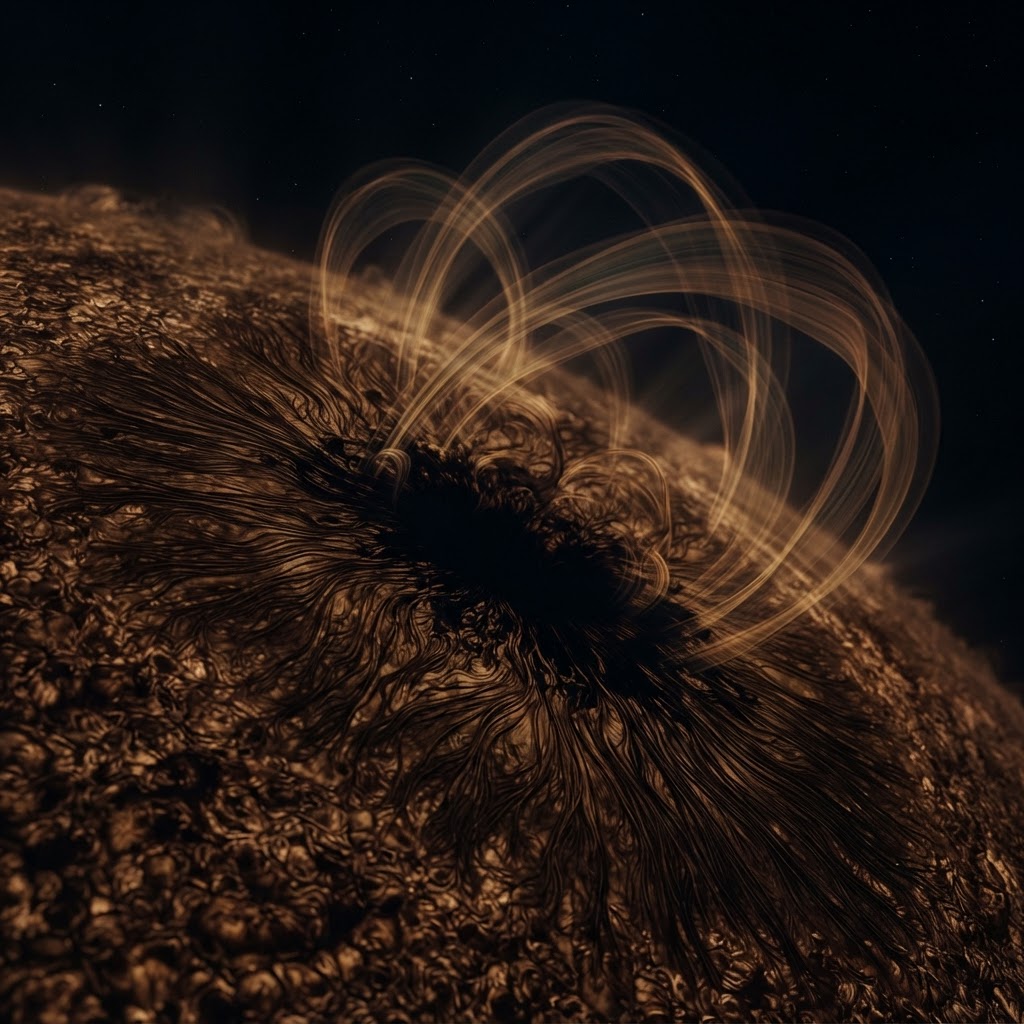
The wind is not uniform. It includes relatively steady, fast streams associated with coronal holes and slower, more variable flows near the Sun’s active regions. Embedded within it is the Sun’s magnetic field, which is carried outward and twisted by solar rotation into the Parker spiral.
Why the discovery remains current
Parker’s insight is now central to space weather. Solar eruptions can drive shocks and clouds of magnetized plasma into the solar wind. When these structures reach Earth, they can trigger auroras—but also disrupt satellites, radio communication, navigation systems, and electrical grids.
Recent missions have sharpened the original picture. NASA’s Parker Solar Probe, launched in 2018, has repeatedly crossed the near-Sun environment where the wind is accelerated and structured. Its measurements have revealed magnetic “switchbacks,” abrupt reversals in the magnetic field that may help explain how the wind gains speed and how energy moves through the corona.
The broader lesson is scientific as much as solar: a counterintuitive mathematical consequence can become an observational fact, even when it conflicts with expert expectation. Parker did not merely identify a new phenomenon. He changed the boundary of the Sun, showing that its atmosphere is not a shell but an expanding, magnetized presence that reaches far beyond the planets.
The remaining mystery
Scientists still do not fully know how the corona heats to millions of degrees or exactly how the solar wind is accelerated. Parker’s theory described what the outflow must do; current missions are working to determine which waves, magnetic structures, and turbulent processes make it happen. More than six decades after his prediction, the wind is established—but its engine remains an active frontier.