Counting patterns, not parts
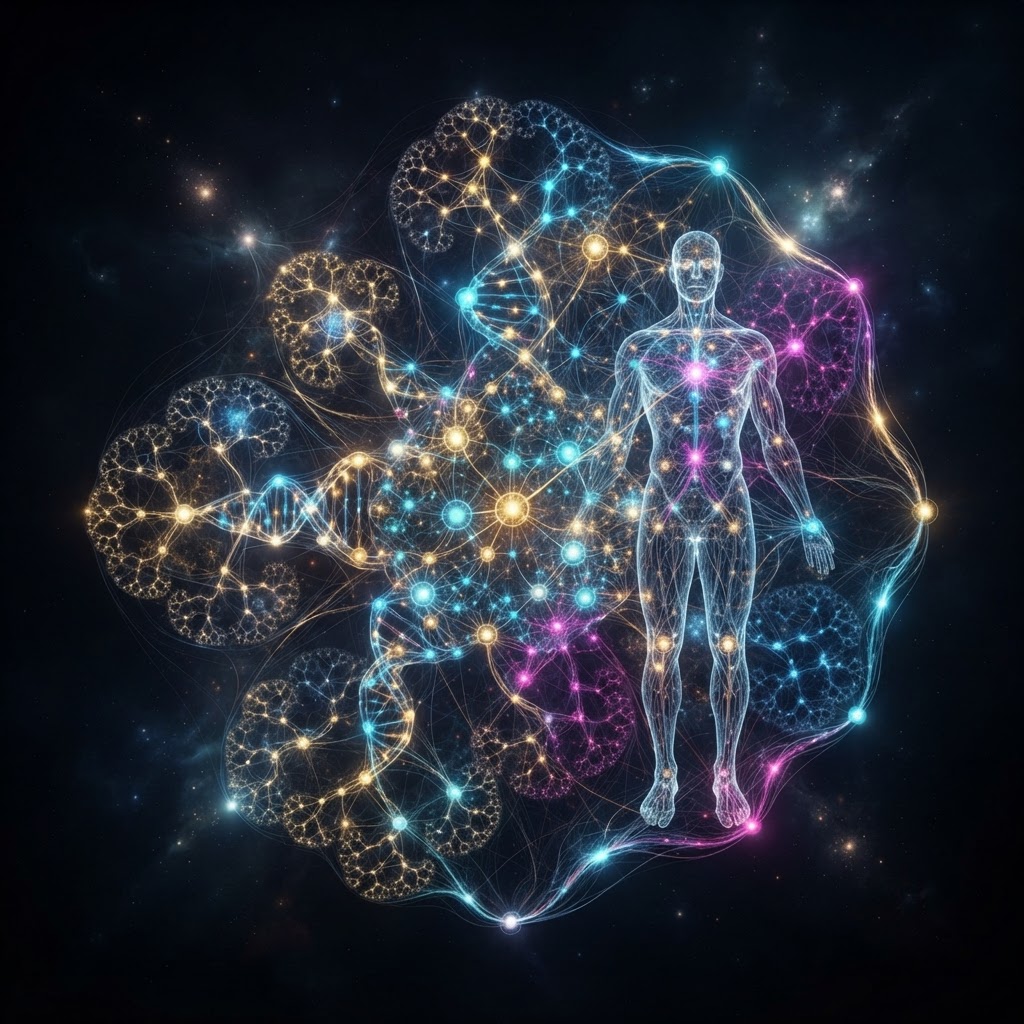
Two centuries after naturalists catalogued species, a new quantitative taxonomy is taking shape — not of organisms but of patterns of information inside them. Information theory, once the domain of communications engineers, is now central to active debates in biology about what makes living systems complex. The recent advance is not a single theorem but a suite of tools and estimation techniques that let researchers ask the right question quantitatively: how much organization, memory and coordinated causation does a biological system contain?
Which information measure for which question?
Shannon entropy remains the baseline for uncertainty, but practitioners increasingly pair it with tailored constructs:
- Mutual information to quantify shared structure across variables (e.g., gene expression and phenotype).
- Transfer entropy and related directed measures to infer directional information flow in neural or cellular networks.
- Excess entropy and statistical complexity to capture stored predictive information and the minimal model complexity needed to reproduce dynamics.
- Partial information decomposition (PID) to separate redundancy, unique contributions and synergy among interacting components — crucial for understanding collective computation in brains and microbial consortia.
- Algorithmic or Kolmogorov complexity as a conceptual yardstick for rule-based structure, though hard to estimate from empirical data.
Why now? Better estimators, more data, and hybrid methods
Two practical developments have accelerated progress. First, high-resolution biological datasets — from dense neural recordings to single-cell transcriptomics — provide the sample sizes and temporal richness needed for dynamic information measures. Second, a wave of improved estimators reduces bias and scales to high dimensions: k-nearest-neighbor methods, kernel-based estimators, and neural-network-based mutual information estimators (e.g., MINE) let researchers approximate information quantities that were previously intractable.
Successes and demonstrations
Applications are proliferating. Information-theoretic analyses have revealed synergistic coding in small neural populations, identified putative driver nodes in gene regulatory networks, and quantified how microbiome communities share and process metabolic information. In ecology, transfer-entropy-based approaches detect cascading influence among species better than correlation-based metrics. These results are not just descriptive: they feed back into experimental design, suggesting perturbations that maximally reduce uncertainty about system function.
Limits and lingering controversies
Despite progress, several methodological and conceptual issues remain. Finite sampling, nonstationarity, and hidden variables can bias estimates; directed measures do not automatically imply causal mechanisms without experimental intervention; and algorithmic complexity remains largely theoretical for empiricalists. Perhaps most important is the multiplicity problem: different information measures answer different scientific questions, and conflating them produces confusion. Integrated Information Theory (IIT) and related proposals that claim to quantify consciousness or organismal 'wholeness' remain contested precisely because operationalizing those claims across diverse biological scales is difficult.
Where the field is headed
Work now emphasizes principled multimodal pipelines: use model-based inference to control for hidden confounds, apply multiple information measures to triangulate function, and employ causal interventions where possible. Hybrid frameworks that combine information geometry, machine learning estimators, and principled decompositions like PID promise practical, interpretable metrics that can be validated experimentally.
In short: information theory has moved from metaphor to measurement in biology. The contemporary challenge is not inventing new entropies but matching the right information lens to the biological question and rigorously validating estimates against interventions.