What’s new
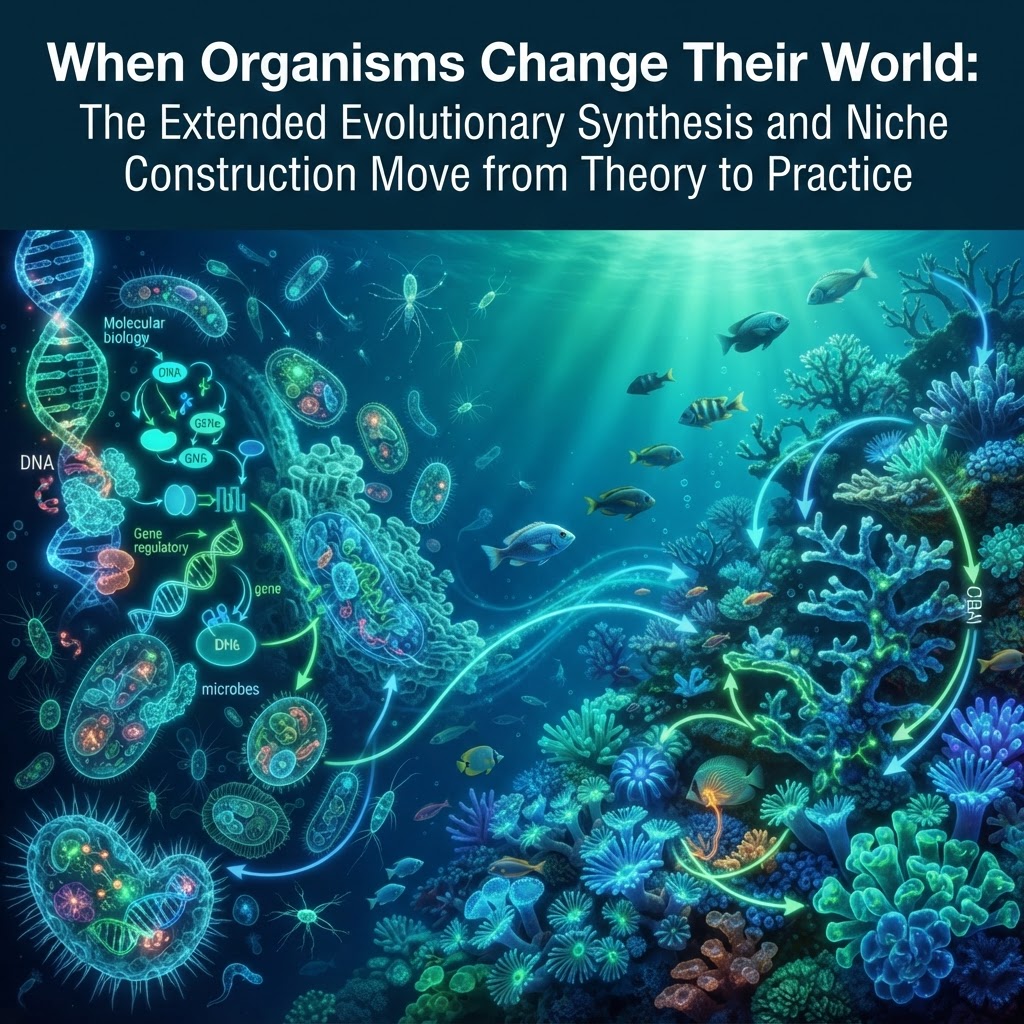
Over the past decade the extended evolutionary synthesis (EES) — a cluster of ideas that emphasize development, plasticity, epigenetics, gene-culture coevolution and, centrally, niche construction — has shifted from a largely philosophical debate into an active research program with testable predictions. Recent empirical studies, computational models and applications in conservation and public health are making the consequences of organisms reshaping their own selective environments measurable and operational.
Core idea: reciprocal causation
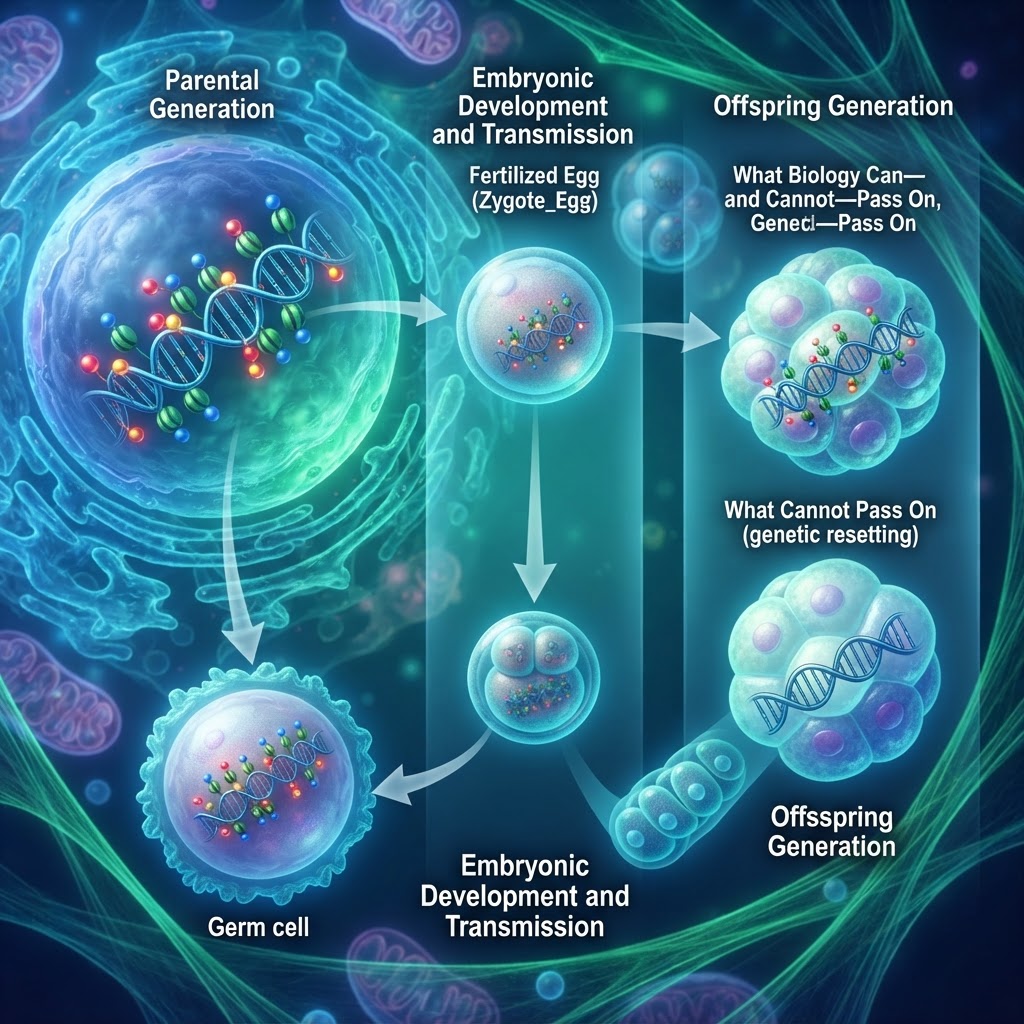
Niche construction theory reframes evolution as a two-way process: organisms modify environments (beavers building dams, earthworms altering soil, humans cultivating crops), and those modified environments, in turn, reshape selection pressures on the organisms and other species. The EES extends this by foregrounding development and non-genetic inheritance (behavioral, ecological, epigenetic) as legitimate sources of heritable variation that influence evolutionary trajectories.
Emerging empirical traction
Two strands of work are driving the recent momentum. First, controlled experiments and comparative studies are documenting cases where organism-driven environmental change measurably alters selection regimes. Examples include studies of niche construction by beavers and burrowing animals, and human-driven environmental change that has led to rapid phenotypic and genomic responses in urban and agricultural species. Second, research into plasticity-first evolution — where environmentally induced phenotypes precede and guide genetic change — has accumulated evidence that plastic responses can expose new trait combinations to selection and, under some conditions, lead to genetic accommodation.
Why the shift matters
- Predictive scope: Incorporating developmental bias, plasticity and ecological inheritance can improve predictions of rapid evolution under environmental change.
- Applied value: Conservation, restoration ecology and public-health strategies increasingly use niche-construction thinking to design interventions that alter evolutionary pressures intentionally (for example, habitat engineering to reduce pathogen transmission).
- Interdisciplinary payoff: The framework links genomics, eco-evolutionary dynamics, microbiome research and cultural evolution in a common causal language.
Still contested — and productively so
Critics within evolutionary biology argue the EES is not a revolution but an extension already accommodated by population genetics and the modern synthesis. That critique has value: many processes emphasized by the EES can be formalized in selection-and-heritability terms. The productive outcome, however, is methodological: proponents have been pushed to produce quantitative models, empirical tests and metrics that make the EES and niche construction empirically falsifiable.
Key open questions
Researchers now face three practical challenges. First, how to quantify the magnitude of niche construction relative to other drivers of selection across systems. Second, under what conditions does plasticity lead to stable genetic change (genetic assimilation) versus transient phenotypic buffering. Third, what is the evolutionary persistence and adaptive significance of non-genetic inheritance — especially transgenerational epigenetic marks — under realistic ecological scenarios.
Outlook
The debate has matured: it is less about rhetoric and more about models, data and applications. Whether or not the EES becomes the dominant synthesis, niche construction has already reshaped research priorities by highlighting organisms as active architects of their own evolutionary futures. That shift has practical consequences for how we manage ecosystems, respond to rapid environmental change and think about the evolutionary dimensions of human agency.