What Happened
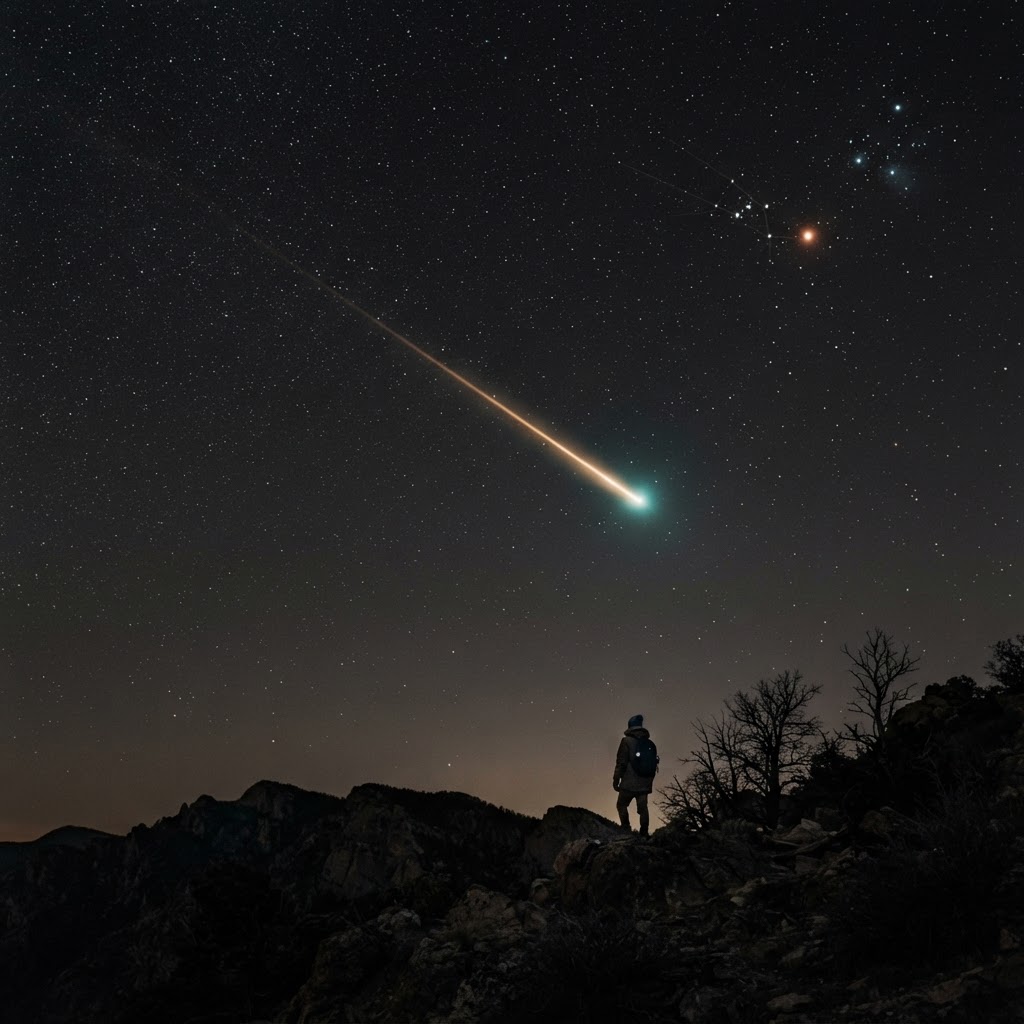
The Orionid meteor shower peaks tonight, the night of October 21 into the early morning of October 22. Every October, Earth's orbit carries us through a river of dust left behind by Comet 1P/Halley, the most famous comet in history. As the grains slam into the upper atmosphere at about 66 kilometers per second, they burn as brief, fast streaks: the Orionids.
The shower is active from October 2 through November 7 this year, but tonight and tomorrow night are its sharpest hours, according to NASA's meteoroid environment guidance.
The Honest Numbers
Under dark, moonless country skies, expect roughly ten to twenty meteors per hour. That is NASA's number and the American Meteor Society's number, and it is the number a patient viewer actually sees when conditions are right.
It is not the number a city gives you. Streetlights and skyglow will cut that count sharply, sometimes to a few per hour. If you can get well away from city and suburban lights, do. If you cannot, the honest expectation is fewer, and the brightest streaks are still worth the look.
What the Moon Will Do
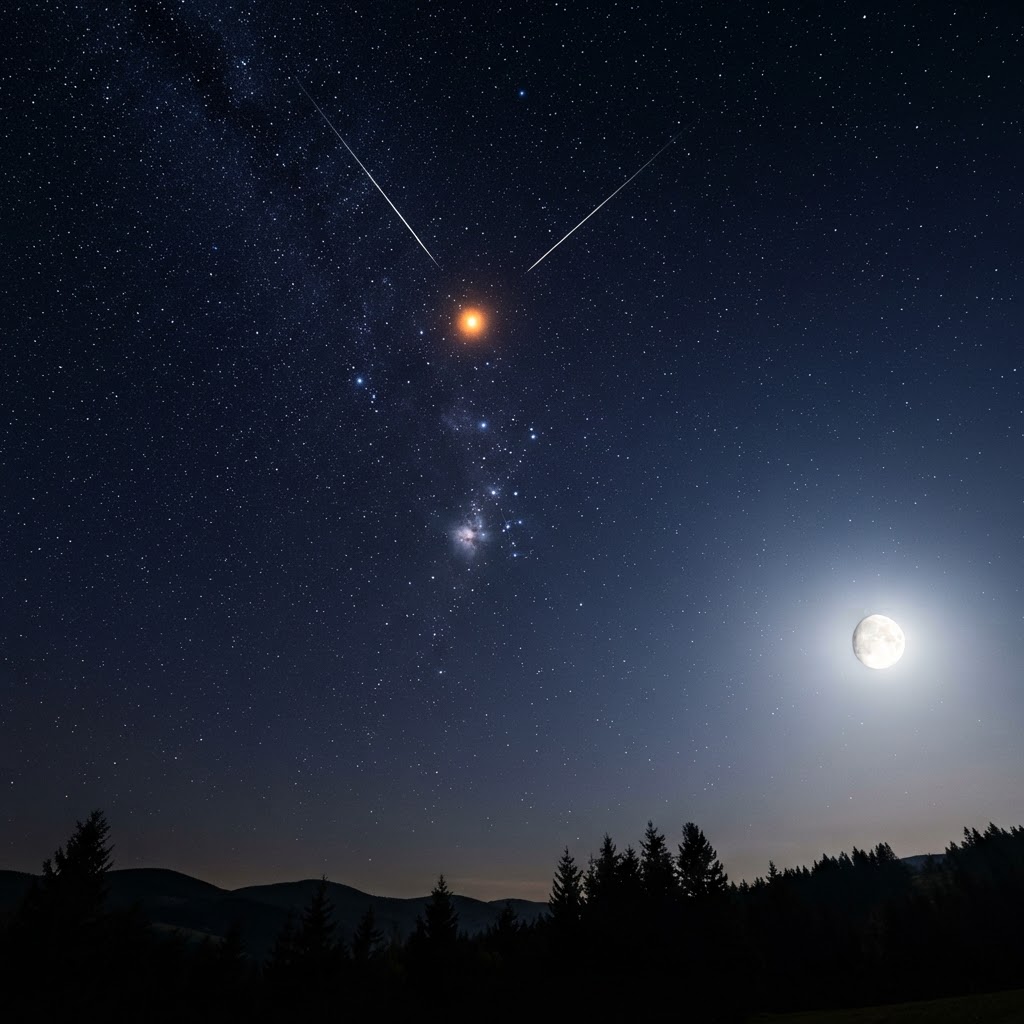
A bright waxing gibbous Moon owns the evening this year, and it will wash out the fainter meteors until it sets in the early-morning hours. That is the honest obstacle, and it is also the schedule: the Moon leaves, the sky goes properly dark, and the best window opens.
The advantage of this year's peak is the moonless hours before dawn. Meteor rates also climb after midnight as your side of Earth turns into the stream, so the moon's early-morning exit lands squarely on the shower's natural peak hours. The window between moonset and dawn is when the ten-to-twenty rate is actually reachable.
How to Watch
Viewing is possible from both hemispheres. The meteors appear to radiate from a point just north of Betelgeuse, the bright orange star at Orion's shoulder, which climbs in the east after about 10 to 11 PM and rides high after midnight.
No equipment is needed, and none helps; the naked eye taking in as much sky as possible is the correct instrument. Lie back, face generally east and southeast if you are in the Northern Hemisphere, give your eyes twenty to thirty minutes in the dark to adapt, and be patient. A blanket and a warm coat are the real gear.
One precision note from NASA's own viewing guidance: the constellation is a signpost, not the source. You should not stare only at Orion. The meteors can appear anywhere in the sky; the radiant is just where their trails point back to.
What the Shower Is Not
It is not an asteroid shower. Meteors are grains of comet dust, most no bigger than a pebble, burning up as they hit the atmosphere at high altitude. Asteroids are rocks that stay in space. The distinction matters to this paper, and it is one the half of the internet calling tonight an "asteroid shower" will get wrong.
It is also not a storm. The Orionids deliver a steady ten to twenty an hour under dark skies, not hundreds, and the streaks pose no danger to anyone on the ground. Some leave glowing trains that hang for seconds after the meteor is gone, and occasional brighter fireballs are possible, but the honest show is quiet, fast, and persistent.
What We Are Watching
The shower tapers but stays viewable through roughly October 26, with activity continuing into early November for the patient. The same comet's dust gives the May sky its Eta Aquarid shower, so Halley's river runs through the year twice.
The coherent signal is this: a real, recurring, predictable night-sky event, peaking tonight, with an honest rate and an honest obstacle. The Moon takes the evening. The pre-dawn takes the show.