The hidden linchpin in plain sight
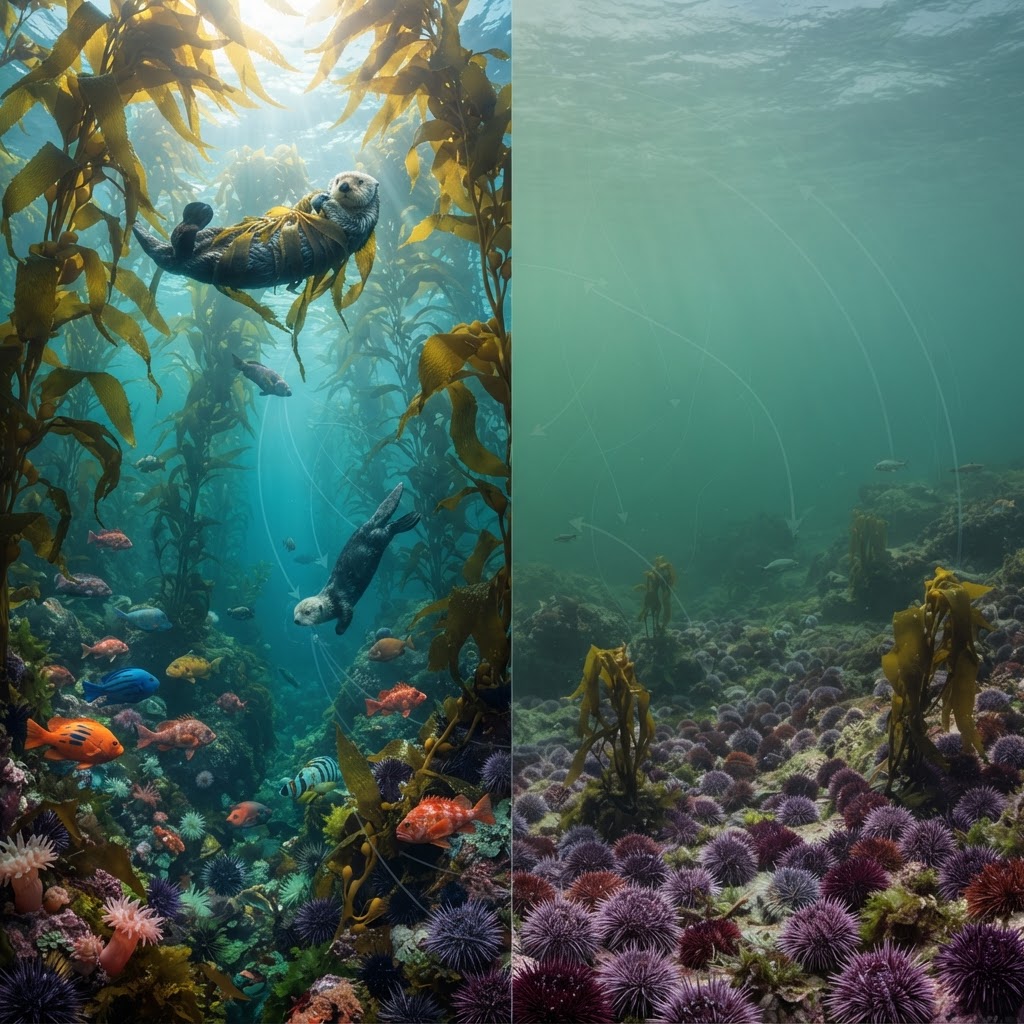
Ecologists have a name for species whose impacts far exceed their biomass: keystone species. The phrase evokes hardware, but the phenomenon is ecological and sometimes dramatic. In the Pacific, the sea otter (Enhydra lutris) is a classic, almost cinematic example. Where otters thrive, kelp forests flourish; where they vanish, urchin barrens spread like a slow-motion desert.
How one predator structures a forest
Sea otters are relatively small, but they have big appetites for sea urchins, crabs and other invertebrates that graze kelp holdfasts and fronds. By keeping urchin populations low and behaviorally constrained, otters allow kelp to grow dense and multi-tiered. Those kelp forests are not just pretty—they are foundation habitats that provide food, nursery space and coastal protection for hundreds of species, from fishes to invertebrates to birds.
That simple predator–prey link triggers a trophic cascade: otters reduce urchins, kelp rebounds, biodiversity increases, and entire biogeochemical cycles shift. In some cases, kelp forests sequester carbon and attenuate wave energy, providing ecosystem services that ripple beyond the shoreline.
Evidence and surprises
Field studies and long-term observations make the otter story unusually robust. Along parts of the North Pacific, sudden declines in otter numbers—driven by hunting, oil spills, or shifts in killer whale predation—were followed by rapid expansion of urchin-dominated habitats. Conversely, reintroductions and natural recoveries lead to kelp recovery within years to decades. The pattern is spatially consistent but not universal: local context—temperature, nutrient supply, alternative prey, and human harvest—shapes outcomes.
Why the sea otter example matters more than it looks
The otter–kelp dynamic is a textbook case with practical resonance. It shows how conserving a single species can restore community structure and services, and why managers sometimes get better results by thinking in networks instead of single-species boxes. It also illuminates ecological thresholds: once urchins reach certain densities, they can overgraze faster than kelp can rebound, creating persistent barrens that resist simple fixes.
Complications and trade-offs
The simplicity of the narrative can obscure difficult realities. Otters sometimes conflict with fisheries, because they also eat commercially valuable shellfish. Their recovery can therefore create social and economic tensions, forcing managers to negotiate trade-offs between ecosystem restoration and livelihoods. Climate change is adding another layer: warming waters and marine heatwaves can stress kelp directly, or shift urchin behavior, altering the cascade that otters otherwise maintain.
What we still need to know
- At what spatial and demographic thresholds does otter recovery reliably transform an urchin barren into a resilient kelp forest?
- How large is the net climate benefit of kelp reestablishment where otters are present, compared with the carbon footprint of possible human mitigation measures?
- How can policy reconcile local fishing interests with the broader public gains from kelp forest restoration?
The sea otter is not a cure-all, but it is a vivid reminder that protecting certain species can produce outsized ecological returns. Recognizing and valuing those returns—ecological, cultural and economic—changes how we prioritize conservation. If we ignore keystones, we risk losing not just a species, but the web of life it holds together.