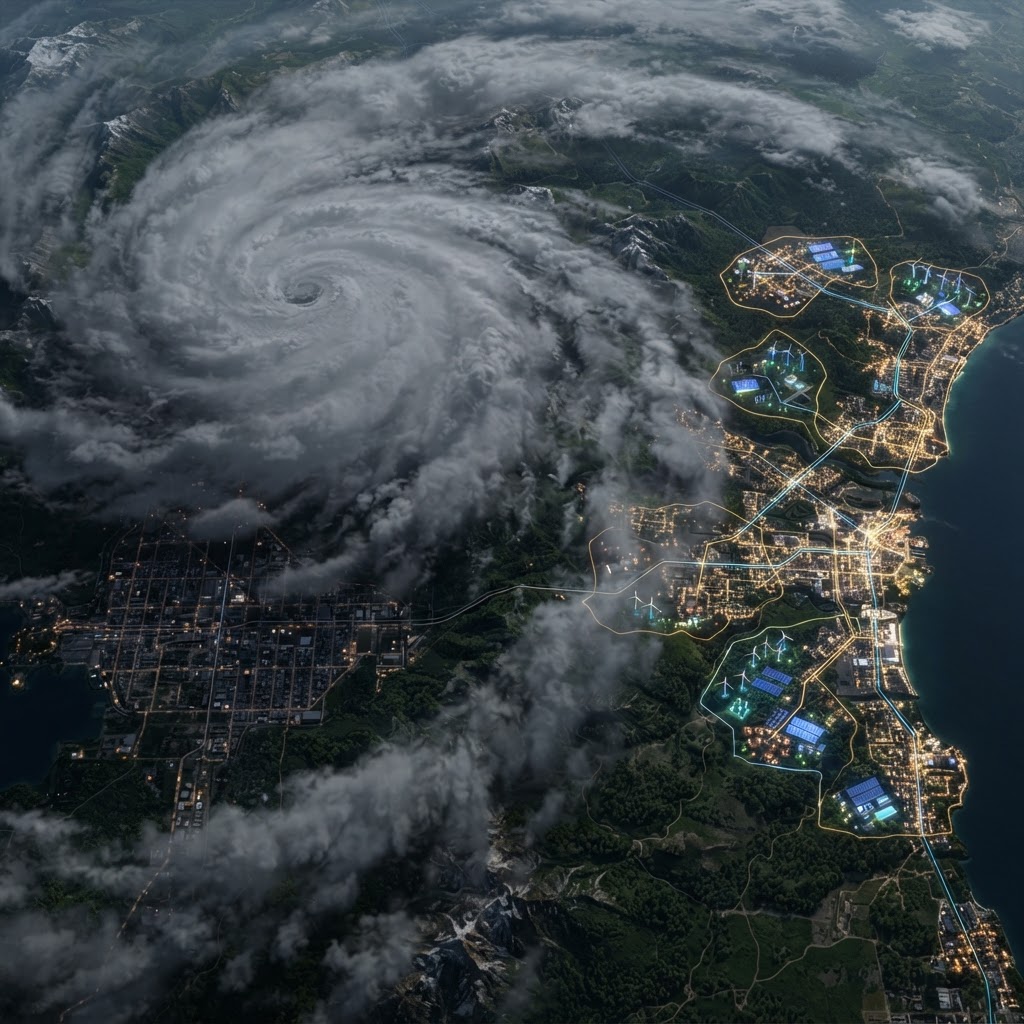
Not a global thermostat, but a regional surgeon
Stratospheric aerosol injection (SAI) — deliberate release of reflective particles into the stratosphere to offset warming — continues to attract close scientific scrutiny. The headline claim that SAI could reduce global mean temperature is straightforward; what is not is how that intervention redistributes heat and moisture across regions. Over the past several years, model intercomparisons and higher-fidelity simulations have sharpened our understanding: SAI is a global-level forcing with distinctly regional fingerprints driven by aerosol microphysics, stratosphere–troposphere coupling and atmospheric dynamics.
Key mechanisms give rise to uneven responses. Aerosols scatter sunlight, cooling the troposphere, but they also absorb shortwave and longwave radiation in the stratosphere, changing thermal gradients. Those changes modulate the Brewer–Dobson circulation and jet streams, alter tropical convection, and shift the positioning and intensity of storm tracks. The same sulfate cloud that dims solar radiation over one region can suppress monsoon rainfall in another or modify sea-surface temperature patterns that feed back on atmospheric teleconnections.
What recent modeling tells us
Multi-model experiments — building on GeoMIP-style protocols and newer coordinated SAI scenarios — consistently show that regional precipitation responses are more uncertain and more consequential than changes in global mean temperature. For example, many models simulate weakened South Asian and West African monsoons under broad-brush SAI deployment, with attendant agricultural risks. Tropical Pacific responses are model-dependent: some simulations show shifts in ENSO amplitude and frequency, others do not, but all indicate the potential for altered remote rainfall patterns across the Americas and Australasia.
Crucially, aerosol properties matter. Particle size, composition and injection altitude determine residence time, scattering efficiency and heterogeneous chemical effects on stratospheric ozone. Models that couple aerosol microphysics and stratospheric chemistry predict both regional cooling contrasts and ozone perturbations that cascade into UV changes at the surface, with attendant ecological and human-health implications.
Where models still struggle
- Aerosol microphysics and aging: coagulation, sulphate formation and the effect of different particle materials are parameterized with large uncertainty.
- Stratosphere–troposphere exchange: coupling schemes and the representation of wave-driven transport differ substantially among models, producing divergent regional outcomes.
- Resolution and regional extremes: coarse global models capture large-scale shifts but miss mesoscale processes that govern extreme precipitation and drought.
These structural uncertainties produce wide ensemble spreads: the same global-mean cooling target can be achieved by different injection strategies that have materially different regional impacts.
Implications for science and policy
Modeling progress makes the policy choice sharper. Any considered use of SAI would require far more than global temperature targets; it would demand explicit specification of acceptable regional trade-offs, robust monitoring, and adaptive control strategies. From a research perspective, the path forward is clear: higher-resolution regional climate simulations nested within coordinated multi-model SAI experiments, improved aerosol microphysics informed by laboratory and field data, and integrated assessments that combine physical climate projections with impacts on water, food and health.
SAI will not be a uniform fix. The behavior of the atmosphere ensures that deliberate perturbations will be redistributed — not erased — by the planet’s circulation. The science community is moving from asking whether SAI could lower global temperature to asking how society could live with the heterogeneous climate of an engineered sky.