The discovery that hid in plain sight
In 1843 the amateur astronomer Heinrich Schwabe published what looks simple today: a roughly 11‑year rhythm in the number of sunspots he had been recording for decades. That modest pattern—later framed as the Schwabe cycle—became the first quantitative fingerprint of the Sun’s magnetic heartbeat. Yet the neatness of an "11‑year cycle" is misleading: the Sun’s activity waxes and wanes with variable amplitude, occasional multi‑decadal lulls and a 22‑year magnetic polarity flip that Schwabe could not have seen.
Why the cycle matters more than the spot count
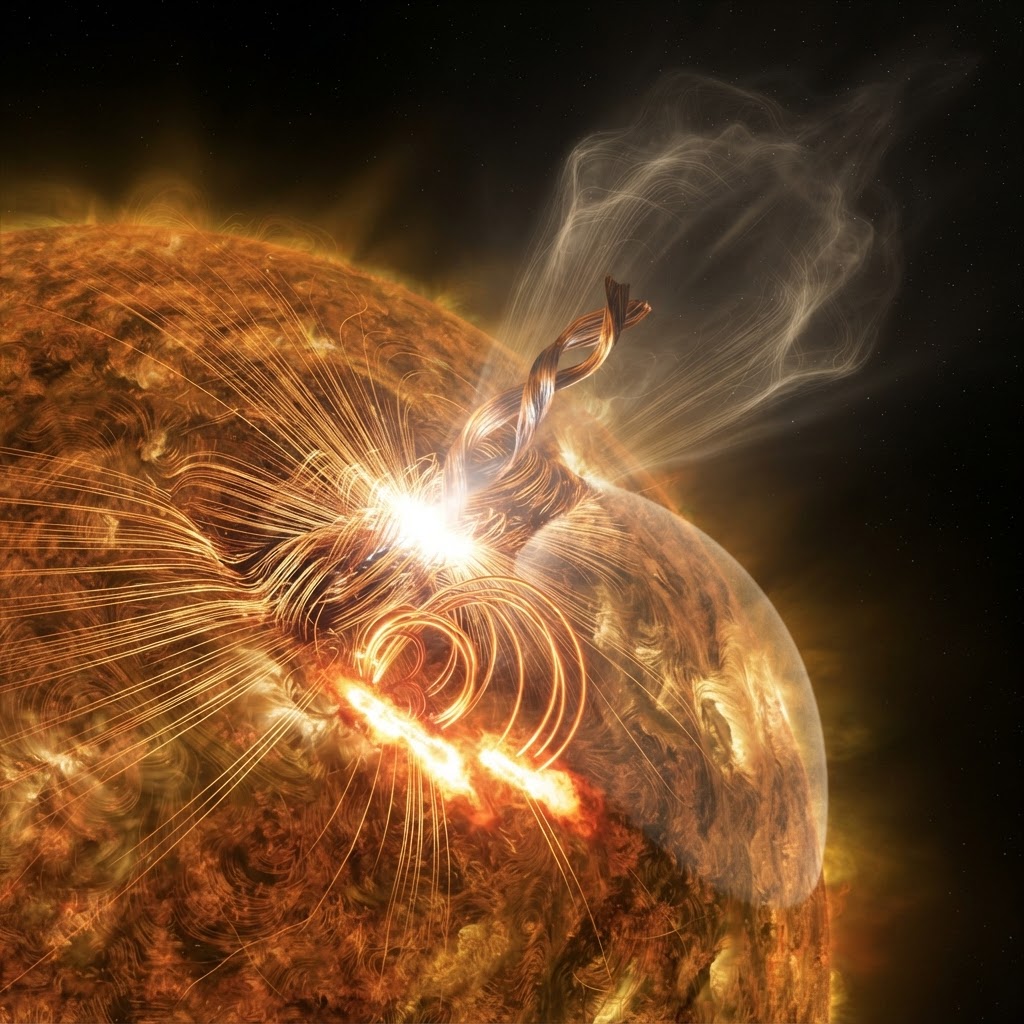
Sunspots are the visible tip of a magnetic iceberg. Each dark blemish marks strong, concentrated magnetic fields; ensembles of spots presage flares, coronal mass ejections (CMEs) and the storms that buffet Earth’s magnetosphere. For operational forecasters, the Schwabe cycle provides a baseline expectation—more spots generally mean more storms—but it is a blunt tool. Modern forecasting relies less on raw counts than on morphology and magnetograms: the complexity of active regions, magnetic shear, and flux emergence are far more predictive of explosive events than the calendar year in the cycle.
How science moved from counting to modeling
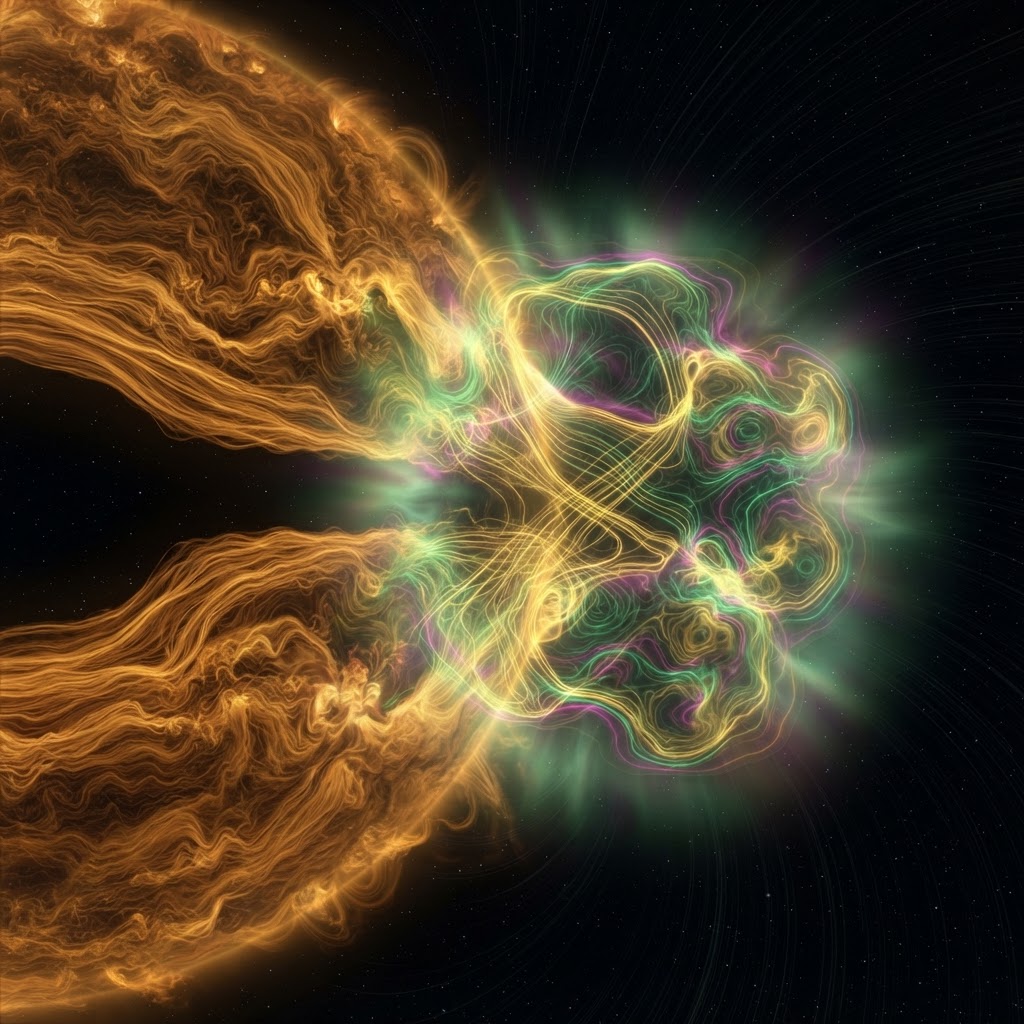
The early 20th century added crucial layers: George Hale discovered magnetic polarity in sunspots (establishing the 22‑year Hale cycle), and mid‑century work by Horace Babcock and others framed a qualitative flux‑transport dynamo: differential rotation, meridional flows and turbulent convection twist and shuffle magnetic fields. Today, data from space missions—SDO, SOHO, STEREO and probes like Parker Solar Probe—plus helioseismic measurements, feed a family of models: kinematic flux‑transport dynamos, surface flux-transport simulators and whole‑sun magnetohydrodynamic codes.
The overlooked gap: predictability vs. proxy
Here is the uncomfortable truth: the 11‑year number is a statistical headline, not a deterministic clock. Two hard limits constrain forecasting:
- Intrinsic variability: the solar dynamo includes chaotic and stochastic components (turbulent convection, fluctuating meridional flows) that limit deterministic prediction beyond one cycle.
- Proxy limitations: sunspot counts and even total magnetic flux are imperfect proxies for eruptive behavior. A few magnetically complex regions during a weak cycle can produce extreme events.
What modern forecasters actually do
Operational centers (NOAA SWPC, ESA) use a mix of observations and probabilistic models: ensemble forecasts from flux-transport models, machine‑learning classifiers trained on magnetograms, and near‑real‑time coronagraph imagery to detect Earth‑directed CMEs. Helioseismology gives a faint advance warning by revealing large subsurface magnetic structures days to weeks before they surface. Despite these advances, forecasts remain probabilistic: we can say a stronger cycle elevates overall risk, but not when or where the next damaging CME will hit.
Why this still matters
Space weather is not an abstract curiosity. Severe geomagnetic storms threaten satellites, radio communications, aviation radiation exposure and terrestrial power grids. Recognizing that the Schwabe cycle is necessary context—not a predictive panacea—reframes priorities: invest in continuous, multi‑wavelength monitoring, improve dynamo models with data assimilation, and embrace probabilistic, impact‑based warnings rather than deterministic countdowns.
Bottom line: Schwabe gave us the cadence; modern heliophysics is still learning the choreography.