What we now know
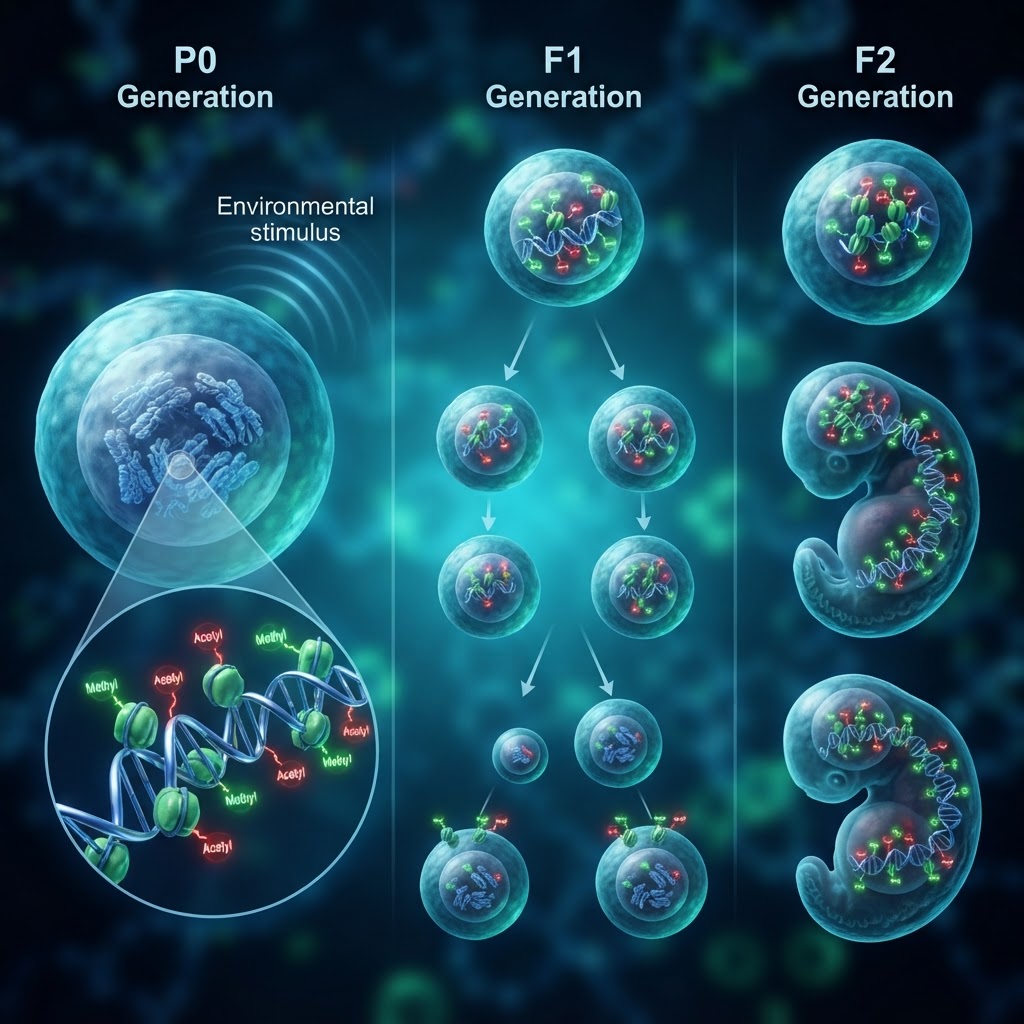
For decades the central dogma framed heredity as the transmission of DNA sequence. That view still stands, but a growing body of experimental work has shown that non‑sequence information—DNA methylation patterns, histone states, small RNAs and even cytoplasmic factors—can in some systems persist across generations and alter offspring phenotypes. This phenomenon, known as transgenerational epigenetic inheritance (TEI), is not a single mechanism but a set of mechanisms with different stability, scope and evolutionary consequences.
Mechanisms under the microscope
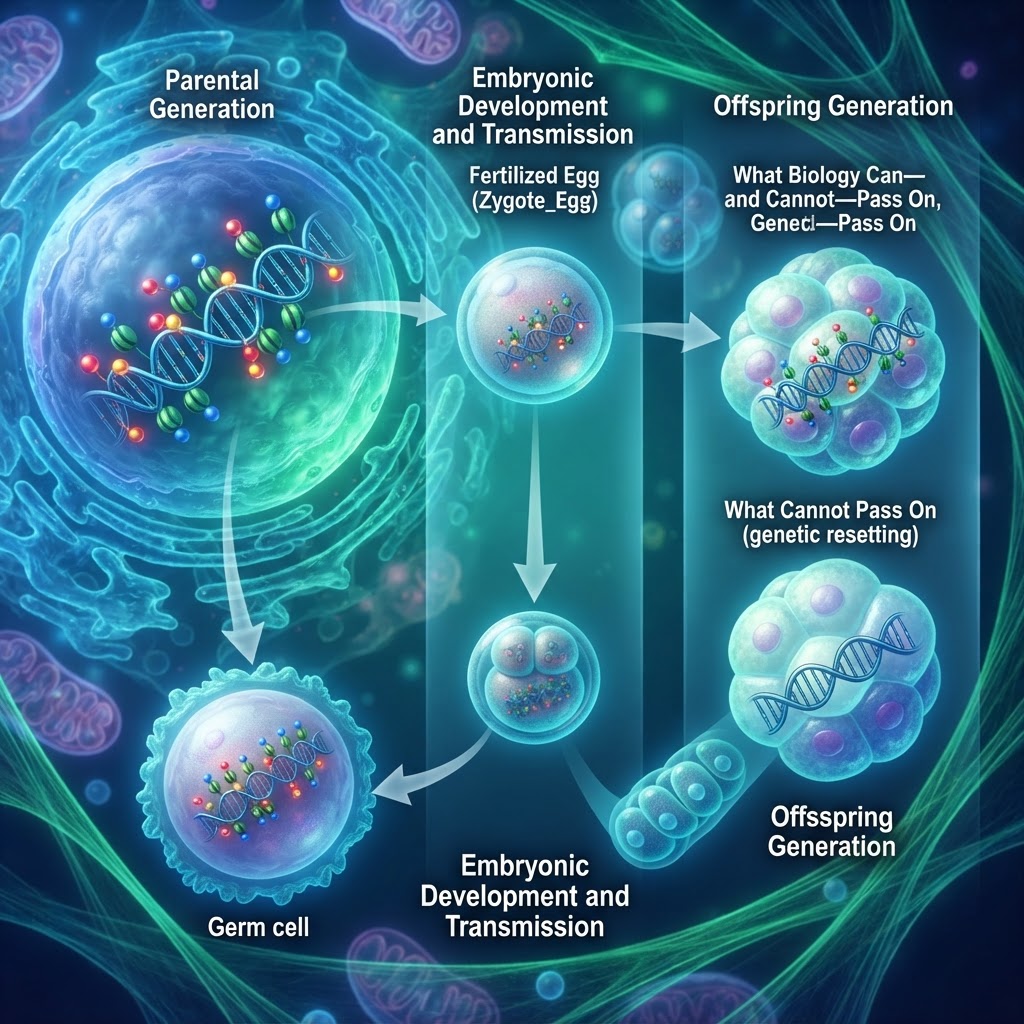
DNA methylation and histone marks. In plants and many invertebrates, methylation and histone modifications can be faithfully copied or avoided by reprogramming, allowing epigenetic states to persist through gametogenesis. In mammals, global epigenetic reprogramming during embryogenesis erases most marks, but some loci escape erasure and can carry parental information forward.
Small RNAs and RNA‑directed silencing. Work in Caenorhabditis elegans and other models has shown that small interfering RNAs and piRNAs can be amplified and inherited over multiple generations, directing gene silencing long after the initial trigger.
Extracellular vesicles and germline signaling. Recent experiments suggest that paternal and maternal circulating factors—including extracellular vesicles carrying RNAs and proteins—can influence germ cells and thereby contribute to non‑DNA inheritance.
Where evidence is strongest
- Plants: robust, genome‑wide transgenerational epigenetic variation without the same wholesale erasure seen in mammals.
- C. elegans: well‑characterized small RNA routes that produce multi‑generation memory of stress or viral exposure.
- Rodent models: diet, stress and toxicant exposure of parents can produce measurable physiological changes in offspring across one to a few generations, though mechanisms are heterogeneous and sometimes transient.
Human relevance—and caveats
Epidemiological signals from historical famines and cohort studies hint at intergenerational effects in humans, but confounding social and environmental factors make causal claims difficult. The consensus across the field is cautious: plausible mechanisms exist, but clear, reproducible examples of stable, adaptive TEI in humans remain limited.
Evolutionary implications
If epigenetic states persist long enough to be acted on by selection, they can function as a form of heritable phenotypic variation. That has several implications: TEI can speed adaptive responses to rapid environmental change, allow reversible bet‑hedging strategies, and provide a substrate for plasticity‑first evolution where epigenetically induced traits become genetically assimilated over time. However, because most epigenetic changes are more labile than DNA mutations, their evolutionary role depends on their stability, fitness effects and the ecological timescale.
The current debate and next steps
Key debates now center on scale and significance: how often does TEI produce adaptive outcomes versus transient noise? Can we quantify rates of epigenetic transmission and their fitness consequences in natural populations? Answering these questions requires longitudinal studies across generations in ecologically realistic contexts, improved molecular markers for transmitted states, and integration of epigenetic dynamics into evolutionary models.
Transgenerational epigenetic inheritance is real—but nuanced. It enriches our understanding of heredity without overturning genetics. The exciting frontier is determining when epigenetic inheritance matters for evolution, and when it is an ephemeral echo of environment rather than a durable legacy.