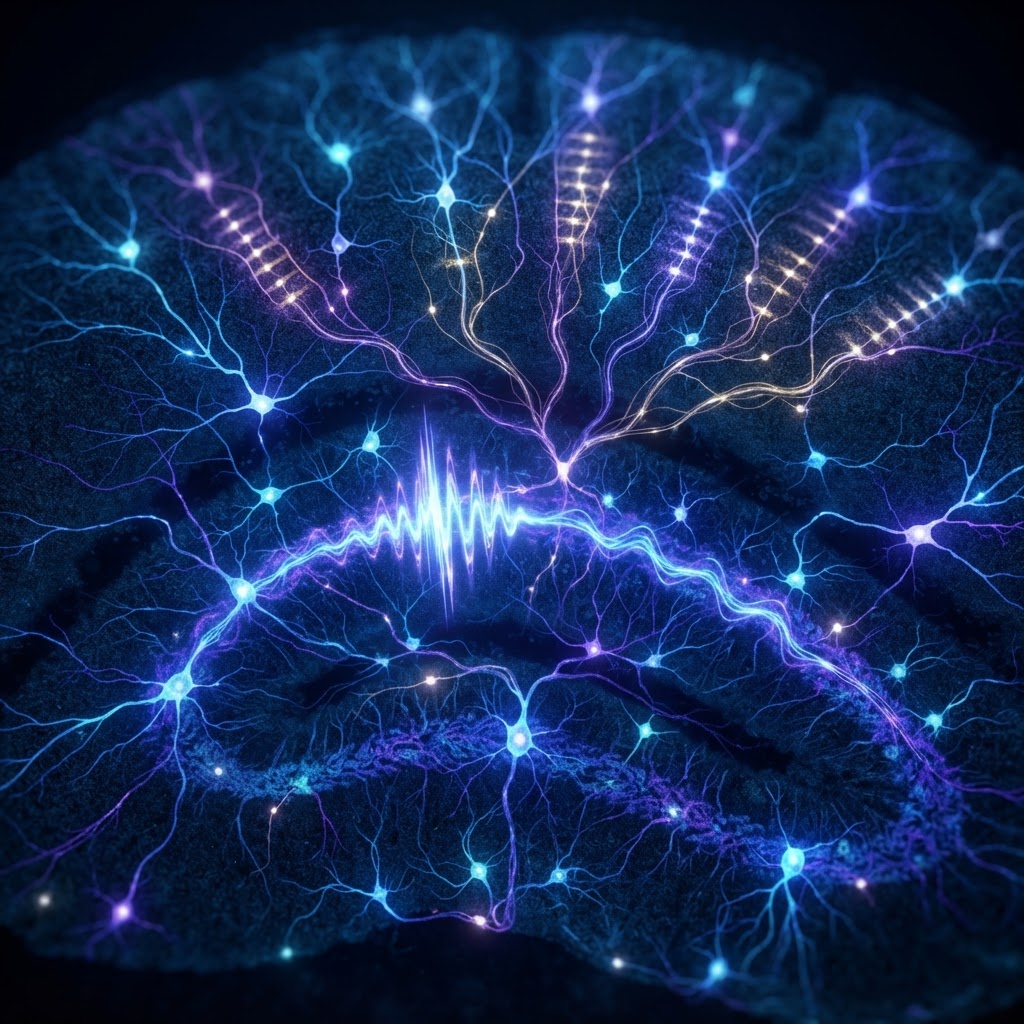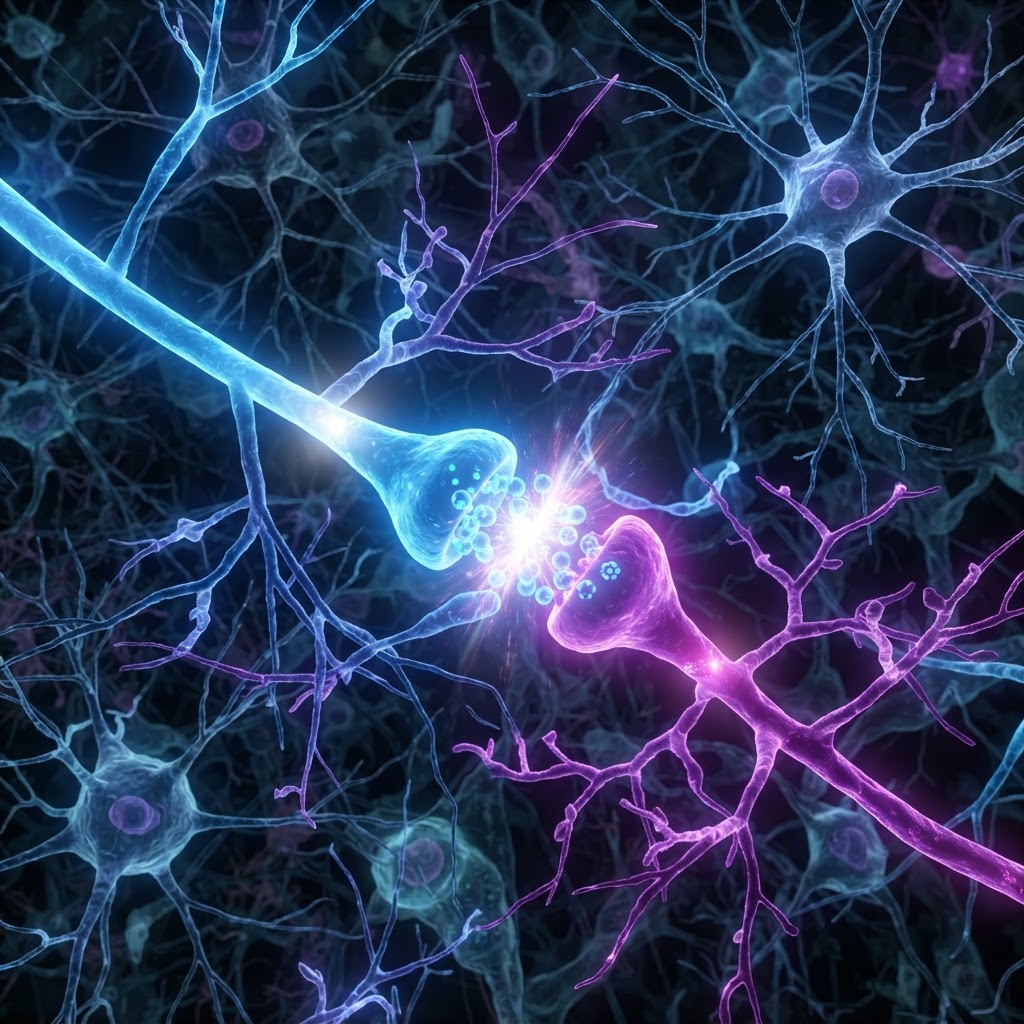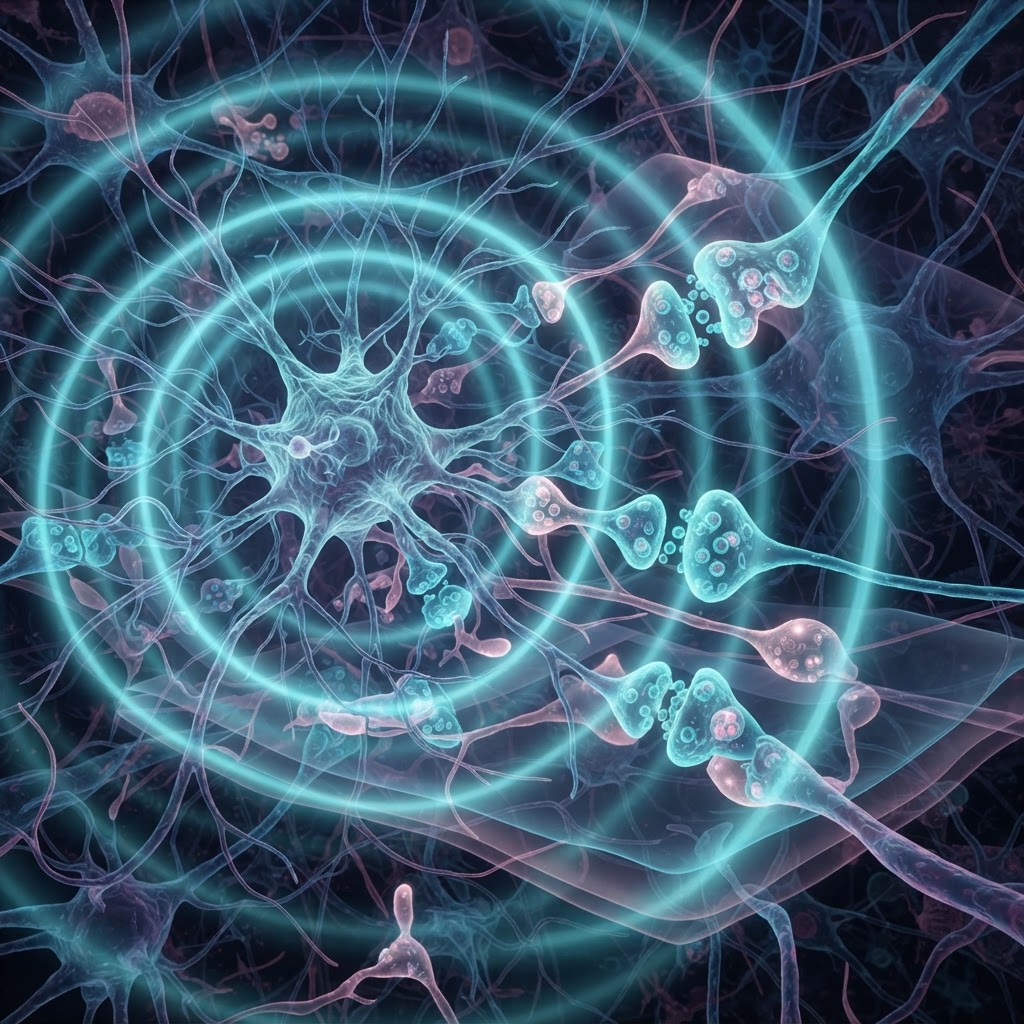
Overview
Astrocytes—long thought to be supportive scaffolding for neurons—are now implicated as active, state‑dependent modulators of synaptic plasticity. Over the past decade, improvements in genetically encoded calcium indicators, two‑photon imaging, and cell‑type specific manipulation have transformed our view: astrocytic Ca2+ activity occurs on multiple spatial scales, from localized microdomain transients to propagating intracellular waves, and these events can bias the induction and direction of synaptic plasticity.
What recent work shows
Two complementary lines of evidence have converged. First, high‑resolution imaging reveals that astrocytes host fast, spatially restricted Ca2+ microdomains closely apposed to synapses, and larger, slower Ca2+ waves that can propagate across processes and between cells. Second, experimental perturbations—pharmacological, genetic, or optogenetic—suggest astrocyte Ca2+ signals influence classic plasticity paradigms (LTP/LTD) by regulating extracellular modulators such as D‑serine, ATP/adenosine, and glutamate, and by controlling local ion homeostasis.
State gating: Neuromodulators (noradrenaline, acetylcholine) reliably drive broad astrocyte Ca2+ responses. Those global or network‑level Ca2+ events appear to set permissive windows for plasticity, essentially changing the rules for whether a group of synapses potentiates or depresses in response to the same neuronal activity.
Heterosynaptic regulation: Propagating astrocyte Ca2+ waves can coordinate plasticity beyond the stimulated synapse by releasing modulatory factors that depress or prime neighboring synapses—an astrocyte‑mediated form of heterosynaptic plasticity that shapes circuit refinement.
Why this matters
These findings recast astrocytes from passive supporters into dynamic partners that integrate neuromodulatory state and local synaptic activity to shape information storage. If astrocytic Ca2+ waves control metaplasticity—how plasticity rules change over time and space—then they are central players in learning, memory consolidation during different brain states, and possibly in dysfunctions such as epilepsy or neurodegeneration.
Unresolved issues and the ongoing debate
The field remains contested on several technical and conceptual fronts. A major debate concerns causality and mechanism: which molecular signals downstream of Ca2+ (gliotransmitters versus ionic shifts) are necessary and sufficient for the plasticity effects reported? Genetic knockouts that blunt large global Ca2+ transients do not always abolish behavior or synaptic plasticity, highlighting the importance of microdomain events that escape some manipulations and current sensors. Timing and concentration mismatches also challenge simple gliotransmission models: can astrocyte release reach synaptic receptors at physiologically relevant speed and precision?
Methodological progress is reducing these uncertainties. New targeted Ca2+ indicators and photoactivatable tools give finer control of astrocyte compartments, and multiplexed imaging can now correlate astrocyte Ca2+, presynaptic and postsynaptic activity, and extracellular neuromodulator dynamics simultaneously. Those experiments are beginning to tease apart local versus global astrocyte contributions and to identify candidate molecular mediators for behaviorally relevant plasticity.
Outlook
Expect the next wave of studies to deliver two kinds of advances: (1) causal dissection of specific molecular pathways linking astrocyte Ca2+ to synaptic receptors and plasticity mechanisms, and (2) demonstrations of how astrocyte‑dependent gating operates in awake, behaving animals across brain states. Reconciling apparently contradictory knockout data with high‑resolution microdomain physiology is the field’s immediate challenge. Success will reshape models of learning to include glial computations as integral, not optional, components of synaptic plasticity.