One sentence that changed how we think about brains
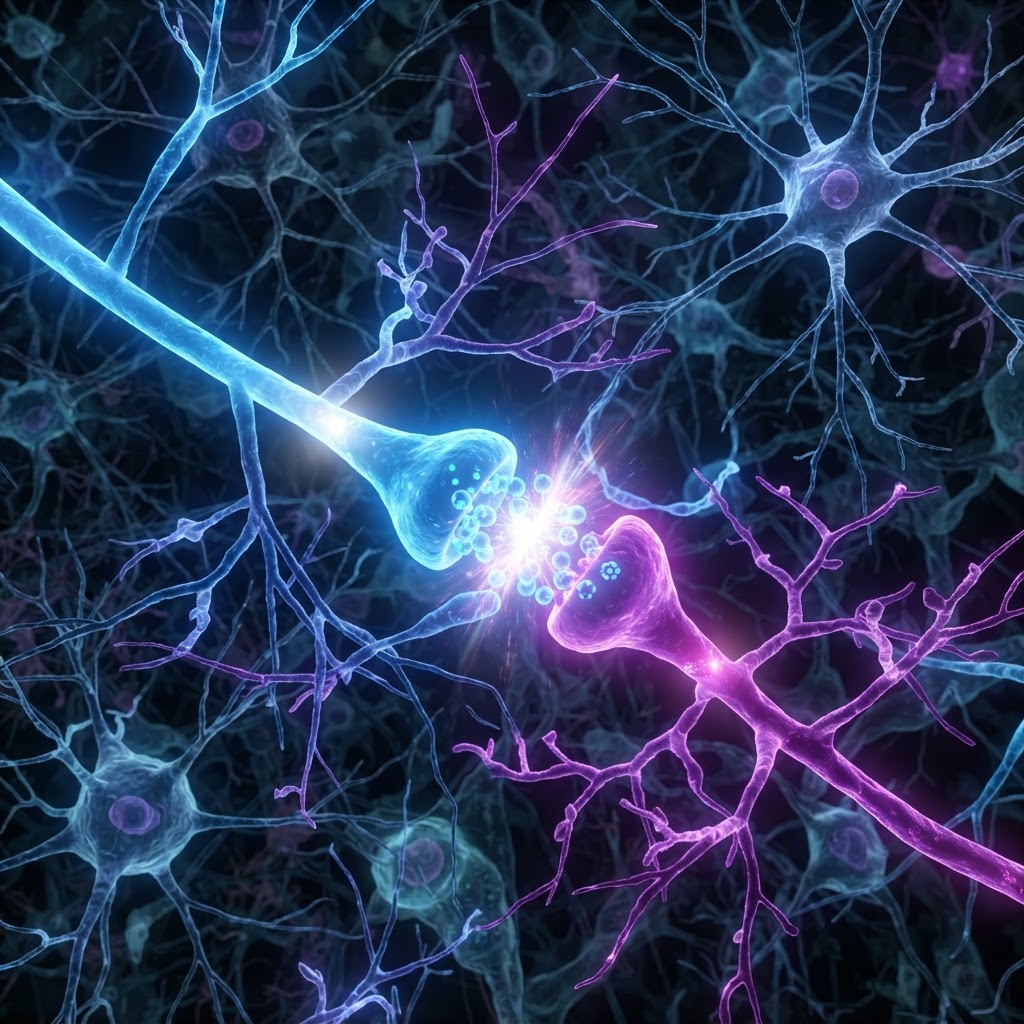
Donald Hebb’s 1949 aphorism — often shortened to “cells that fire together wire together” — was not a lab result but a theoretical proposal: a simple rule for how experience could sculpt synapses to form memory and behavior. Today that idea is no quaint relic. It sits at the heart of modern cellular neuroscience, has inspired precise synaptic rules in the lab, and frames active debates about how brains remain stable while remaining plastic.
From idea to measurable mechanism
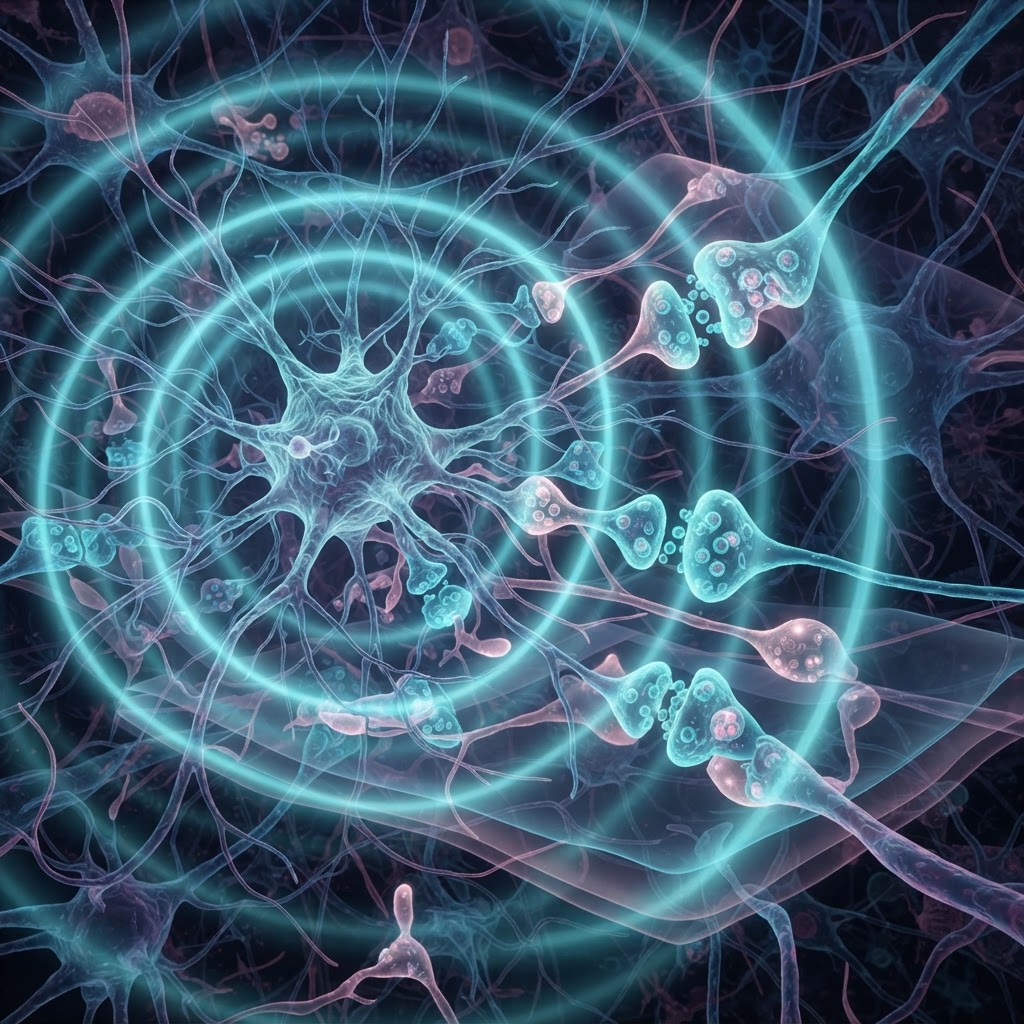
Hebbian plasticity matured into experimentally testable concepts in the 1990s and 2000s with the discovery of spike-timing-dependent plasticity (STDP). STDP shows that the relative timing of pre- and postsynaptic spikes determines whether a synapse strengthens or weakens — exactly the time-sensitive refinement Hebb anticipated. Reviews such as Caporale & Dan (2008) synthesized decades of electrophysiology showing how milliseconds matter for synaptic sign and magnitude.
At the same time, molecular and imaging advances revealed how plasticity is localized and gated. Work on synaptic tagging and capture and on dendritic branch-specific protein synthesis has shown that Hebbian changes can be both highly local and yet consolidated by cell-wide processes — a cellular compromise between precision and permanence.
Where contemporary experiments have pushed Hebb forward
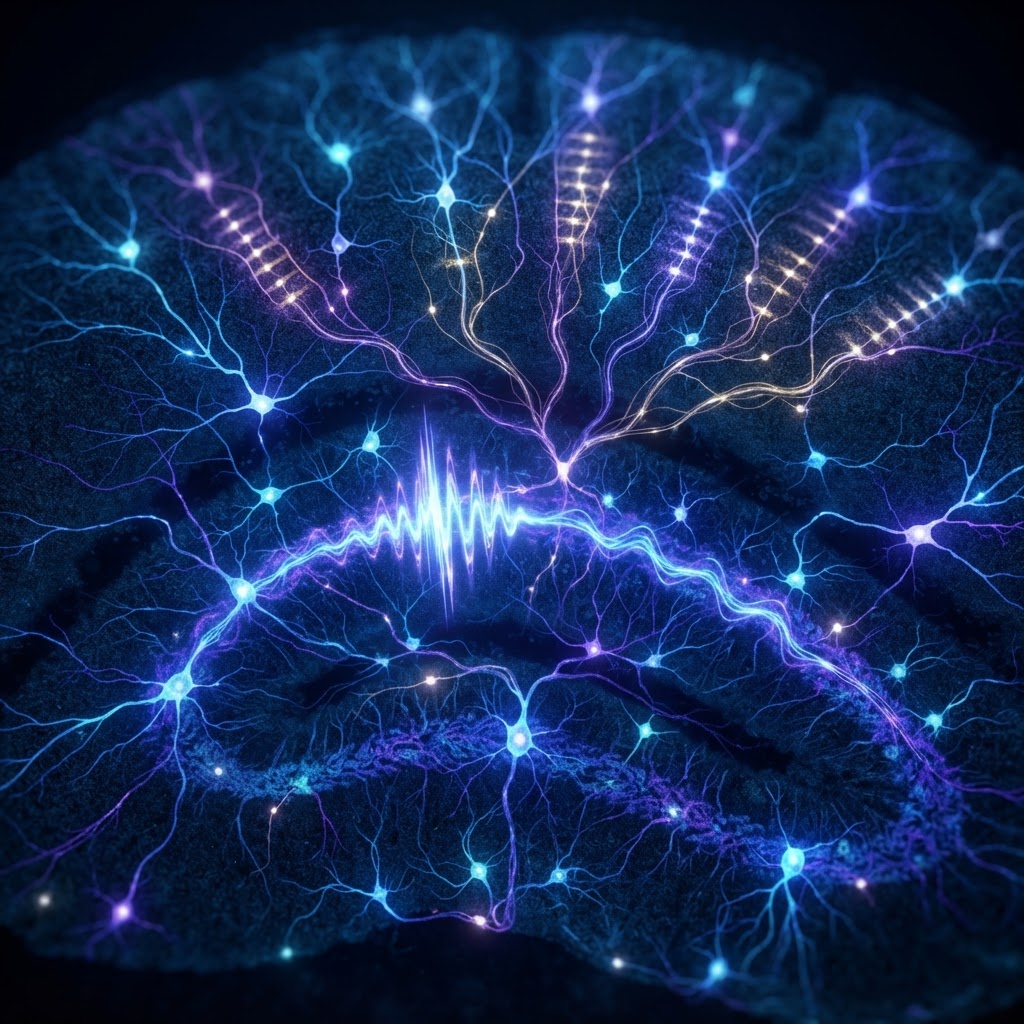
- Dendritic computation: Dendrites can generate local spikes and amplify coincidences, making Hebbian strengthening branch-specific rather than uniformly distributed across a neuron.
- Synaptic clustering: Active synapses tend to cluster on branches, increasing the impact of coordinated inputs and supporting memory traces at a subcellular scale.
- Engrams and behavior: Optogenetic tagging of ensembles in rodents links synaptic potentiation to recallable memories, closing the loop from Hebbian plasticity to animal behavior.
The tensions that keep the rule alive as a research program
Hebb’s rule is not a complete account. A purely Hebbian amplifier would destabilize circuits: small potentiations cascade to runaway excitation. Modern neuroscience recognizes that homeostatic mechanisms — synaptic scaling, inhibitory plasticity and neuromodulatory gating — are essential complements that constrain and shape Hebbian change. Gina Turrigiano and others have framed this as a dialectic: Hebbian learning creates specificity; homeostasis preserves stable function.
Moreover, the brain’s need to learn sequences, generalize across contexts, and integrate reward signals requires extensions to the canonical Hebbian formulation. Dopamine-dependent plasticity, heterosynaptic changes, and structural remodeling of spines add computational richness beyond the original rule.
Why this matters now
Hebbian principles have left the lab and entered engineering. Neuromorphic chips and unsupervised learning algorithms adopt local, biologically inspired updates that are energy-efficient and robust. Clinically, understanding Hebbian and anti-Hebbian dynamics helps explain maladaptive plasticity in chronic pain, addiction, and epilepsy, suggesting targeted interventions.
What’s next
The current frontier is integration: mapping Hebbian-like molecular cascades to dendritic computations and to systems-scale circuit dynamics during naturalistic behaviour. Advances in large-scale imaging, molecular profiling, and closed-loop perturbations mean we can now ask not only whether synapses change with experience, but precisely how those changes build persistent, flexible memories.
Hebb’s rule remains a guiding hypothesis — elegant, local, and imperfect — whose imperfections are as productive as its successes. Neuroscience today is less about proving Hebb right or wrong than about articulating the network of mechanisms that realize, constrain, and exploit Hebbian learning in real brains.