Overview
Autonomic shifts—rapid changes in the balance between sympathetic and parasympathetic tone—are a normal feature of daily life. Yet a growing body of clinical reports and mechanistic studies shows that when those physiological changes are misinterpreted by the brain, relatively benign signals can become the seeds of persistent symptoms: panic attacks, breathlessness, dizziness, functional neurological symptoms, and a substantial portion of the disability seen after viral illness, including long COVID.
What the reports show
Clinical teams and researchers over the past several years have documented two linked phenomena. First, various conditions—orthostatic intolerance, postural orthostatic tachycardia syndrome (POTS), post-infectious autonomic neuropathies, and episodes of acute stress—produce measurable autonomic shifts: heart rate perturbations, blood pressure lability, altered skin conductance, and respiratory irregularities. Second, many patients experience a mismatch between the objective signal and their subjective interpretation of it. In practice this looks like a transient tachycardia interpreted as an oncoming heart attack, or mild hypoventilation perceived as suffocation.
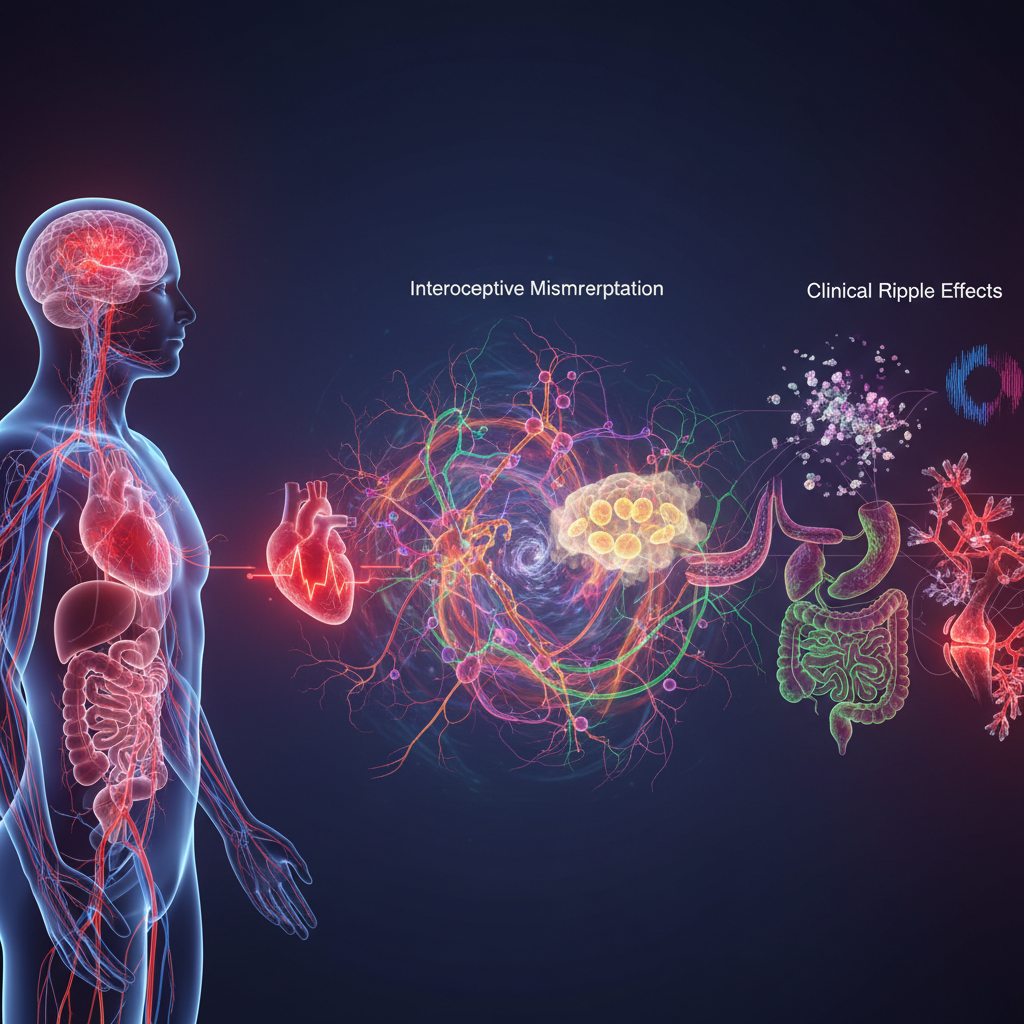
Why it matters: the misinterpretation (sometimes called interoceptive misattribution or interoceptive inference error) can drive sustained anxiety, hypervigilance, and maladaptive behaviors (avoidance, overbreathing, excessive checking) that perpetuate symptom cycles even after autonomic markers return to baseline.
Mechanisms—what current science suggests
There are three converging explanatory strands.
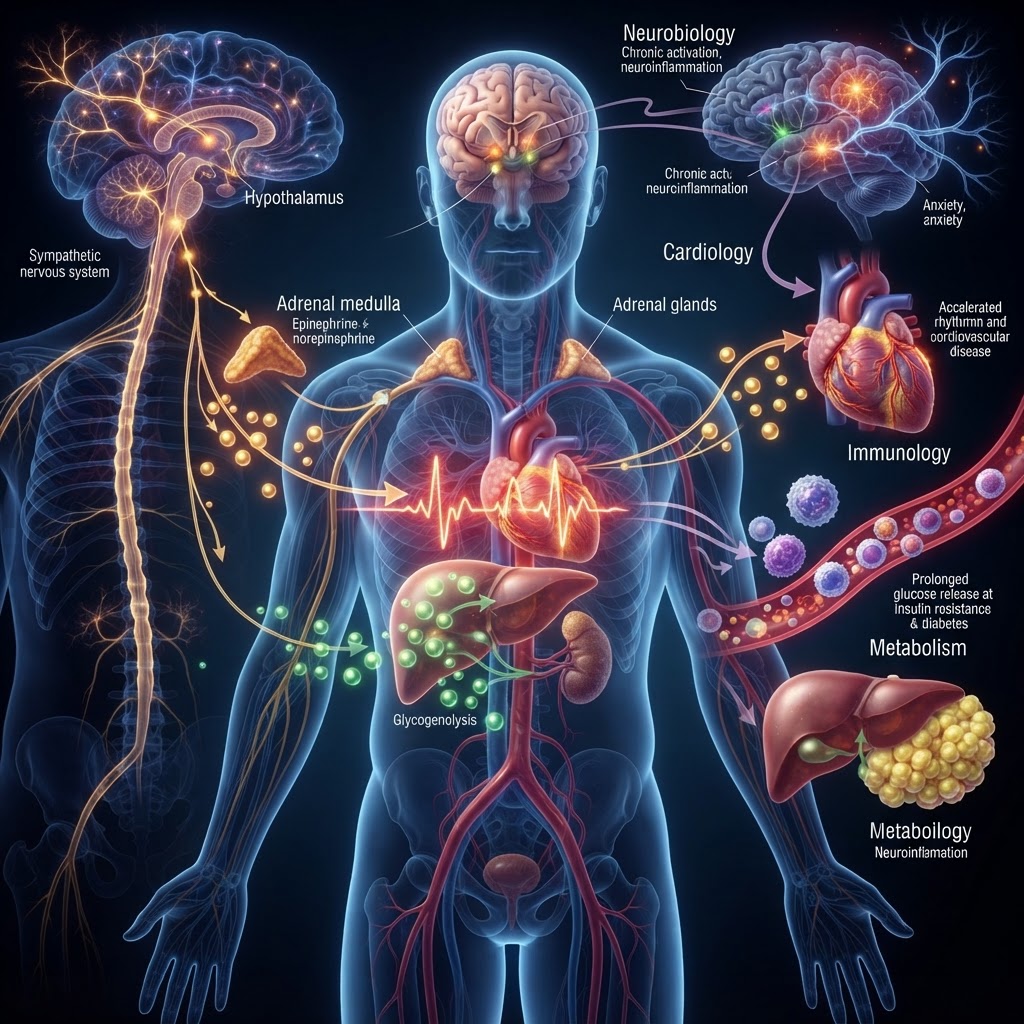
1) Signal inputs: Peripheral autonomic changes provide the raw data—heartbeats, baroreceptor signals, stretch receptor feedback from lungs and blood vessels. These are modulated by illness, deconditioning, medication, and viral injury to autonomic fibers.
2) Central processing: Contemporary models frame perception of internal states as a process of prediction and inference. The brain constructs expectations about bodily states and compares incoming signals to those predictions. When prediction errors are large, attention and affective systems amplify the signal. Work in computational psychiatry positions many somatic syndromes as failures of interoceptive inference: either excessive precision of prior beliefs (catastrophic expectations) or excessive precision of noisy sensory evidence.
3) Behavioral and physiological feedback: Once a bodily sensation is tagged as threatening, autonomic arousal increases further—creating a positive feedback loop. This loop explains how a transient tilt-table–induced heart rate rise can escalate into a full-blown panic episode in susceptible people.
Clinical contexts and recent findings
Several areas bring this interplay into sharp relief:
Long COVID and post-infectious syndromes: Reports and cohorts studying post-viral disability repeatedly highlight autonomic dysfunction (labile heart rate, orthostatic intolerance) co-occurring with breathlessness, palpitations, and cognitive fog. A significant fraction of these patients show discordance between autonomic testing and symptom severity, pointing to a central amplification component.
Functional somatic disorders and panic disorder: Controlled studies indicate many patients have heightened interoceptive sensibility (they notice bodily changes) but diminished interoceptive accuracy (they misidentify what those changes mean). That dissociation predicts poorer outcomes unless specifically addressed.
Performance and elite athletes: Autonomic variability is also central to performance. Adaptive autonomic shifts facilitate mobilization and recovery, but misread signals—for example, interpreting normal pre-competition sympathetic tone as pathology—can impair focus and trigger maladaptive strategies (overtraining, avoidance).
Interventions and practical implications
Interventions now fall into three pragmatic buckets: improve signal accuracy, recalibrate priors, and modulate autonomic tone.
Signal training—biofeedback and heart-rate variability (HRV) training—helps people develop a more veridical mapping between sensation and physiology. Studies report improved symptom tolerance and reduced panic frequency with structured HRV biofeedback.
Recalibration—psychotherapies that use interoceptive exposure and cognitive reappraisal (forms of CBT and targeted somatic therapies) reduce the catastrophizing interpretations that assign threat value to innocuous sensations.
Autonomic modulation—breathing retraining, graded exercise for deconditioning, and, in select cases, neuromodulation (noninvasive vagus nerve stimulation) and pharmacologic stabilization—can blunt the magnitude of autonomic perturbations and lower the chance of misinterpretation loops forming.
What remains unresolved
Key open questions include which patients benefit most from which combination of approaches, the durability of retraining effects, and the molecular or neural markers that reliably dissociate peripheral autonomic dysfunction from central amplification. There is also an urgent translational gap: many front-line clinicians lack rapid, practical protocols to identify interoceptive misinterpretation and to integrate simple biofeedback or interoceptive exposure into routine care.
Takeaway
Autonomic shifts are common; interpretation matters. The recent surge in clinical reports—accentuated by long-COVID cohorts—highlights the need to treat both the body and the brain. Practical, evidence-informed approaches that combine physiologic stabilization with targeted cognitive and interoceptive training can reduce symptom burden and stop harmless autonomic fluctuations from becoming chronic sources of disability.