Legacy of a single phrase
When Walter B. Cannon coined the image of “fight-or-flight,” he gave clinicians and scientists a compact model for how organisms respond to acute threat: rapid sympathetic activation, adrenal secretion of epinephrine, cardiovascular and metabolic shifts that prioritize immediate survival. That conceptual engine—simple, evocative, and measurable—has become one of medicine’s working metaphors for stress physiology.
From acute reaction to chronic risk
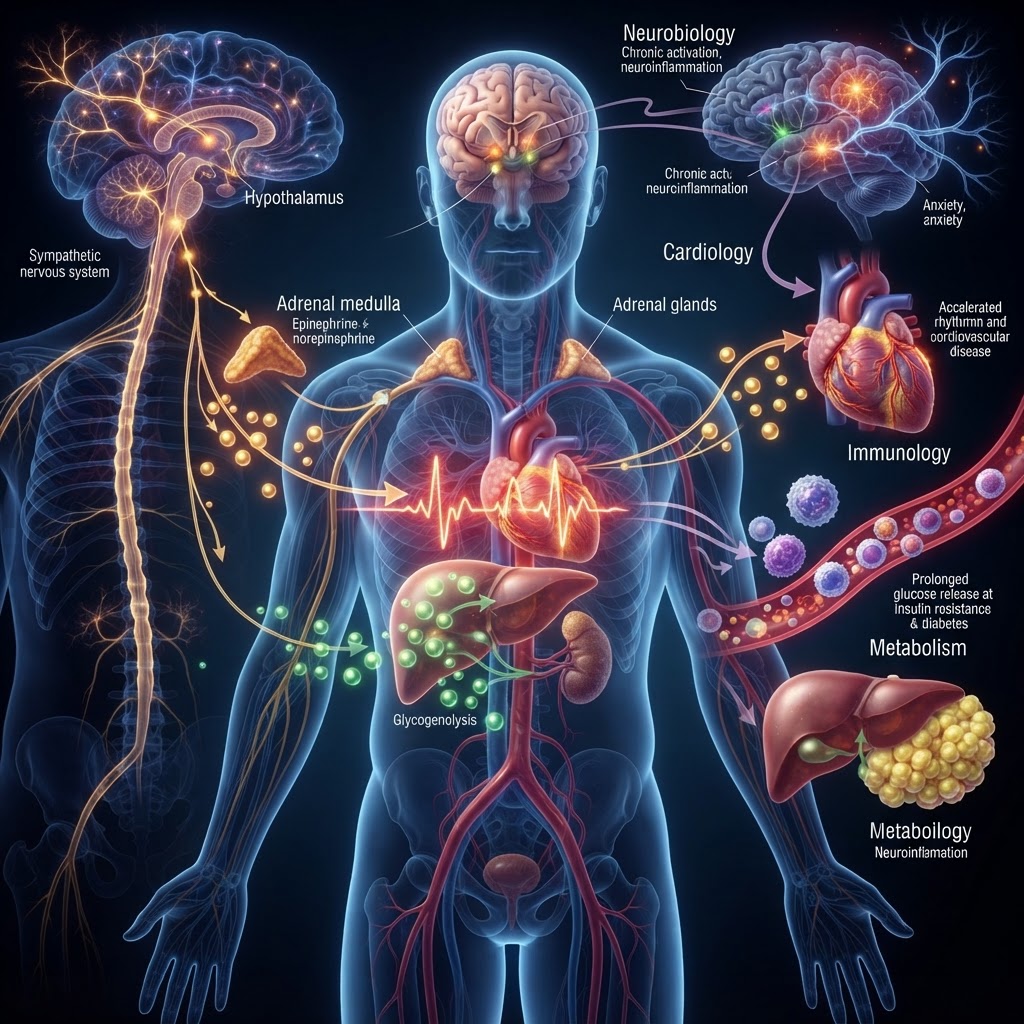
Cannon’s work remains foundational: the sympathetic‑adrenal‑medullary (SAM) axis he described explains why heart rate, blood pressure and glucose rise seconds after danger. But translating those acute mechanisms into the chronic diseases that dominate modern health care required new ideas. Over the last three decades researchers introduced allostasis and allostatic load to describe how repeated or prolonged activation of stress systems remodels biology—promoting inflammation, metabolic dysfunction and vascular injury.
That conceptual shift is not academic. Contemporary epidemiology links cumulative stress exposure and dysregulated stress physiology to hypertension, type 2 diabetes, depression, PTSD and poor outcomes after infection. Biomarkers rooted in Cannon’s physiology—heart‑rate variability, catecholamine levels, and cortisol dynamics—are now evaluated as predictors of perioperative risk, ICU outcomes, and long‑term cardiometabolic trajectories.
What modern science has added
- Neural circuit precision: neuroimaging and optogenetics have resolved discrete hypothalamic, brainstem and limbic nodes that gate sympathetic and HPA outputs—revealing parallel programs, not a single on/off switch.
- Sex and context matter: the “fight‑or‑flight” shorthand underplayed nuanced, sex‑dependent responses. Work on “tend‑and‑befriend” and social buffering shows variation in behavioral and physiological strategies for threat.
- Bidirectional biology: immune signaling modulates neural stress circuits; inflammation feeds back to alter autonomic tone and HPA secretion, a loop relevant to sepsis, autoimmune disease and post‑infectious syndromes.
Clinical relevance now
Modern clinicians deploy Cannon’s ideas in concrete ways: beta‑blockers and alpha‑adrenergic agents blunt maladaptive sympathetic surges in trauma and cardiac care; heart‑rate variability and wearable sensors are being trialed as prognostic tools; vagal‑nerve stimulation and biofeedback target autonomic balance as treatment adjuncts in depression, epilepsy and inflammatory disease. Stress physiology is also central to public‑health conversations about how social disadvantage becomes biological disadvantage.
Where the debate still is
Two active debates frame current research. First: how to move beyond descriptive biomarkers to causal, actionable pathways—distinguishing adaptive acute responses from the specific biological changes that cause disease. Second: how to personalize interventions given wide interindividual variability in stress responsivity shaped by genes, early life, and social context.
Conclusion
Walter Cannon gave modern medicine a parsimonious, testable model. A century on, that model is both validated and complicated. The fight‑or‑flight narrative still orients urgent clinical decisions, but the next advance will come from integrating circuit‑level neuroscience, immune dynamics and social determinants to predict who will recover from a surge and who will pay a long‑term price.