Executive snapshot
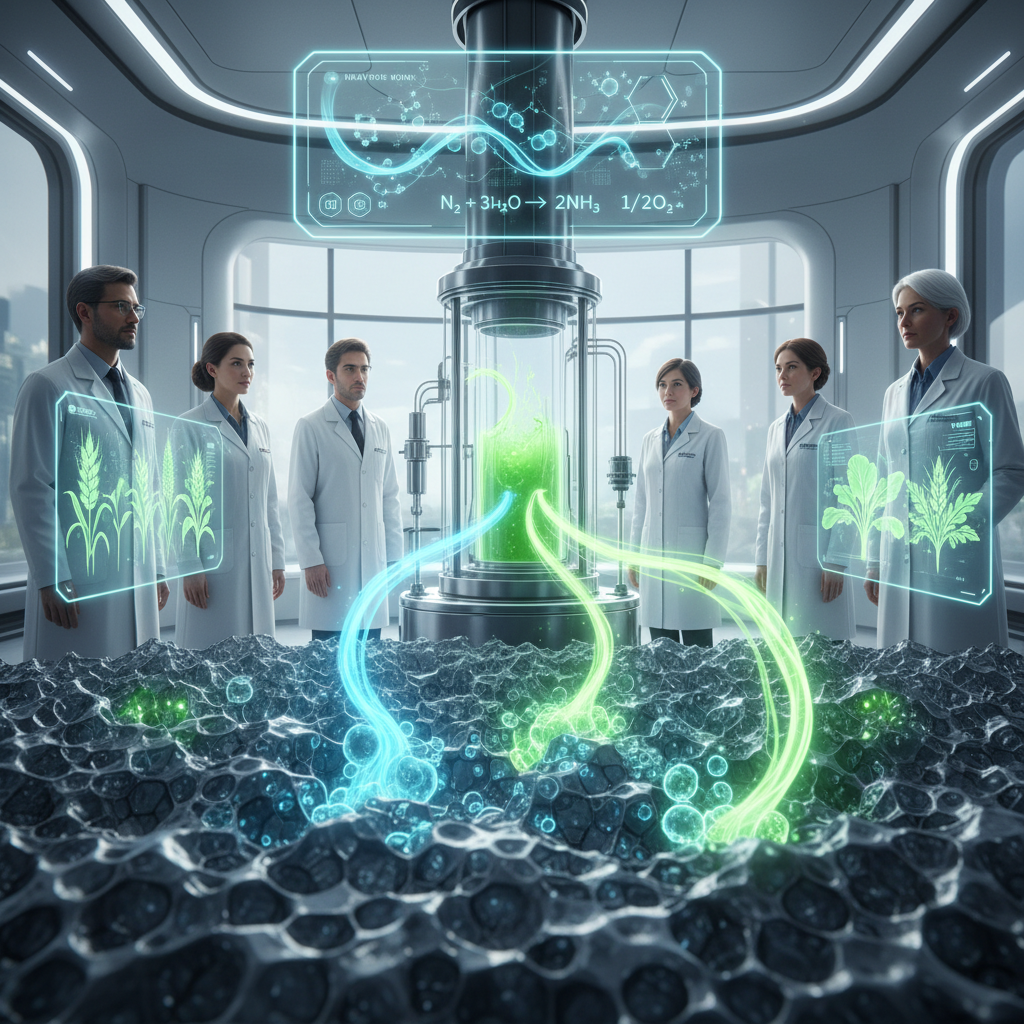
Researchers are converging on multiple non‑Haber strategies to produce reactive nitrogen for agriculture: electrochemical conversion of dinitrogen to nitrate or organo‑nitrogen compounds, lithium‑mediated nitrogen reduction to ammonia in nonaqueous cells, plasma‑assisted fixation, and engineered biological routes. Several recent studies report improved selectivity and mechanistic control, but none yet combine the yield, energy efficiency and robustness required for rapid industrial replacement of ammonia synthesis.
What “ammonia‑free” means—and what it does not
Ammonia‑free fertilizer production is frequently described in press as a single technology that will instantly replace the century‑old Haber‑Bosch plant. That is a misconception. In practice the term covers multiple pathways that avoid using Haber‑Bosch ammonia as an intermediate—for example direct electrochemical production of nitrate, synthesis of nitrogen‑rich polymers and organics, or formation of stabilized nitrogen salts. All of these still require energy to break N≡N and to place nitrogen in a plant‑available form; they differ in intermediates, efficiencies and environmental outcomes.
Why electrochemical approaches attract attention
Electrochemistry promises on‑demand, modular, and electrified nitrogen conversion that can be paired with renewables. Two strands dominate current work:
1) Electrochemical N2 reduction (NRR) to ammonia or other reduced N products. This field explores catalysts that adsorb and activate N2 at ambient conditions. Progress in catalyst design—single‑atom sites, transition‑metal nitrides, and tailored defect chemistries—has improved mechanistic understanding. But aqueous NRR competes strongly with the hydrogen evolution reaction (HER), and low N2 solubility limits current densities.
2) Electrochemical oxidation pathways to nitrate/nitric acid or direct synthesis of nitrogen‑containing organics. Rather than producing ammonia and then oxidizing it, some teams are directly electrochemically oxidizing ambient nitrogen (via NOx intermediates) or reducing oxidized nitrogen to nitrate in controlled cells. These routes can produce plant‑available nitrate without the ammonia intermediate and may sidestep some handling issues, but they raise their own selectivity and energy‑cost questions.
Recent advances to watch
Over the past 2–3 years, papers have reported improved selectivity and mechanistic clarity using:
- Non‑aqueous, lithium‑mediated cells that sustain higher Faradaic efficiencies in lab demonstrations by decoupling proton sources and tuning lithium chemistry.
- Single‑atom and defect‑rich catalysts that show enhanced N2 adsorption and lower activation barriers in model systems, helping to suppress HER in carefully designed electrolytes.
- Electrochemical cells and membrane architectures that pull NOx from air and convert it to nitrate/nitric acid with improved energy intensity, enabling localized production of nitrate fertilizers.
- Hybrid systems that combine plasma activation of N2 with electrochemical steps to lower overall energy per fixed N atom.
These developments represent important scientific steps. Yet they are still frequently demonstrated at low current densities (often < 10 mA cm−2), short durations, and under conditions that are difficult to scale without performance loss.
Mini deep dive: why electrochemical NRR is hard
At the heart of electrochemical nitrogen reduction are three intertwined challenges:
Thermodynamics and kinetics: Breaking the N≡N bond requires high activation energy. Catalysts must bind N2 strongly enough to activate it, but not so strongly that intermediates are trapped.
Competing reactions: In aqueous media, protons and water provide facile pathways for hydrogen evolution, a parasitic reaction that consumes electrons and reduces apparent selectivity to nitrogen products. Many reports that claim NRR must be scrutinized for ammonia contamination from air, glassware, or reagents.
Practical metrics: Research uses three metrics that decide viability—Faradaic efficiency (fraction of electrons producing the desired N product), ammonia (or product) yield rate (mass produced per area per time), and energy efficiency (kWh per kg‑N). For agricultural deployment, targets are an order of magnitude beyond current best lab numbers: sustained current densities >100 mA cm−2, Faradaic efficiencies in the tens of percent at least, and energy costs competitive with or lower than decentralized Haber‑Bosch with green H2.
Clarifying common misconceptions
1) "A single lab result equals a commercial breakthrough." Not yet. Many reports use idealized cells, short runs, or non‑standard controls. Reproducibility and long‑duration tests are essential.
2) "Ammonia‑free automatically equals lower emissions." Ammonia‑free paths can reduce dependence on centralized steam‑reforming H2, but lifecycle emissions depend on where electricity comes from, the energy intensity of the new process, and downstream fertilizer behavior (volatilization, nitrification rates).
3) "Direct N2→fertilizer bypasses environmental impacts." Different nitrogen species have different soil fates; replacing ammonia with nitrate or novel organics changes leaching, denitrification and N2O emission profiles—these ecological consequences must be measured.
Where the field should go next
Answering two questions will determine impact: can lab demos be translated to sustained, high‑current operation with real feedstocks (air, seawater) and can lifecycle analyses demonstrate climate and ecological benefits? That requires standardized protocols, stress‑testing, and early pilot plants that connect electrochemical reactors to fertilizer distribution/use trials.
Bottom line: Recent work has moved ammonia‑free fertilizer production from speculative to experimental plausibility. Electrochemical methods offer flexibility and synergies with renewables, but the path to replacing global Haber‑Bosch infrastructure is neither fast nor guaranteed. The next five years will test whether the field can transform promising mechanistic advances into engineered, low‑cost, and ecologically sound fertilizer manufacturing.