Introduction — an ancient intuition made biological
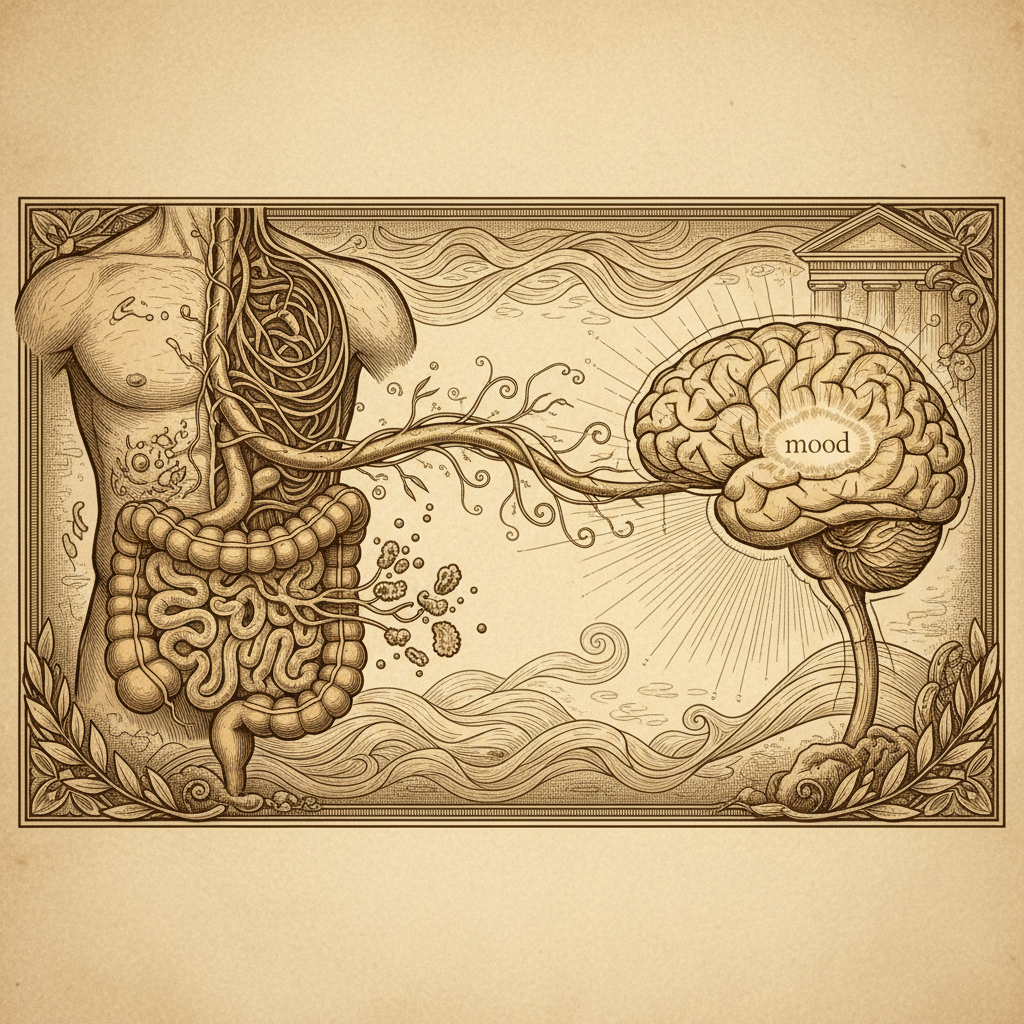
For millennia physicians and laypeople have spoken of "gut feelings." Hippocrates himself is often paraphrased as saying all disease begins in the gut; the sentiment endured even as nineteenth‑century physiology turned metaphor into mechanism. Today we can map that intuition onto a concrete biological axis: visceral sensory fibers of the vagus nerve carry a torrent of information from the gastrointestinal tract to brainstem nuclei, and through them to emotion circuits in the limbic system. The result is a rewiring of how we understand mood, stress and even psychiatric disease.
Key figures on the road to discovery
The story is cumulative. In the mid‑1800s anatomists such as Leopold Auerbach and Georg Meissner described the enteric plexuses that earned the gut its nickname, "the second brain." Ivan Pavlov’s meticulous studies of digestion and conditioned reflexes framed the gut as a dynamic, neural organ. In the late twentieth century Michael D. Gershon gave the enteric nervous system its modern manifesto with The Second Brain, emphasizing autonomy and local neurotransmitters.
Two modern threads converged to make the vagus central. Kevin Tracey’s work on the "inflammatory reflex" showed that vagal efferents modulate systemic inflammation — a bridge to mood via immune signaling. Parallel work in psychobiotics led by researchers such as John F. Cryan and Ted Dinan demonstrated that gut microbes could alter behaviour in rodents and that many of those effects depended on an intact vagus. Their 2011 study showing that a strain of Lactobacillus changed anxiety‑like behaviour via vagal pathways became a watershed moment: the microbiome could influence the brain, and the vagus was the conduit.
Mechanisms: how vagal afferents translate gut state into mood
Vagal afferents detect mechanical stretch, nutrients, hormones and immune mediators through a diverse palette of receptors. Signals enter the nucleus tractus solitarius (NTS) in the medulla and rapidly reach the parabrachial nucleus, hypothalamus, amygdala and insular cortex — nodes central to interoception and affect.
Key modalities include:
- Neural reflexes: mechanoreceptors and chemoreceptors on vagal endings fire in response to luminal distension, acidity and peptides.
- Endocrine cross‑talk: enteroendocrine cells release hormones such as CCK and GLP‑1 that activate vagal afferents.
- Immune signaling: cytokines modulate vagal firing and, conversely, efferent vagal activity restrains inflammation (the inflammatory reflex).
- Microbial metabolites: short‑chain fatty acids, tryptophan metabolites and other microbial products influence vagal tone either directly or via enteroendocrine and immune intermediaries.
The net effect is that peripheral states — from satiety to dysbiosis and gut inflammation — alter central neurotransmitter systems (including GABA, noradrenaline and serotonin pathways) and thus mood and stress reactivity.
Why this was revolutionary
Two conceptual shifts followed. First, mood and affect are not brain‑only phenomena but embodied states shaped by continuous peripheral signaling. Second, non‑neuronal elements — microbes and immune molecules — are legitimate actors in neuropsychiatry. That reframing opened new therapeutic vistas: vagus nerve stimulation (VNS) for refractory depression, transcutaneous VNS devices, anti‑inflammatory approaches to mood disorders, and the emergent field of psychobiotics.
Where we are now and why it matters
Clinically, VNS is an established adjunct for treatment‑resistant depression and epilepsy; more recent noninvasive methods are under investigation for anxiety and PTSD. Heart‑rate variability, a proxy for vagal tone, is increasingly used as a biomarker linking physiological resilience to mental health. At the bench, human microbiome studies suggest associations between gut communities and depression, though causality remains difficult to prove.
Open questions and the road ahead
Critical uncertainties persist. Which microbial species or metabolites reliably alter mood in humans? How do individual differences in vagal anatomy and receptor expression condition responses? Can we design safe, durable interventions that modulate vagal afferent signaling without unintended systemic effects? Solving these will require rigorous translational studies that integrate neurophysiology, immunology and microbiomics.
Conclusion
The tale of the gut‑brain axis is a reminder that science often rediscovers old wisdom with new tools. From Pavlov’s dogs to modern optogenetics and clinical VNS, the vagus has gone from anatomical curiosity to therapeutic target. Understanding how our guts talk to our brains reframes psychiatric illness as a whole‑body phenomenon — and offers a richer palette of strategies to restore mental health.