Memory is often imagined as a recording: experience enters, is stored, and later played back. Neuroscience has replaced that tidy picture with something more dynamic. Memories are rebuilt, strengthened, and sometimes transformed after the event—especially during sleep and other periods of quiet wakefulness. At the center of this story is one of the brain’s most compact and consequential signals: the hippocampal sharp-wave ripple.
A signal discovered in the laboratory
The hippocampus, a seahorse-shaped structure buried deep in the temporal lobe, had long been linked to memory. The decisive modern turn came through work on animals with hippocampal lesions, including the famous patient H.M., studied by Brenda Milner, William Scoville, and later generations of researchers. H.M. could learn some skills but could not reliably form new conscious memories, revealing that the hippocampus was essential for binding experiences into lasting records.
In the 1950s and 1960s, electrophysiologists began recording the electrical activity of hippocampal neurons. John O’Keefe’s discovery of place cells in the 1970s showed that individual neurons could fire when an animal occupied particular locations. The hippocampus, it seemed, was not merely a passive storehouse: it carried an internal map of experience.
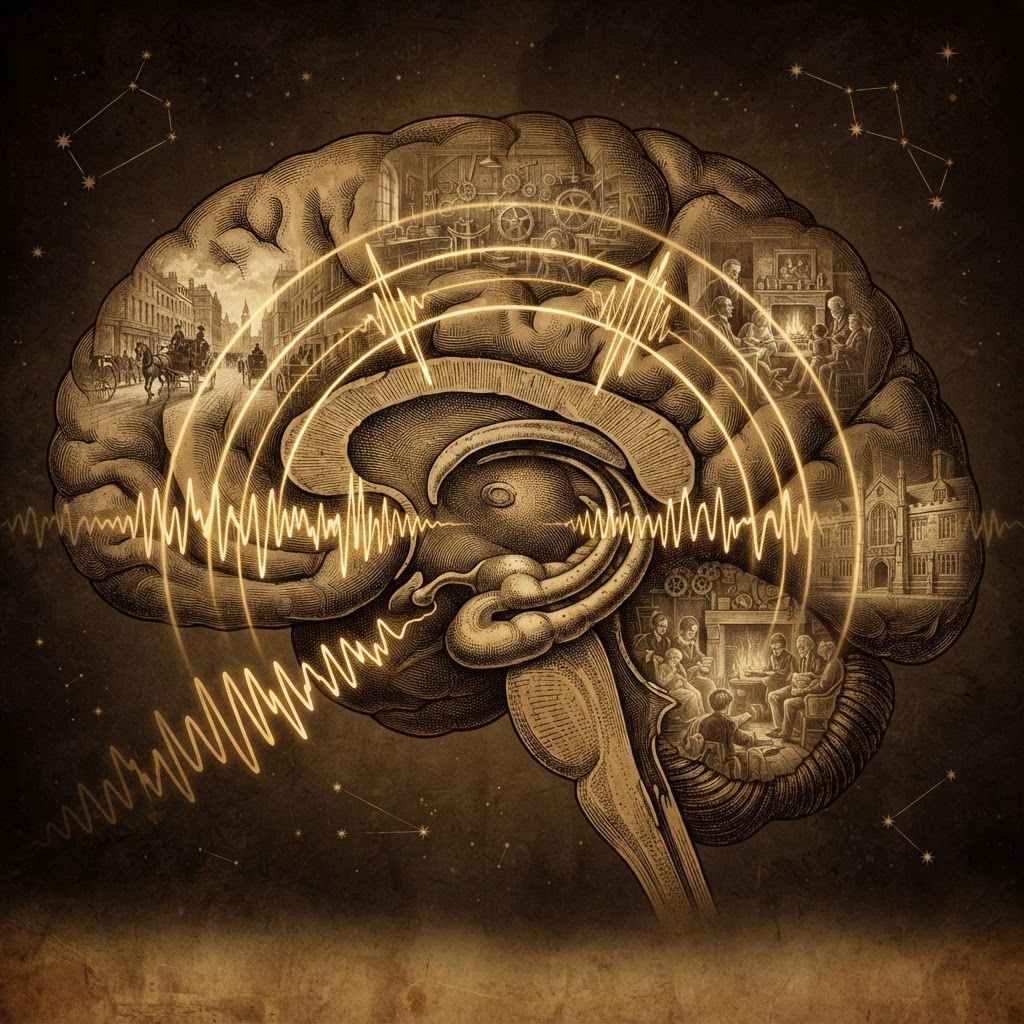
Sharp-wave ripples emerged from this same experimental tradition. During quiet waking and non-REM sleep, the hippocampus produces large, brief electrical deflections called sharp waves, accompanied by high-frequency oscillations known as ripples. A ripple lasts only a fraction of a second, yet hundreds of neurons may participate in a precisely timed burst. The event is a kind of neural punctuation—rare during active exploration, common when the brain is offline.
The brain replays its day
In 1994, Bruce McNaughton and colleagues, building on the work of O’Keefe and others, reported that place-cell sequences observed while rats ran through an environment could reappear during subsequent sleep. The replay was compressed in time: a route that took seconds to travel could be represented in tens or hundreds of milliseconds. These episodes often occurred during sharp-wave ripples.
That finding transformed the meaning of rest. The sleeping brain was not simply disconnected from the world. It was revisiting recent experience, rehearsing relationships among places and events. In some replay events, sequences appeared in reverse order; in others, they anticipated paths the animal would later take. Replay therefore looked less like a literal videotape than like a rapid simulation engine, capable of reconstructing and recombining experience.
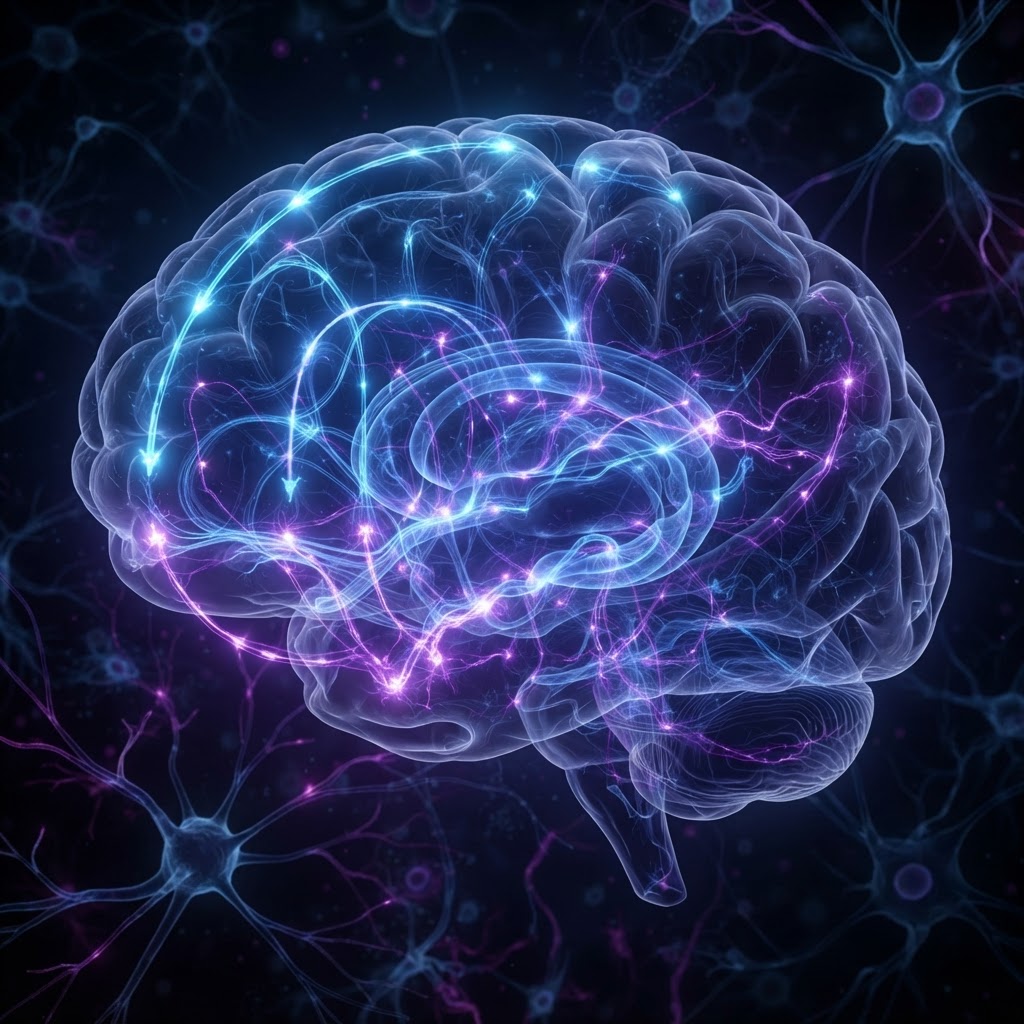
The leading model is that sharp-wave ripples help the hippocampus communicate with widespread cortical networks. During waking life, the hippocampus can rapidly encode the details of an episode, while the neocortex—slower to learn, but more stable and broadly connected—gradually extracts general knowledge. Offline replay repeatedly activates hippocampal representations and their cortical partners. Over time, this dialogue may redistribute memories, integrate them with older knowledge, and make recall less dependent on the hippocampus.
Consolidation is not simply “saving”
This process, known as systems consolidation, is more than transferring a file from one folder to another. Replay can strengthen useful associations, separate similar experiences, and support the discovery of regularities. A maze route may become a navigational map; a single encounter may contribute to a broader concept.
Sleep experiments in humans have added a second layer. Electroencephalography has identified ripple-like high-frequency events in the hippocampus, often coordinated with cortical slow oscillations and sleep spindles. Targeted memory cues presented during sleep can sometimes bias which memories are reactivated. These findings suggest that consolidation depends not only on replay itself, but on its timing within a larger rhythm linking hippocampus, thalamus, and cortex.
Yet caution matters. Much of the most elegant evidence comes from rodents, where place cells and behavior can be measured with exceptional precision. Human hippocampal ripples are harder to record, usually requiring clinical electrodes implanted for epilepsy monitoring. High-frequency activity can also be contaminated by pathological discharges or muscle and electrical artifacts. The basic phenomenon is robust, but its exact causal role remains under active investigation.
From correlation to mechanism
Animal studies have begun to test causality. Disrupting ripple-associated activity can impair spatial learning or memory retention, while artificially coordinating hippocampal and cortical activity can influence consolidation. At the same time, not every ripple is beneficial. Ripples may support learning, planning, and memory integration, but pathological high-frequency events can contribute to epileptic activity. The brain’s most useful rhythms can become dangerous when their timing or circuitry is distorted.
The enduring importance of sharp-wave ripples lies in the question they make visible: how does a transient biological event become a stable personal past? The answer appears to involve repeated, precisely timed reactivation—not passive storage, but nocturnal reconstruction. Each replay is an opportunity to preserve an experience, connect it to prior knowledge, or revise its meaning.
Today, researchers are examining ripple coordination in aging, Alzheimer’s disease, epilepsy, and memory disorders, while computational neuroscientists use replay-inspired algorithms to improve artificial learning systems. The broader lesson reaches beyond the hippocampus. Minds do not learn only when they confront the world. They learn afterward, in the intervals when activity seems to have ceased—when the brain turns inward and quietly practices becoming itself.