A Desperate Surgery, An Irreversible Lesson
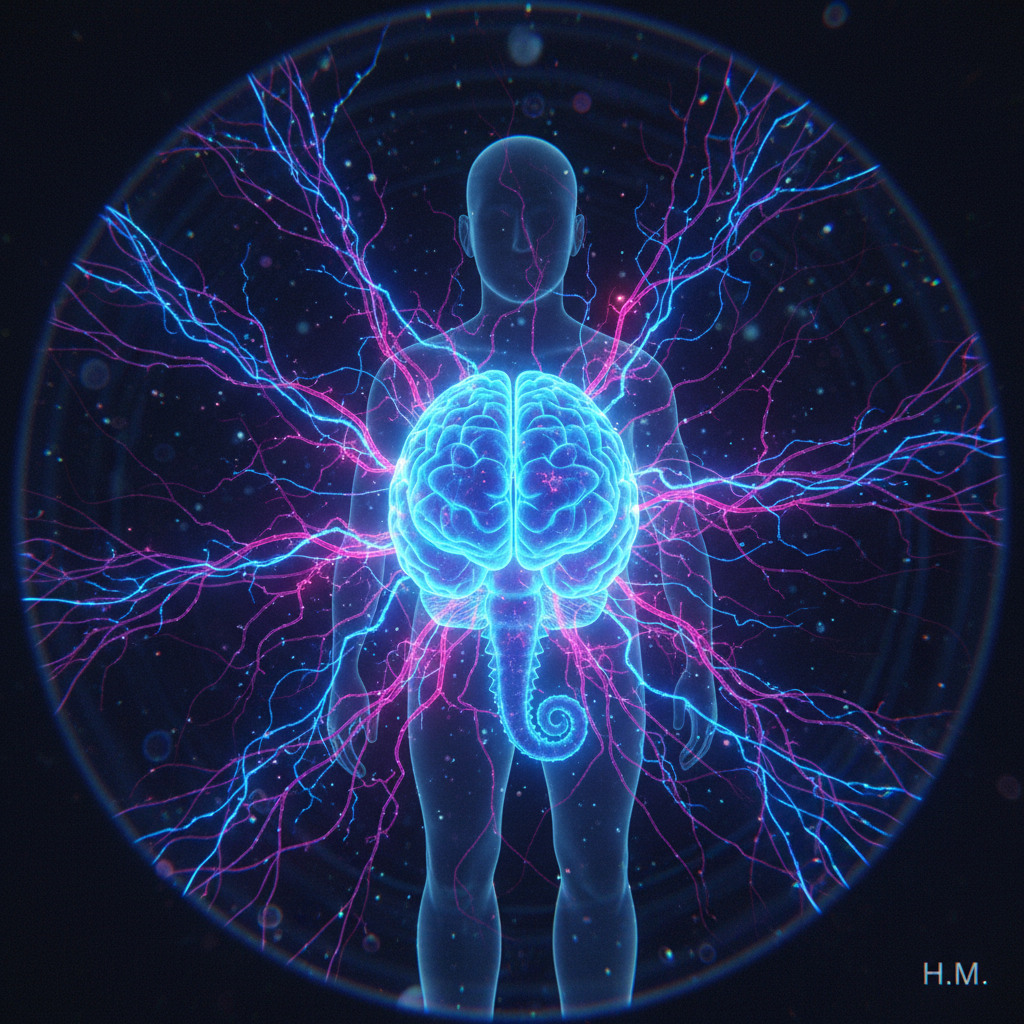
In 1953, a 27-year-old epileptic patient known for decades only as H.M. underwent a radical bilateral medial temporal lobe resection at Hartford Hospital, performed by neurosurgeon William Beecher Scoville. The surgery was a last resort: H.M.'s seizures had become so frequent and so severe—up to eleven major convulsions per week—that normal life was impossible. Scoville removed approximately two-thirds of the hippocampus bilaterally, along with the parahippocampal gyrus, the entorhinal cortex, and the amygdala. The seizures diminished. Something else vanished entirely: Henry Molaison's ability to form new long-term memories.
The deficit that emerged was not a global cognitive collapse. H.M.'s IQ, measured post-operatively by Brenda Milner and her mentor Wilder Penfield at McGill University, was intact—arguably slightly improved, freed from the fog of constant seizure activity. His personality was preserved. His language was fluent. His working memory—the capacity to hold information in mind for seconds to minutes—functioned normally. What was catastrophically absent was the ability to transfer any new declarative experience into durable storage. H.M. could read the same magazine article repeatedly without any sense of recollection. He would meet a researcher daily, only to greet her as a stranger each morning. He lived, as he once poignantly described it, in a perpetual present tense.
Parsing the Amnesia: What H.M. Could and Could Not Do
The neuropsychological dissections conducted by Milner, and later by Suzanne Corkin at MIT over five decades, were as important as the original lesion. They established a taxonomy of memory systems that remains foundational today. H.M.'s amnesia was anterograde—an almost total inability to encode new declarative memories after the surgery. It was also retrograde, but graded: memories from his distant childhood were relatively preserved, while those from the years immediately preceding surgery were heavily degraded. This temporal gradient—older memories surviving better than recent ones—would later be formalized as the standard model of systems consolidation.
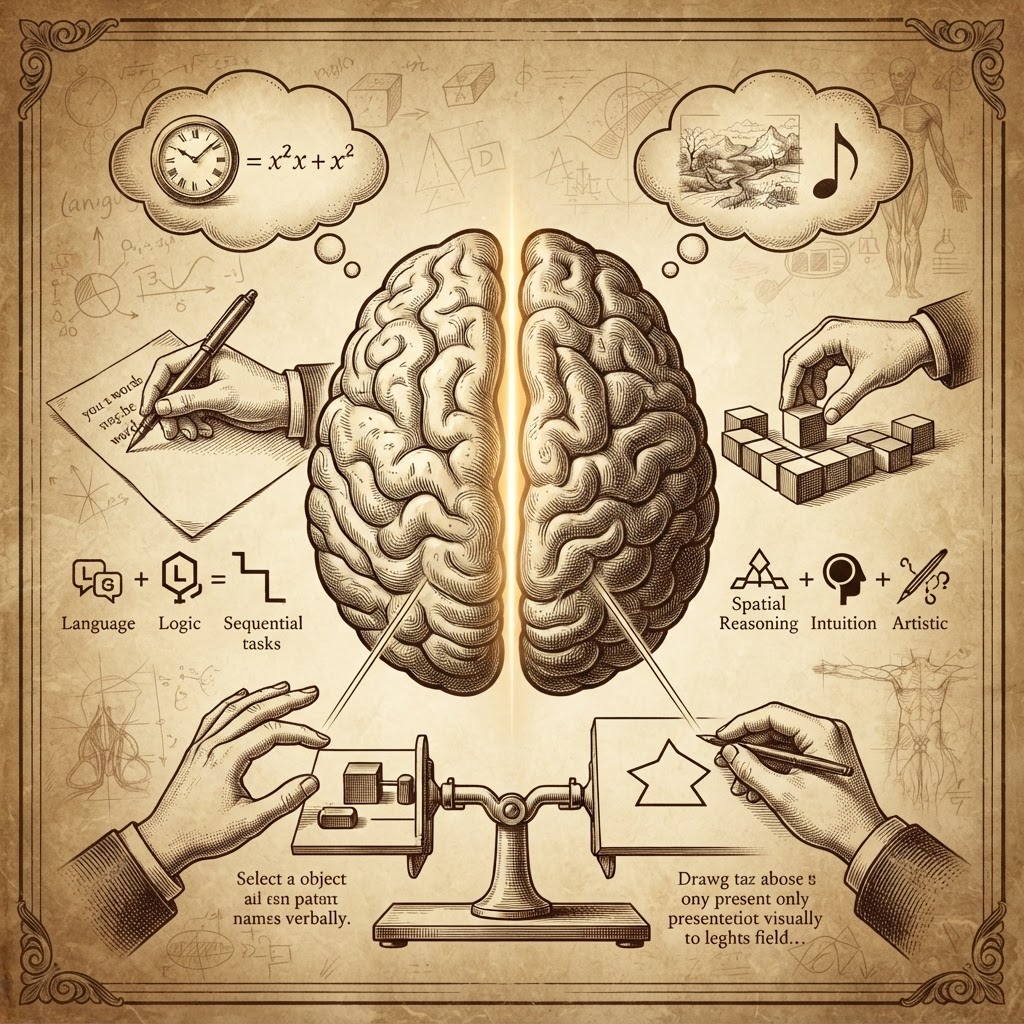
Crucially, H.M. retained intact procedural memory. In a classic series of experiments, Milner demonstrated that H.M. could learn and improve on mirror-drawing tasks—tracing a star while viewing only its mirror reflection—showing measurable skill acquisition across sessions even though each morning he had no episodic memory of having practiced. This dissociation between declarative and non-declarative memory was not merely interesting; it was revolutionary. It proved that memory is not a unitary faculty. It is a collection of computationally and anatomically distinct systems, and the hippocampus is critical for only a subset of them.
Further fractionation came later. H.M. showed intact classical conditioning of the eyeblink reflex (a cerebellar-dependent process) and preserved priming effects (mediated by neocortical regions). What he could not do was consciously recollect any episode, learn new factual knowledge (semantic memory), or navigate novel spatial environments—all capabilities now recognized as hippocampus-dependent.
The Hippocampus as a Relational Binding Engine
What, mechanistically, does the hippocampus contribute that other structures cannot? The dominant computational framework, articulated by Howard Eichenbaum and Neal Cohen among others, is the relational memory theory. The hippocampus does not store memories wholesale; rather, it binds together the distributed cortical representations of an experience—the visual, auditory, olfactory, emotional, and contextual elements—into a coherent, indexable episode. The actual long-term trace is distributed across neocortex; the hippocampus holds the index.
This binding function depends on the hippocampus's unique circuit architecture. The primary input arrives via the entorhinal cortex, which funnels processed multimodal information from association cortices into the hippocampus proper. Within the hippocampus, information flows through a canonical trisynaptic circuit: entorhinal cortex → dentate gyrus → CA3 → CA1 → subiculum → entorhinal cortex. The dentate gyrus performs pattern separation—using sparse coding and neurogenesis in adult mammals to keep similar experiences representationally distinct. CA3, with its rich recurrent collateral network, performs pattern completion—reconstructing a full memory from a partial cue. CA1 integrates the pattern-completed signal from CA3 with direct entorhinal input, acting as a mismatch detector and novelty encoder.
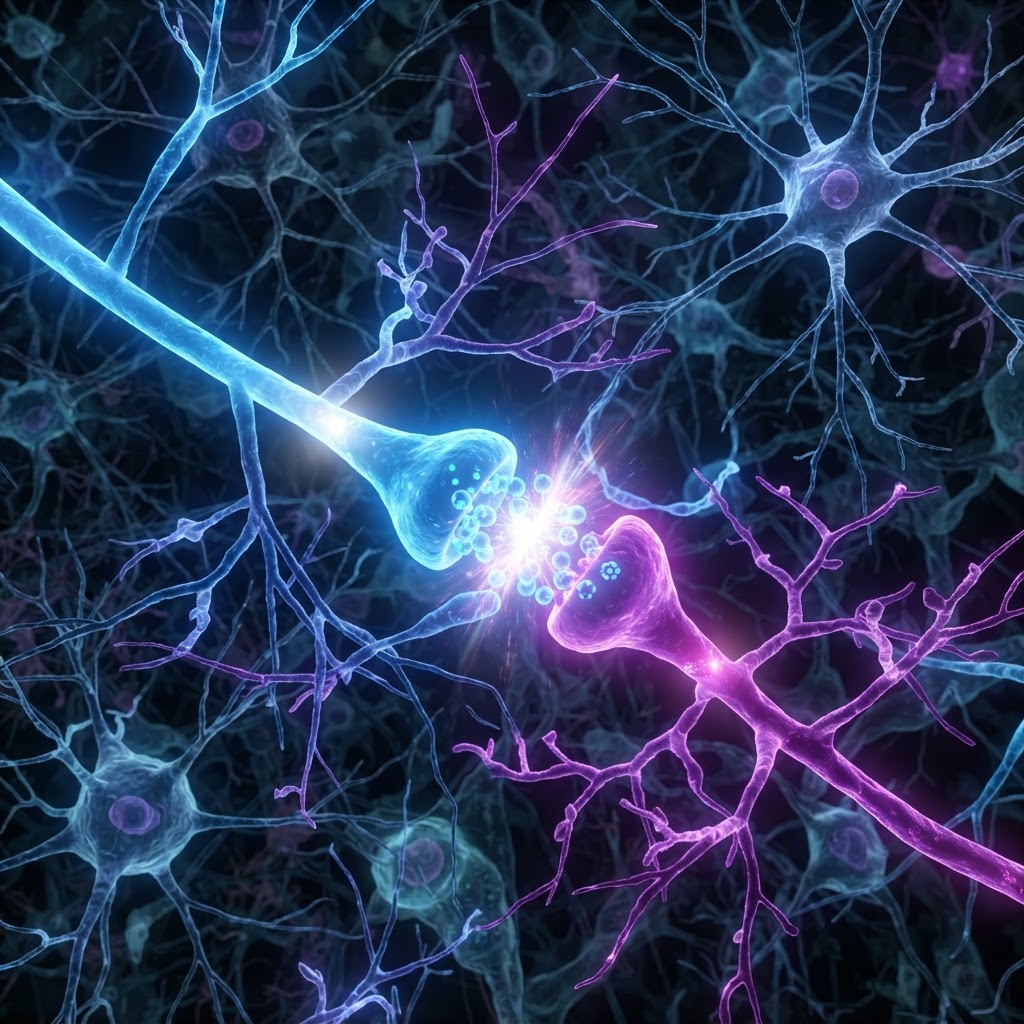
At the synaptic level, long-term potentiation (LTP)—the activity-dependent strengthening of synaptic connections first described by Bliss and Lømo in 1973—is the dominant candidate mechanism for encoding. NMDA receptor-dependent LTP in the Schaffer collateral pathway (CA3→CA1) requires coincident pre- and postsynaptic activity, implementing a Hebbian learning rule with extraordinary biochemical elegance. Disruption of NMDA receptors in CA1 in transgenic mice abolishes spatial memory without impairing motor function—a result that aligned cleanly with H.M.'s human lesion data across a forty-year gap.
Systems Consolidation: The Dialogue Between Hippocampus and Neocortex
H.M.'s graded retrograde amnesia was not merely a clinical curiosity—it was a mechanistic clue. If the hippocampus were the permanent repository of all declarative memories, all retrograde memory should have been equally destroyed. Instead, remote memories survived. This demands an account of how memories migrate.
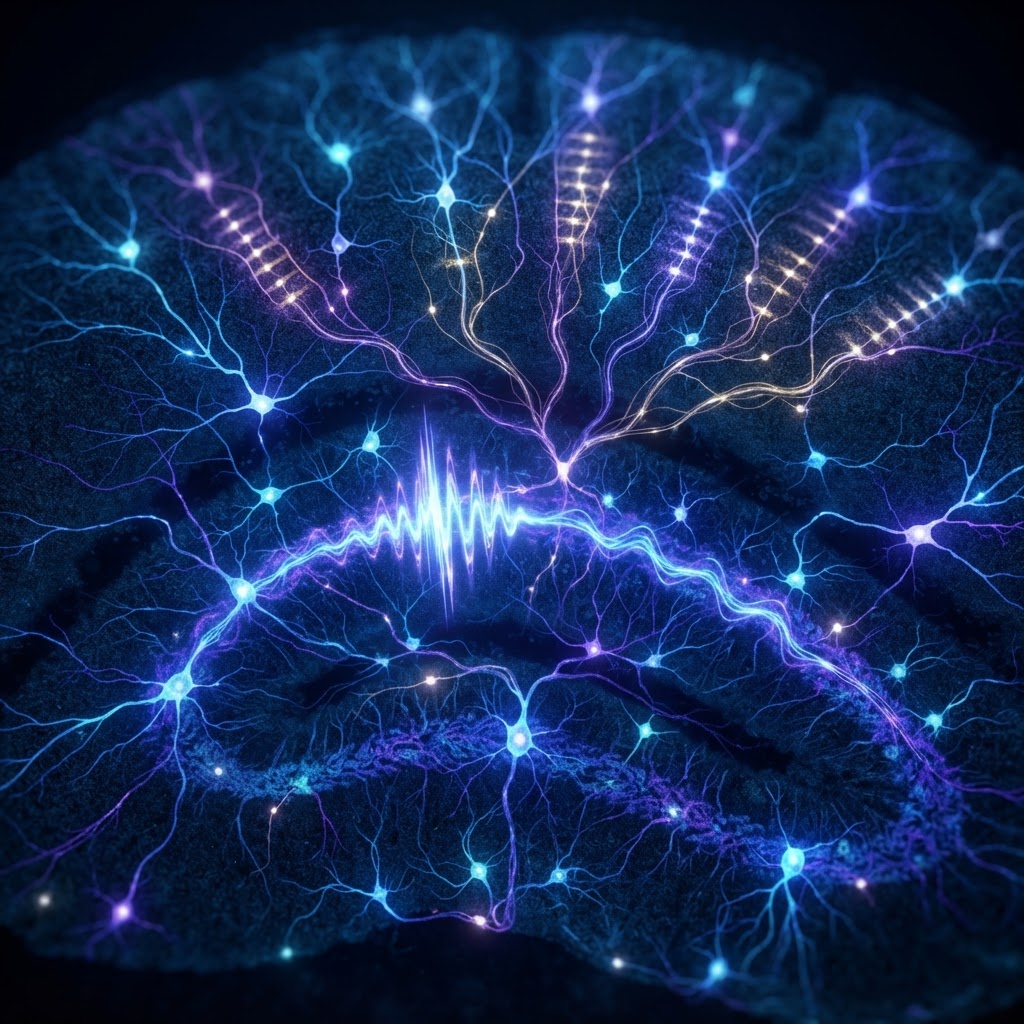
The standard model of systems consolidation, championed by Larry Squire and collaborators, proposes that the hippocampus initially binds a memory but is gradually rendered dispensable as repeated reactivation strengthens direct cortico-cortical connections. During slow-wave sleep, hippocampal sharp-wave ripples (80–120 Hz oscillations) drive coordinated replay of recent experiences to the prefrontal cortex and other neocortical areas, incrementally building a cortical representation that no longer requires hippocampal mediation. The process unfolds over weeks to years in humans.
This model, however, faces a persistent challenger: the multiple trace theory (MTT), developed by Morris Moscovitch and Lynn Nadel. MTT holds that the hippocampus is always required for episodic memories—the rich, contextually detailed recollection of a specific event. What consolidates to neocortex, in this view, is only a schematized, context-free semantic version of the experience. Remote episodic memories should therefore still require hippocampal engagement. Neuroimaging evidence is mixed: some studies show sustained hippocampal activation for remote autobiographical memories; others show its decline. The debate remains genuinely unresolved, and H.M. himself—lacking both recent and remote episodic memory—cannot adjudicate it, since his lesion destroyed both the encoding mechanism and any previously stored hippocampal traces.
Beyond H.M.: Modern Revisions and Ongoing Controversies
The decades since H.M.'s surgery have enormously complicated the original picture. Single-unit recordings in rodents navigating mazes revealed place cells—hippocampal neurons that fire selectively when the animal occupies a specific spatial location, forming a cognitive map (John O'Keefe, 1971). The subsequent discovery of grid cells in the entorhinal cortex (Moser lab, 2005), border cells, and time cells (neurons that encode elapsed time within an episode) has extended the hippocampus's role from episodic binding to a broader spatiotemporal scaffolding function. O'Keefe and the Mosers shared the 2014 Nobel Prize in Physiology or Medicine for this work.
Recent research has also challenged the strict declarative/non-declarative divide. Hippocampal lesions in rodents impair some forms of contextual fear conditioning—a task with procedural-like properties—suggesting the boundary between memory systems is more porous than Milner's original dissection implied. Meanwhile, human fMRI studies using multivariate pattern analysis (MVPA) have revealed that the hippocampus is active during future thinking and imagination, supporting the scene construction hypothesis (Eleanor Maguire and colleagues), which frames the hippocampus as a general engine for constructing coherent mental scenes rather than a dedicated memory archive.
Perhaps most provocatively, the discovery of adult hippocampal neurogenesis—new neurons born in the dentate gyrus throughout life—raises the question of whether new memories require, or are even dependent upon, this ongoing cellular renewal. Studies in rodents link neurogenesis rates to learning efficiency and stress-induced memory impairment, but translating this to humans remains contentious, with some postmortem studies finding negligible adult neurogenesis in the human dentate gyrus and others reporting robust ongoing production.
H.M.'s Legacy and the Road Ahead
Henry Molaison died on December 2, 2008, at the age of 82. Within hours, his brain was transported to UC San Diego, where it was sectioned into 2,401 histological slices and digitized at microscopic resolution by Jacopo Annese's Brain Observatory team—a final contribution from the man who, his entire adult life, had given science far more than science could give back to him.
The open questions his case seeded are still generative. How, precisely, do sharp-wave ripples orchestrate systems consolidation—and can we manipulate them therapeutically to enhance memory or attenuate traumatic encoding? What is the minimal hippocampal circuitry required for episodic binding, and can it be replicated in neural prosthetics? The DARPA-funded work of Theodore Berger on hippocampal memory prostheses—closed-loop devices that read CA3 activity and stimulate CA1 to restore impaired memory encoding in primates and humans with traumatic brain injury—is a direct technological descendant of H.M.'s tragedy.
At a deeper conceptual level, H.M. forced a fundamental reconceptualization of what memory is: not a recording device, not a unitary faculty, but a distributed, dynamic, multiply-dissociable family of processes, each served by distinct neural substrates, each subject to different rules of encoding, storage, and retrieval. That insight, born from one man's catastrophic loss, remains the bedrock of cognitive neuroscience.