What Hodgkin and Huxley did
In 1952 Alan Hodgkin and Andrew Huxley published a set of coupled nonlinear differential equations that reduced the action potential to a small number of biophysically interpretable variables: a membrane capacitance, voltage‑dependent conductances for sodium and potassium, and gating variables (m, h, n) that evolve according to first‑order kinetics. The equations turned the messy electrophysiology of the squid giant axon into a quantitative, predictive theory that explains how rapid upstrokes, refractory periods and conduction arise from the interplay of conductances and membrane voltage.
Why the model still matters now
Predictive minimalism. The Hodgkin–Huxley (HH) model is parsimonious yet generative: it reproduces spike waveforms, propagation speed and threshold phenomena with parameters that map directly to ionic currents. That mapping has made the HH framework the lingua franca of cellular electrophysiology, used in computational neuroscience, cardiac electrophysiology and bioengineering.
New tools, deeper validation. Modern experimental methods—single‑channel patch‑clamp, voltage‑sensitive dyes and genetically encoded voltage indicators, and optogenetic perturbations—have repeatedly tested and extended HH predictions. High‑speed voltage imaging can now resolve the submillisecond dynamics Hodgkin and Huxley inferred from ensemble currents, confirming the qualitative role of fast sodium activation and slower potassium activation across many neuron types.
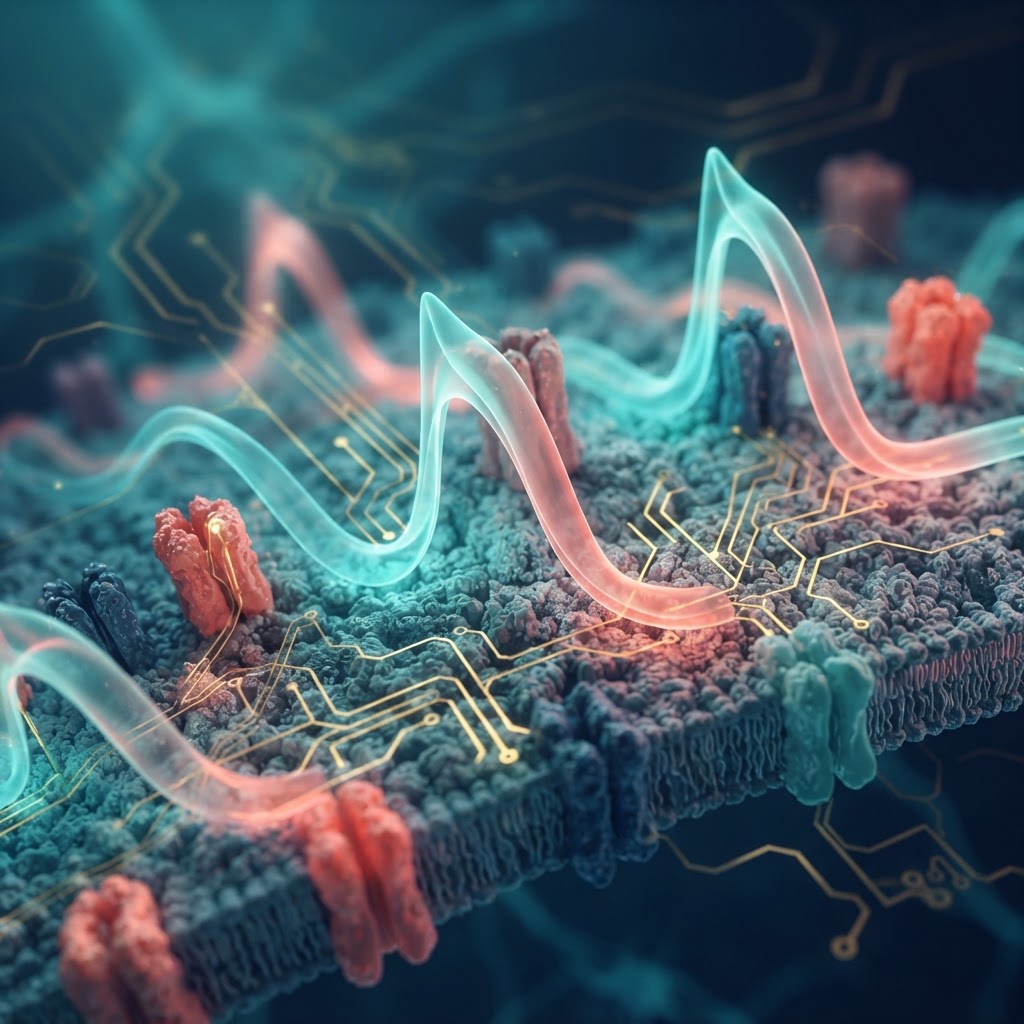
Molecular structure meets dynamical equations. The molecular identities of ion channels and high‑resolution cryo‑EM structures of voltage‑gated sodium and potassium channels have supplied physical detail that complements the HH phenomenology. We can now link channel conformational states to the gating variables in HH‑like kinetic schemes, grounding the classic equations in atomic structures and enabling mechanistic modeling of mutations and drugs.
How the model is being refined
- Stochasticity. The original HH equations are deterministic and describe average currents. For small structures (dendritic spines, thin axons) stochastic opening of individual channels matters; stochastic HH variants and Markov‑state channel models capture variability that the deterministic model misses.
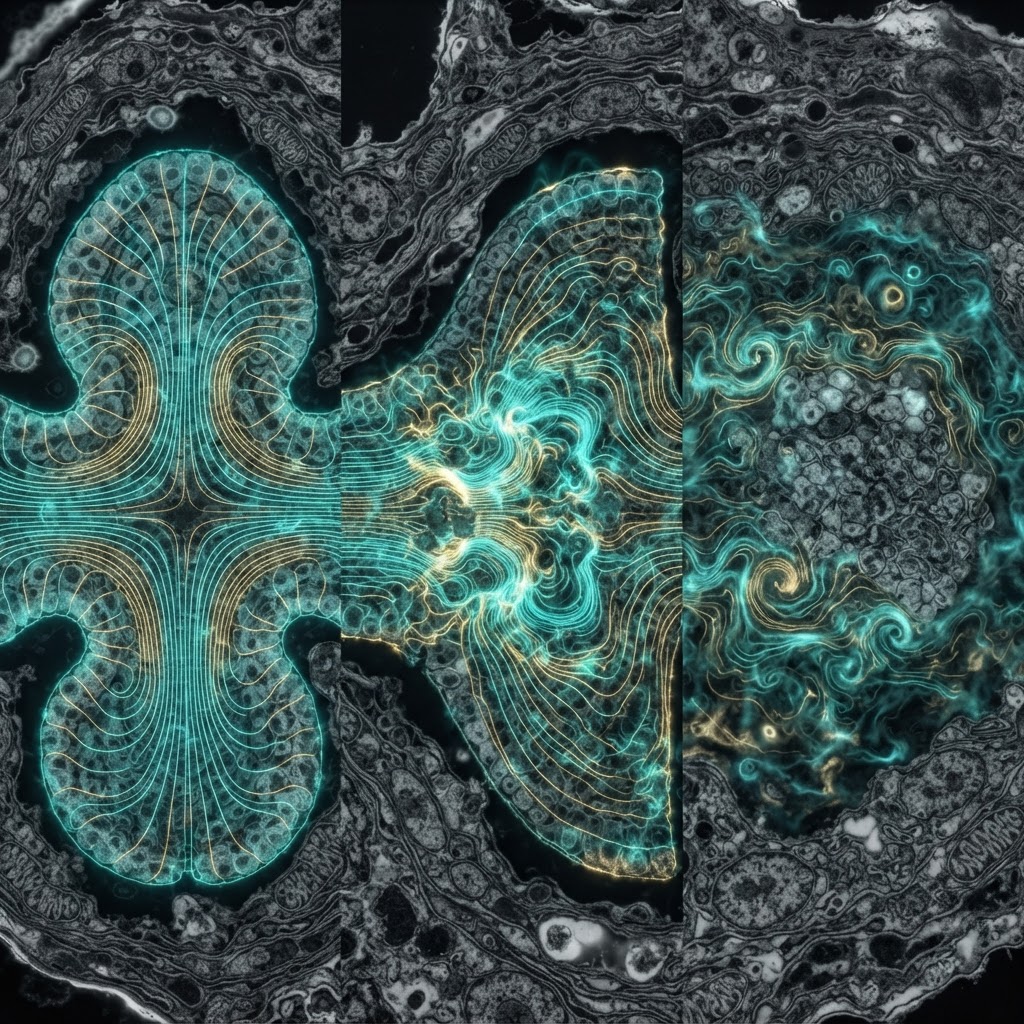
- Spatial complexity. Modern neurons have extended dendrites, active zones and subcellular heterogeneity. Multicompartmental HH‑type models and reaction‑diffusion extensions are essential to predict how spikes initiate and back‑propagate in real morphologies.
- State dependence and modulation. Neuromodulators, phosphorylation and accessory proteins alter gating kinetics in vivo. Current models increasingly incorporate modulatory state variables so HH dynamics connect to physiology and pathology (channelopathies).
Practical impact and emerging applications
HH‑based modeling underpins cardiac simulations for arrhythmia research, informs neuroprosthetic stimulation strategies, and enters machine‑learning pipelines that emulate spiking neurons. In translational contexts, linking HH‑style kinetics to molecular structure expedites variant interpretation for genetic channelopathies and rationalizes drug action on specific gating transitions.
Unresolved tensions
Despite its power, the HH framework raises a continuing conceptual challenge: how much molecular and stochastic detail is necessary to predict function at the network or behavioral level? Bridging scales—from atomic cryo‑EM models to circuits—is an active area of research. Equally pressing is the problem of in vivo parameterization: channel densities and kinetics measured in vitro can differ markedly inside intact, neuromodulated tissue.
Bottom line. Hodgkin and Huxley gave neuroscience a precise mathematical language for excitability. Today that language is richer—enriched by molecular structures, stochastic methods and optical readouts—but the core insight remains: the nerve impulse is an emergent dynamical consequence of voltage‑dependent conductances. Refining how those conductances vary across space, time and physiological state is the frontier.