What the radical‑pair hypothesis says
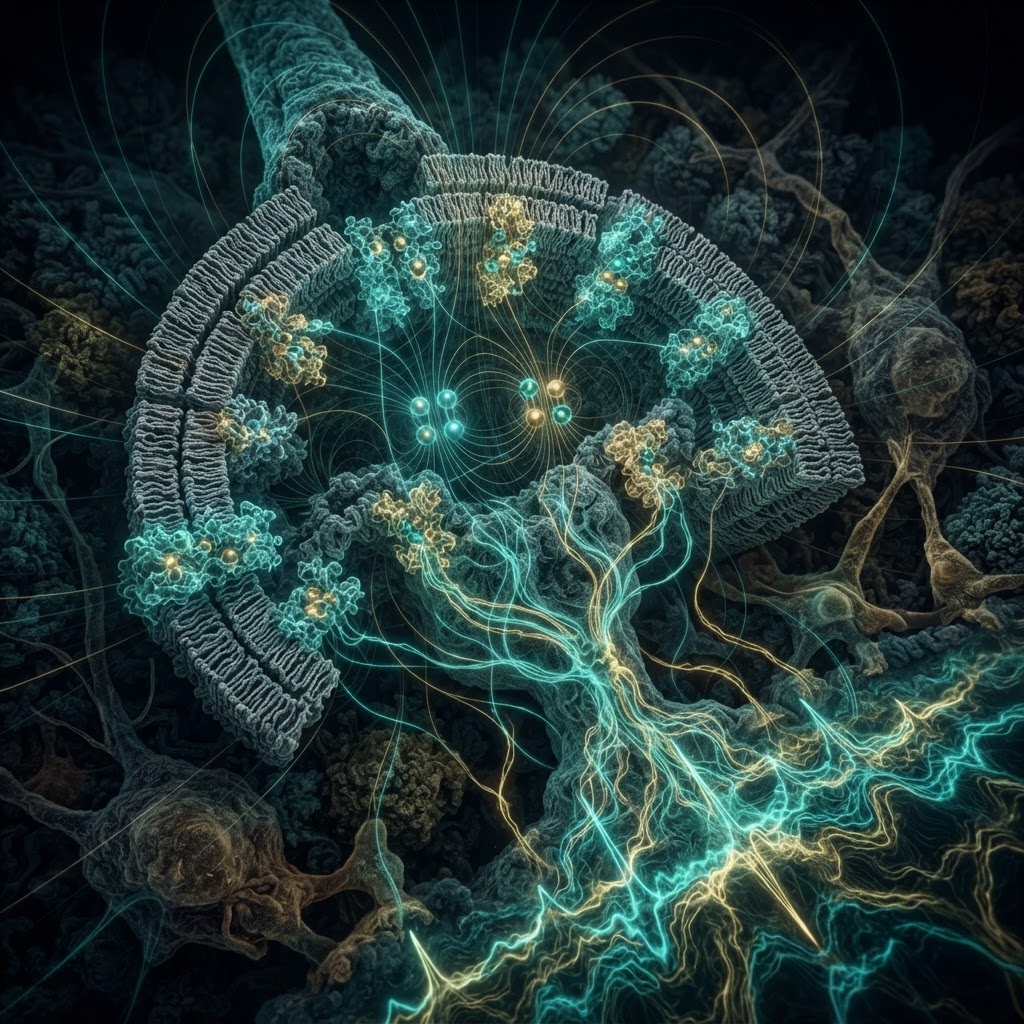
The radical‑pair mechanism proposes that pairs of electrons created in a photoreceptor protein form a weakly coupled quantum system whose spin dynamics are biased by the Earth's magnetic field. That spin bias changes reaction yields in the protein and, ultimately, produces an orientation signal for the bird. The leading molecular candidate is cryptochrome, a blue‑light photoreceptor expressed in the retina of many migratory species.
Why the idea feels like quantum biology
Radical pairs are genuinely quantum objects: their electron spins can exist in coherent superpositions and their singlet–triplet interconversion rates depend sensitively on tiny magnetic interactions. A key insight is that long enough spin coherence—on the order of microseconds—permits the Earth's ~50 μT geomagnetic field to modulate reaction outcomes. That sensitivity is orders of magnitude below biochemical energy scales, so the physical picture requires quantum spin physics operating inside a noisy cell.
Recent and converging lines of evidence
- Behavioral signatures: Migratory birds orient under dim blue light but not red light, consistent with a light‑activated receptor. Applied weak oscillating radiofrequency fields at specific frequencies disrupt orientation in ways predicted for an electron‑spin resonance effect, linking animal behavior to spin physics.
- Biochemical candidates: Cryptochrome 4 (Cry4) and related isoforms are expressed seasonally in migratory species' retinas and bind flavin cofactors appropriate for radical‑pair chemistry.
- In vitro spin chemistry: Laboratory studies of cryptochrome and model flavin–tryptophan chains show magnetic‑field‑dependent reaction yields and lifetimes consistent with the timescales needed for geomagnetic sensing.
What's new and active now
In the past several years the field has shifted from speculative theory toward quantitative biophysics. Experimentalists have improved assays to measure magnetic sensitives of cryptochrome constructs, characterized the photophysics of flavin radicals, and refined behavioral protocols to test resonance effects. Those advances tighten the parameter space—the spin lifetimes and anisotropies—required for a functioning compass and make more testable predictions about when and how orientation should fail under controlled perturbations.
Why this matters
The radical‑pair model is a rare instance where quantum coherence plausibly contributes to a real animal behavior. If validated in vivo, it links quantum spin dynamics to sensory processing and navigation, offering a new biological paradigm: animals exploiting spin chemistry to sense weak fields that are invisible to conventional biochemical detectors.
Key open questions
- How is the tiny chemical signal from cryptochrome amplified and read out by retinal neurons to produce a robust neural code for direction?
- Which cryptochrome isoforms and retinal cell types are necessary and sufficient for magnetoreception in intact animals?
- Can causality be demonstrated by targeted manipulations (genetic knockout, optogenetic-like control of spin states) rather than inference from behavioral disruptions?
Outlook. The radical‑pair hypothesis is no longer just an elegant theory: it is a testable biophysical model with increasing experimental support. The next few years will hinge on physiological demonstrations that close the loop from photophysics to neuronal signaling to navigation—experiments that could establish a textbook example of usable quantum effects in biology.