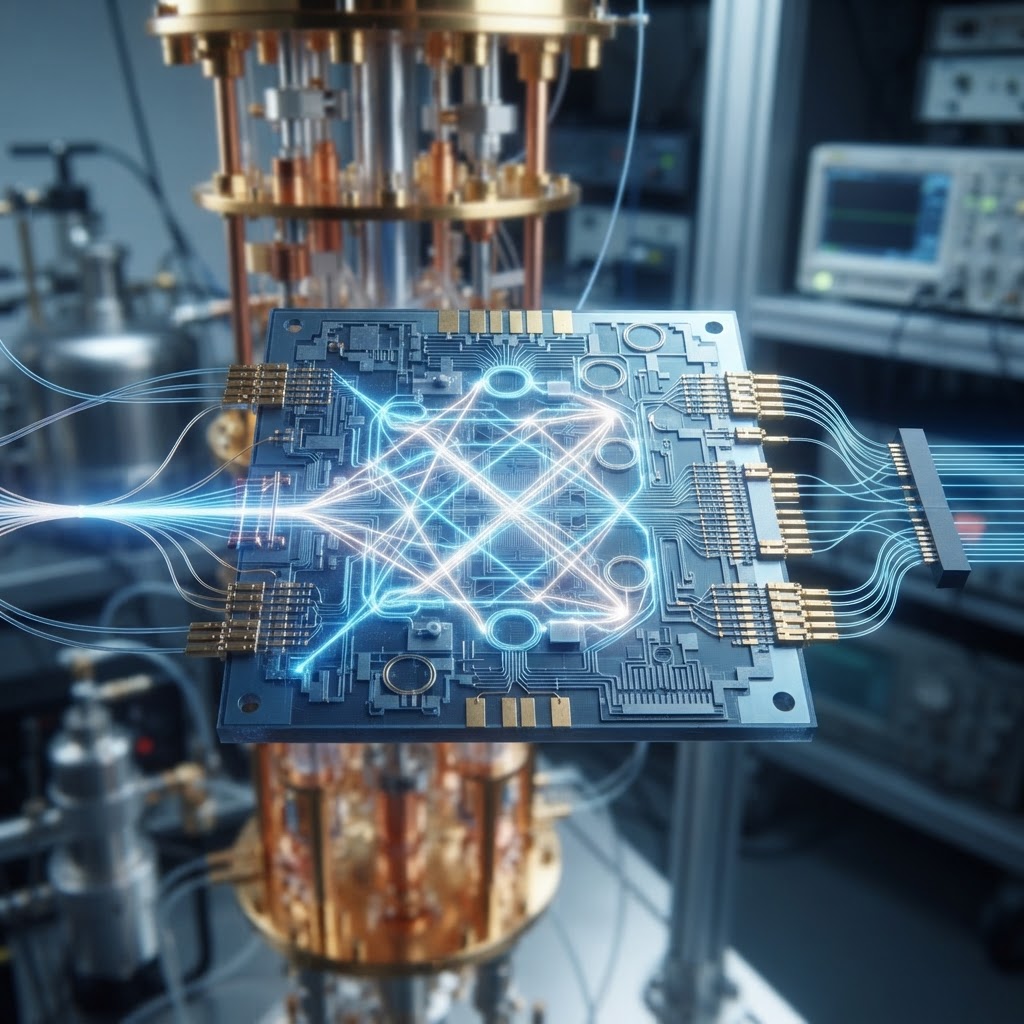
Neuromorphic computing is entering a more focused phase. Rather than trying to reproduce the brain neuron by neuron, researchers are increasingly borrowing one of its most consequential computational principles: sparsity. In biological neural circuits, only a small fraction of neurons typically become active at any moment, and signals are often transmitted as brief spikes rather than continuous numerical values. That restraint can reduce energy use while preserving the information needed for perception, control, and learning.
The idea is now shaping both silicon architectures and machine-learning methods. Event-driven processors such as IBM’s TrueNorth and Intel’s Loihi represent information with spikes and communicate only when activity occurs. This contrasts with conventional processors, which repeatedly move dense arrays of numbers through memory—even when most values are small, redundant, or irrelevant to the immediate task.
Why fewer signals can mean more efficiency
Sparse coding is not simply a matter of switching off random units. Biological systems appear to distribute information across selective populations of neurons, with different cells responding to particular features, contexts, or combinations of inputs. In computational terms, a sparse representation can preserve discriminative structure while reducing communication and storage.
That distinction matters because data movement is often more expensive than arithmetic. Neuromorphic chips exploit local memory, asynchronous communication, and event-driven computation to avoid processing every operation on a global clock. When inputs are naturally sparse—such as changes in a camera scene, sounds separated into transient events, or sensor readings from a robot—the potential savings are especially large.
Recent work has also expanded beyond specialized spiking networks. Conventional deep-learning models are being compressed through pruning, mixture-of-experts routing, activation sparsity, and conditional computation. These approaches share a principle with neuromorphic design: allocate computation selectively rather than treating every input and every layer as equally important.
The difficult part is learning
Hardware efficiency is easier to demonstrate than useful, general learning. Spiking neural networks must contend with discontinuous spike events, limited precision, and training methods that do not map neatly onto standard backpropagation. Surrogate-gradient techniques have made training more practical, while local and event-driven learning rules seek to reduce dependence on energy-intensive global updates.
Benchmarks remain a source of debate. A neuromorphic system may consume far less energy for a particular task, but comparisons can change when researchers include data encoding, training, memory access, latency, or the conventional hardware used as a baseline. Sparse models can also become brittle: if important activity is pruned or routing decisions are wrong, accuracy may fall abruptly.
From demonstrations to deployment
The strongest near-term applications are likely to be embedded systems that must respond quickly under tight power constraints. Robots, autonomous sensors, hearing devices, and always-on industrial monitors can benefit from processing information locally instead of streaming raw data to the cloud. Event-based vision is a prominent example: cameras record changes in brightness asynchronously, producing sparse streams that align naturally with spike-based processors.
The broader significance is conceptual. Sparse biological coding suggests that intelligence need not depend on uniformly dense computation. But the brain’s efficiency comes from a coordinated system of representations, memory, plasticity, and embodiment—not from sparsity alone. The current challenge is to determine which parts of that system can be translated into robust engineering principles.
Neuromorphic computing is therefore less a replacement for GPUs than a complementary architecture for situations where latency, privacy, and energy matter more than raw throughput. The decisive test will be whether sparse machines can learn reliably in changing environments, not merely perform efficiently on carefully prepared demonstrations.