Artificial intelligence is running into an increasingly physical constraint: moving data often costs more energy than performing the arithmetic itself. Neuromorphic-computing researchers are responding with an idea borrowed from biology—most neurons remain quiet most of the time, while a small, changing subset carries the signal.
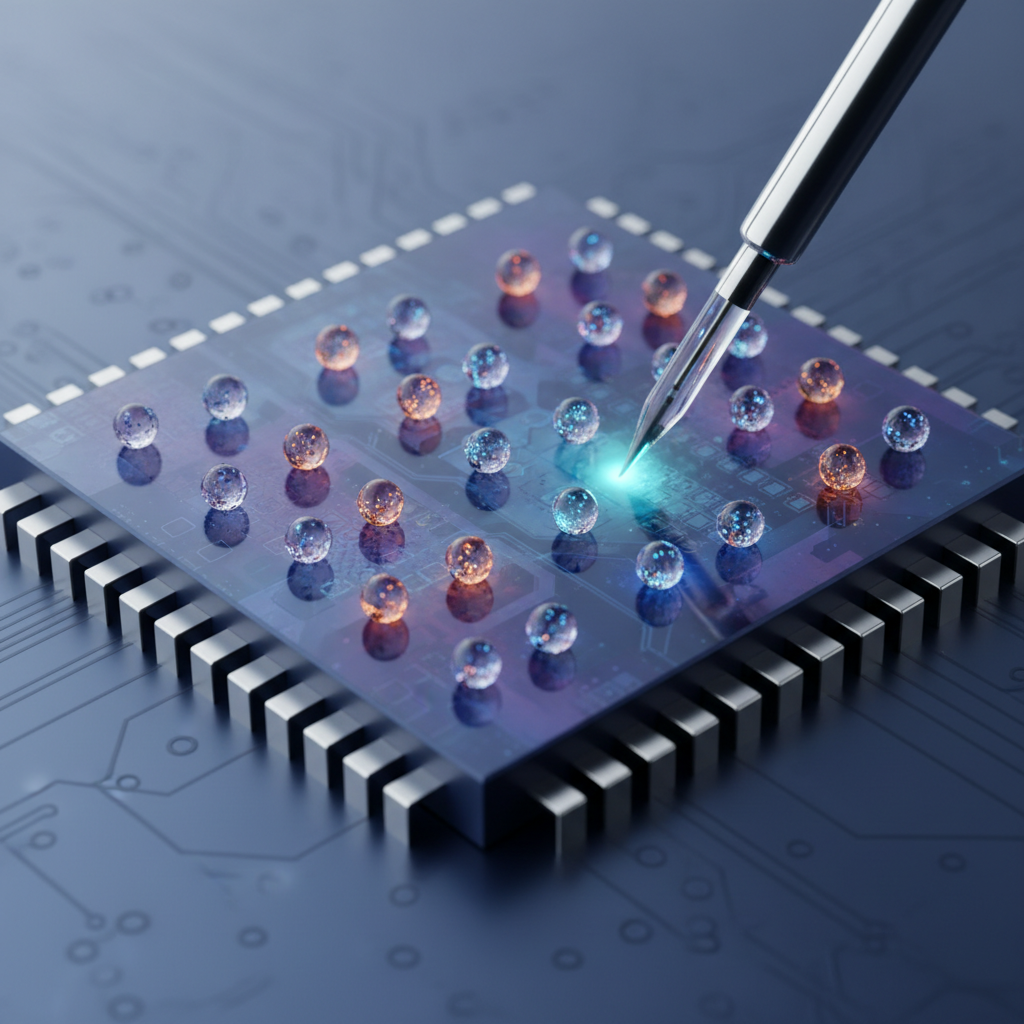
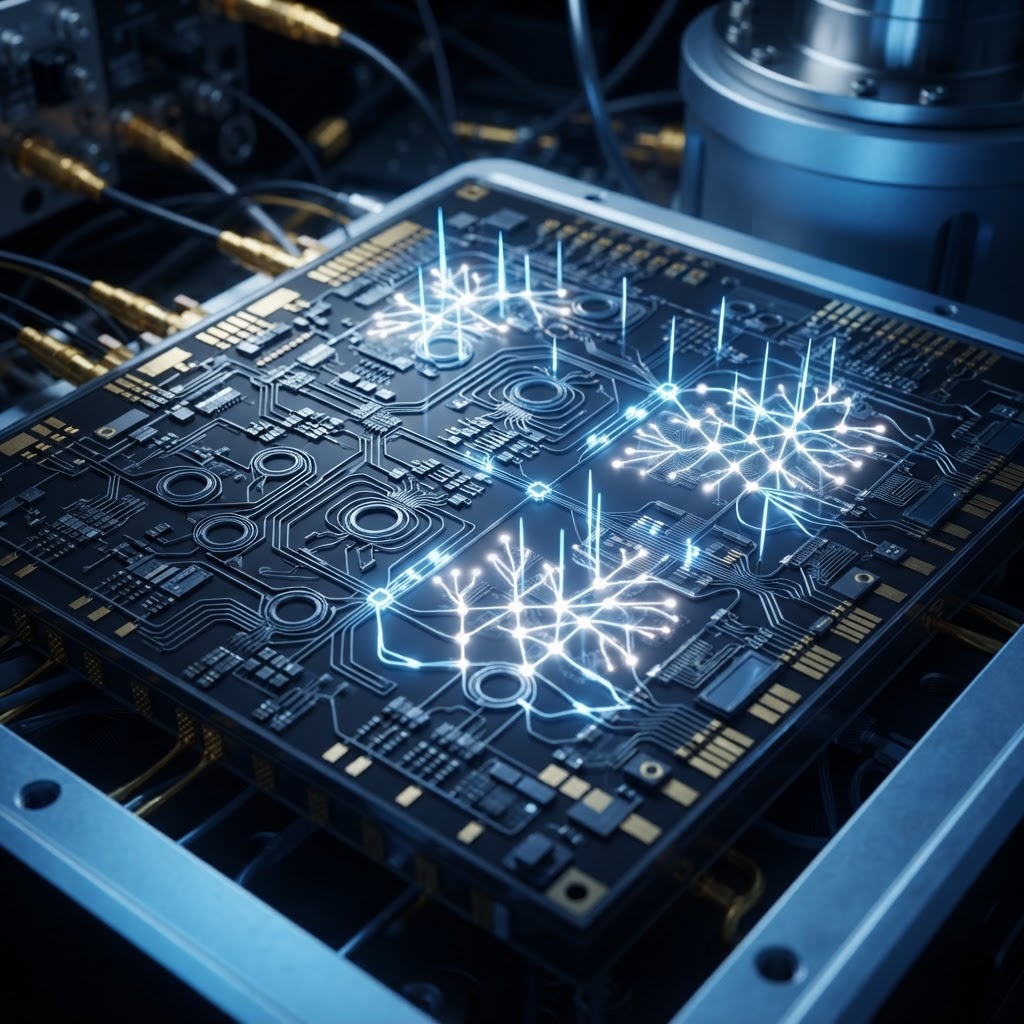
This principle, known as sparse coding, is reshaping the design of experimental processors. Rather than repeatedly updating every unit in a neural network, neuromorphic systems can represent information as brief events, or “spikes,” and activate only the circuits needed to process them. The result is a shift from clock-driven computation toward activity-driven computation.
Silence as an architectural feature
Conventional AI accelerators generally execute dense streams of tensor operations. Even when an input contains little new information, memory and compute units may continue moving and multiplying values. Spiking and event-based architectures take a different route: a neuron communicates only when its internal state crosses a threshold, and downstream circuits respond only to those events.
That selectivity can reduce memory traffic, a major source of power consumption in modern machine learning. It is particularly attractive for sensors that encounter continuous but mostly uneventful streams—cameras, microphones, radar systems and industrial monitors. Event-based cameras, for example, report changes in brightness rather than sending complete images at fixed intervals. A neuromorphic processor can handle those asynchronous updates without reconstructing a full frame first.
From neuroscience metaphor to hardware discipline
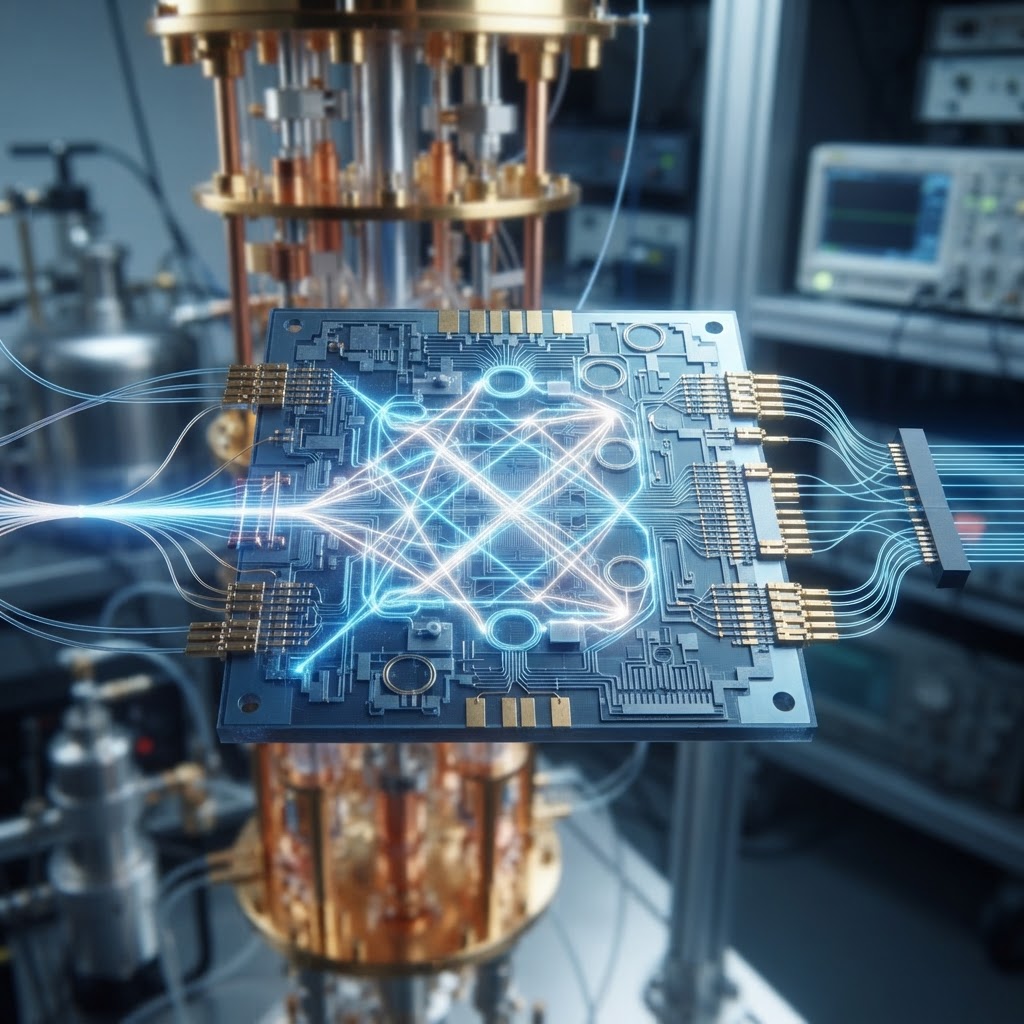
The biological analogy is useful, but it is not a claim that current chips reproduce the brain. Neuromorphic systems typically simplify or abstract away much of biology. Their advantage comes from enforcing a few computational principles in silicon: local state, asynchronous communication, co-located memory and processing, and sparse activity.
Recent platforms have made these ideas more practical. Intel’s Loihi 2, IBM’s earlier TrueNorth, and research systems built from memristive or other analog devices demonstrate different ways to implement spiking networks. Meanwhile, academic work on sparse neural representations and event-driven algorithms is narrowing the gap between energy-efficient inference and the accuracy expected from conventional deep-learning models.
Yet headline comparisons require caution. Energy results depend heavily on the task, software stack, data movement, fabrication process and whether training is included. A neuromorphic chip may be exceptionally efficient for a low-latency sensor workload while offering little benefit for a dense language-model operation. Sparse computation is not automatically cheap if the system must constantly search for irregular memory locations or convert data between incompatible formats.
The current contest is over usefulness
The field is therefore moving beyond the question of whether spikes are biologically plausible. The more consequential test is whether sparse, event-driven hardware can deliver reliable advantages in deployed systems. Researchers are targeting always-on applications where milliseconds and milliwatts matter: autonomous machines, wearables, robotics and edge security.
A further challenge is programming. Conventional neural-network tools assume dense matrix algebra, while spiking models often require different training methods, temporal representations and hardware-aware optimization. Better compilers, benchmarks and hybrid designs—pairing neuromorphic front ends with conventional accelerators—may prove more important than any single neuron model.
The emerging lesson is architectural rather than cosmetic. Biology does not win by calculating every possibility at maximum precision. It filters, routes and updates selectively. If engineers can make that selectivity predictable and programmable, neuromorphic computing could become less a replacement for GPUs than a specialized layer for machines that must perceive the world continuously without paying to recompute it from scratch.