Lead
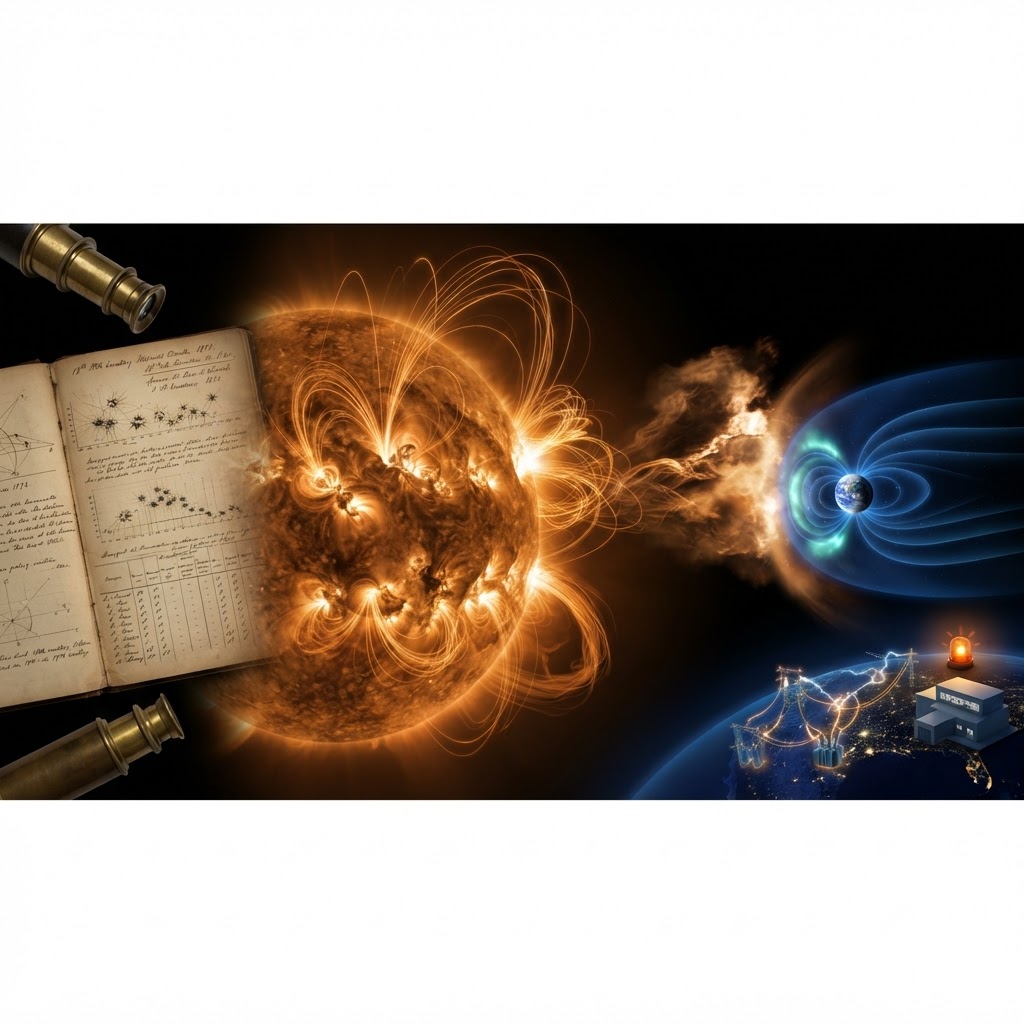
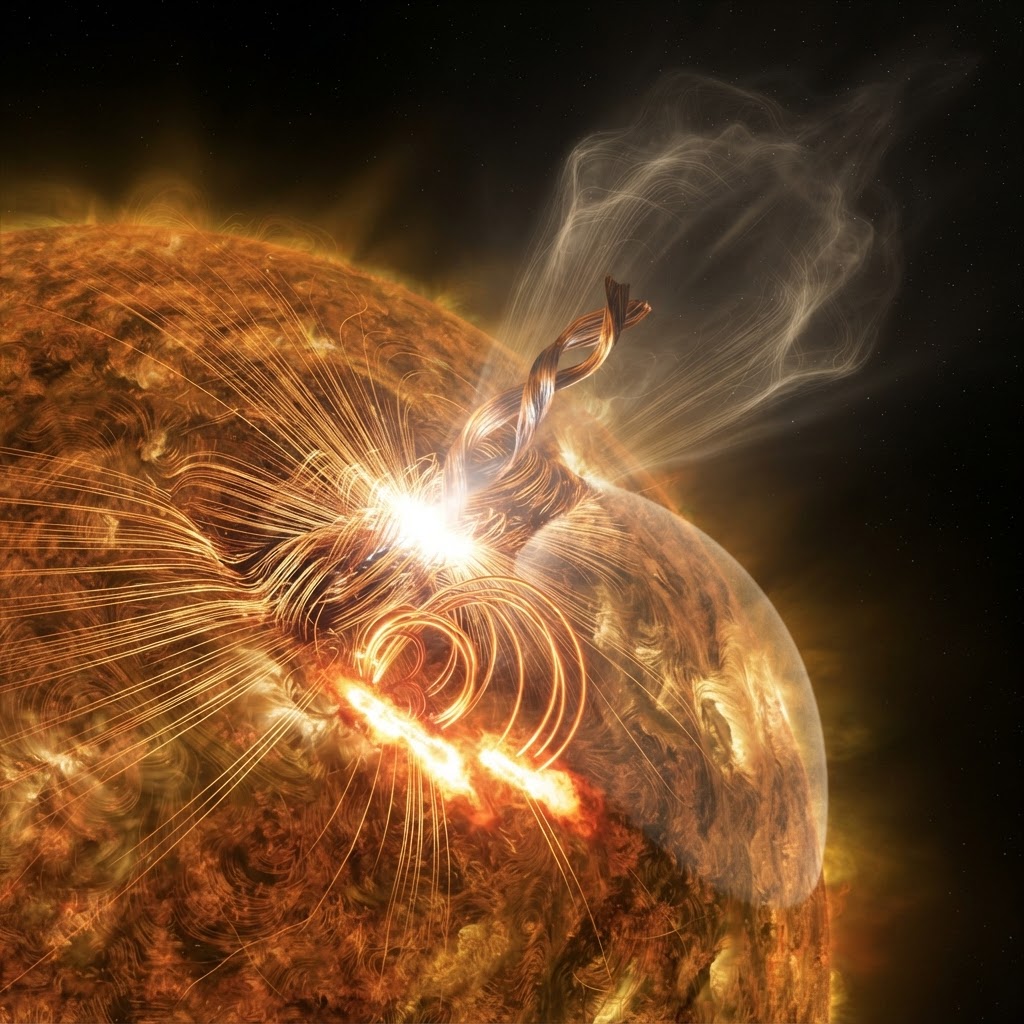
Coronal mass ejections (CMEs) are the solar system's most energetic expulsions of magnetic field and plasma. When two or more CMEs erupt in quick succession and catch up with one another en route to Earth, they can merge or interact to produce a single, more complex structure — a compound stream — that often drives stronger, longer-lasting geomagnetic storms than individual CMEs would. Recent multi-spacecraft observations together with high-resolution magnetohydrodynamic (MHD) modeling are sharpening our picture of these interactions and exposing critical forecasting gaps.
What happens when CMEs meet
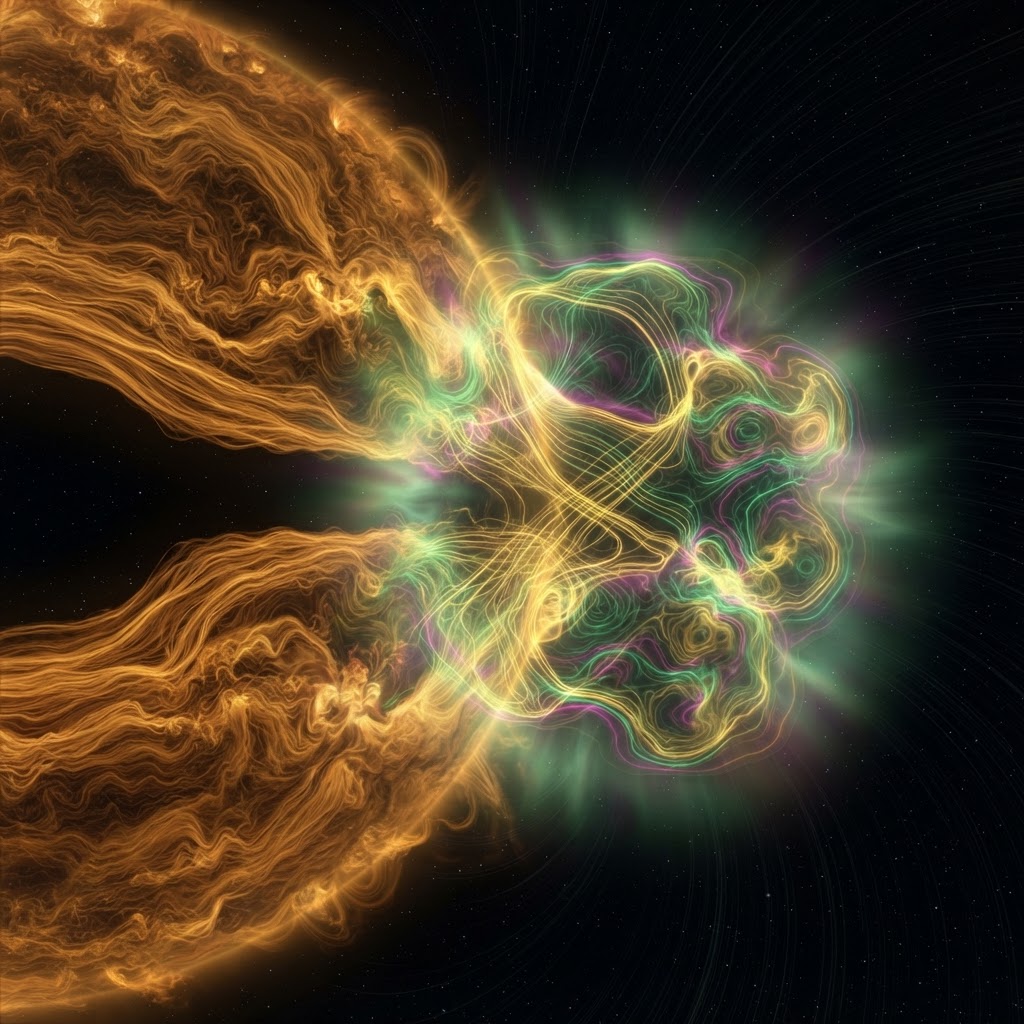
When a faster CME collides with a slower predecessor the interaction can take several forms: the faster ejecta can overtake and compress the leading CME's sheath and magnetic ejecta, the shock fronts can merge, and the internal magnetic fields can reconnect or reconfigure. The result is often a compressed, heated sheath region with intensified magnetic fields and a complex ejecta that may no longer resemble a classical magnetic cloud.
New observational and modeling insights
Heliospheric imagers on STEREO, combined with coronagraphs (SOHO/LASCO) and in-situ monitors (ACE, DSCOVR, Wind), have allowed researchers to watch CME interactions in three dimensions for the first time. These data show interactions beginning close to the Sun and continuing through the inner heliosphere. Contemporaneous MHD simulations reproduce many observed signatures: enhanced dynamic pressure, amplified southward magnetic field components (Bz), and prolonged intervals of disturbed solar wind.
Key takeaway: interactions frequently intensify the sheath ahead of the merged structure, and they can reorient or strengthen the southward field that couples most effectively with Earth's magnetosphere, raising the potential for larger Dst disturbances and sustained geomagnetic activity.
Why compound storms matter
Compound storms pose outsized risks. A compressed sheath with strong southward Bz can trigger intense substorms and rapid ring-current injections, while a long-duration merged ejecta sustains auroral currents and ground-induced currents that threaten power grids and pipelines. Insurance, satellite operators, and power-system planners are particularly concerned because interacting CMEs are not rare during active solar intervals and because their impacts can exceed naive additive estimates.
Forecasting challenges and debates
Predicting the geoeffectiveness of interacting CMEs remains a frontier problem. Forecasters must anticipate not just arrival time and speed but the post-interaction magnetic orientation — whether the southward component will be enhanced, rotated away, or randomized by reconnection. Current operational tools such as ensemble heliospheric propagation models (WSA–ENLIL) capture timing and compression but struggle to predict internal field topology; new data-assimilation strategies and more physics-rich MHD models are being developed but are computationally costly.
Where research is heading
The field is moving toward integrated, multi-mission frameworks: coordinated coronagraph and heliospheric imaging, targeted in-situ sampling when possible, and real-time high-fidelity simulations. Machine learning approaches trained on historical interacting events offer a complementary path to probabilistic forecasts. Observational campaigns during rising solar activity over the next few years will be crucial to validate these methods.
Bottom line
CME–CME interactions transform otherwise manageable space-weather drivers into compound storms with disproportionately large effects. Recent advances gave us clearer, three-dimensional views of those collisions and improved modeling of their dynamical consequences — but reliably predicting the magnetic geometry that controls geomagnetic severity remains the key unsolved problem for operational forecasting.