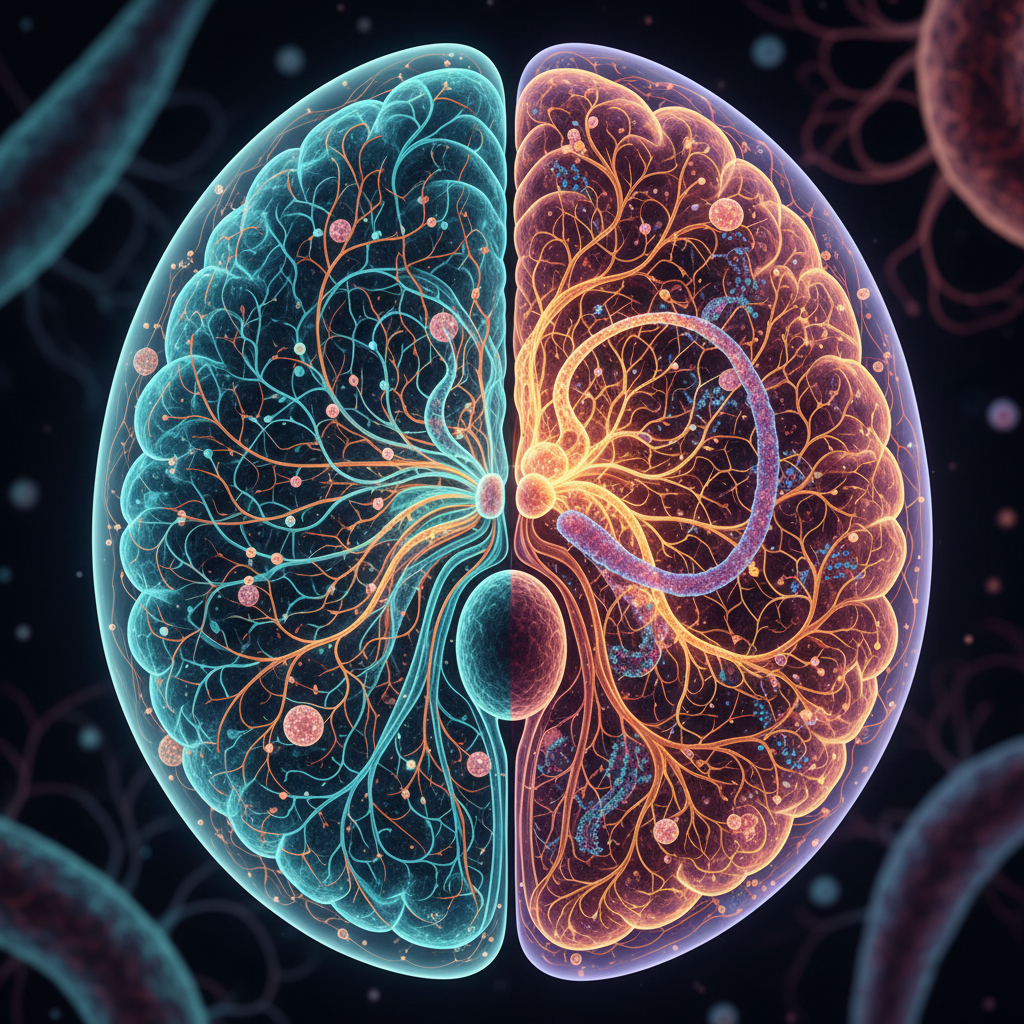
For decades, the circadian clock was treated largely as a problem of sleep: a master pacemaker in the brain responding to light and coordinating the daily cycle. That picture is now incomplete. Nearly every major metabolic tissue contains its own molecular clock, and current research is clarifying how those local timers shape glucose control, lipid handling, hormone action, and appetite.
These peripheral clocks are built from feedback loops involving genes such as BMAL1, CLOCK, PER, and CRY. Their activity rises and falls over roughly 24 hours, switching metabolic programs on and off according to time. The liver clock helps schedule glucose production and detoxification; clocks in skeletal muscle influence fuel use and insulin sensitivity; pancreatic clocks affect insulin secretion; and adipose clocks regulate lipid storage and inflammatory signaling.
A local timer, not just a brain signal
The brain’s suprachiasmatic nucleus remains the central coordinator, primarily reset by the light–dark cycle. But peripheral clocks are strongly influenced by behaviors that vary by time of day—especially feeding, fasting, exercise, and sleep. A person can therefore experience a form of internal desynchrony: the central clock may receive regular morning light while the liver repeatedly receives food late at night.
Animal studies make the biological stakes clear. Genetic disruption of clock components in specific tissues can produce impaired glucose tolerance, fatty liver, altered blood lipids, and obesity-like metabolic phenotypes. In humans, shift work, irregular sleep, and late eating are associated with higher risks of type 2 diabetes and cardiovascular disease. These observations do not prove that clock disruption alone causes disease, but they align with controlled laboratory studies showing that circadian misalignment can reduce insulin sensitivity and disturb hormonal rhythms even when calorie intake is held constant.
Timing is becoming a therapeutic variable
This has accelerated interest in time-restricted eating, in which meals are confined to a consistent daily window. Early trials suggest that eating earlier, and allowing a prolonged overnight fast, may improve glucose regulation and blood pressure in some people, sometimes without weight loss. The likely mechanisms include better alignment between food intake and the clock-controlled period when insulin sensitivity is highest.
Yet the field is moving beyond simple claims that “early is always better.” Chronotype, sleep timing, work schedules, medication use, and the composition of meals all matter. A feeding window that improves one person’s alignment may be impractical—or biologically mismatched—for another. Researchers are also testing whether exercise timing, controlled light exposure, and drugs that target clock-related pathways can restore coordination among tissues.
The clinical challenge
The most important unresolved issue is translation. Molecular clocks are measurable in blood cells and sometimes inferred from transcriptomic signatures, but clinicians do not yet routinely assess the timing or strength of a patient’s liver, muscle, or pancreatic clock. Nor is there a universally accepted definition of circadian disruption in metabolic disease.
For now, the evidence supports a practical principle rather than a universal schedule: regular sleep, strong daytime light exposure, consistent meal timing, and avoidance of habitual late-night eating are biologically plausible ways to reduce internal conflict. The emerging view is more precise than the old “body clock” metaphor. Metabolism is governed by a network of clocks, and health may depend not only on what we eat or how much we sleep, but on whether our tissues receive those signals at the right time.