As psychedelic-assisted therapy moves from experimental clinics toward regulatory scrutiny, one biological question has become central: how can a brief drug experience produce psychological changes that last weeks or months? Increasing evidence points to plasticity—the nervous system’s capacity to alter synapses, circuits, and behavior—with the serotonin 5-HT2A receptor acting as a critical entry point.
A receptor with several levers
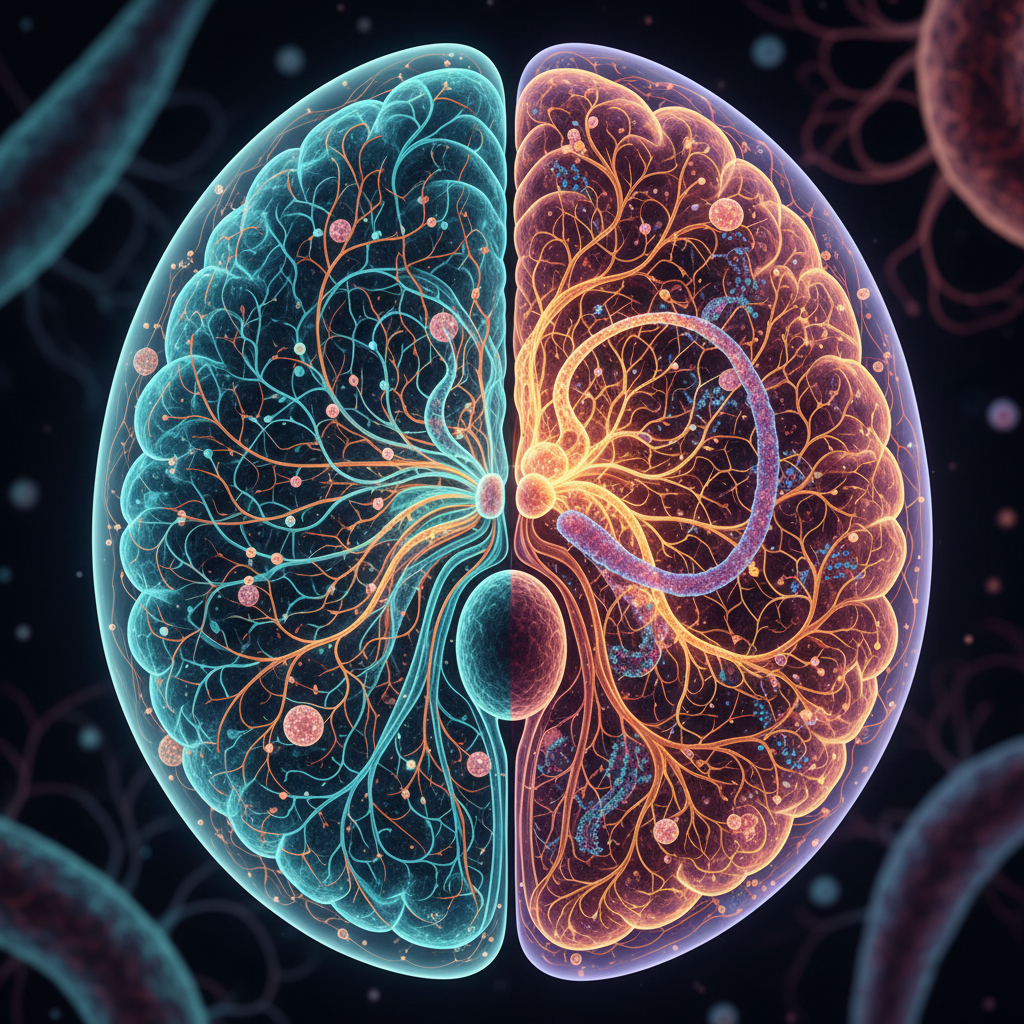
Classic psychedelics including psilocybin, LSD, and DMT activate 5-HT2A, a receptor concentrated on excitatory neurons in the cerebral cortex. Its stimulation changes patterns of cortical signaling, perception, and cognition. But the receptor does more than switch on an acute psychedelic state. In animal and cellular studies, psychedelic compounds can also increase dendritic branching, promote formation or maturation of dendritic spines, and enhance markers associated with synaptic growth.
These effects are often grouped under the term psychoplastogen: a compound that rapidly increases the capacity for structural or functional neural change. The proposed sequence is appealing. 5-HT2A activation engages intracellular pathways involving glutamate, brain-derived neurotrophic factor, TrkB signaling, and mTOR-related protein synthesis. Together, these pathways could temporarily open a window in which learning, emotional updating, and therapy-guided behavior change become easier.
Plasticity is not the same as healing
The important qualification is that more plasticity does not automatically mean a better outcome. A brain in a more changeable state may be especially responsive to its environment. That could help weaken rigid fear, avoidance, or depressive prediction loops—but it also makes context, expectations, and therapeutic support biologically consequential.
Recent receptor-focused research has sharpened this picture. Different psychedelics can bias 5-HT2A toward distinct intracellular signaling patterns, while their subjective effects and plasticity-related actions do not always map neatly onto one another. Scientists are therefore testing whether durable therapeutic effects require the full perceptual experience, or whether selected downstream pathways might eventually be engaged with fewer acute alterations in consciousness.
The “non-hallucinogenic” challenge
This question has driven efforts to develop so-called non-hallucinogenic psychoplastogens. In rodents, several compounds have produced synaptic or behavioral effects with reduced psychedelic-like activity. Yet translating these findings is difficult. Rodent behavioral assays are imperfect proxies for human depression or trauma, and a compound that preserves molecular plasticity may not reproduce the learning, emotional salience, or meaning-making associated with a guided psychedelic session.
Human evidence is advancing, but it remains more indirect than the popular narrative suggests. Clinical trials show that psilocybin-assisted therapy can reduce symptoms in some people with depression, anxiety, and substance-use disorders, usually alongside intensive psychological preparation and integration. Imaging and biomarker studies suggest changes in network organization and receptor-related signaling, but they do not yet establish a single causal pathway from 5-HT2A activation to recovery.
What researchers still need to separate
The field must distinguish acute receptor activation from later plasticity, and both from expectancy, therapeutic alliance, and ordinary learning. It also needs better measurements of whether newly formed synapses persist, how they are selected by experience, and why some patients respond while others do not. Dose, treatment setting, prior trauma, concurrent medication, and individual differences in serotonin signaling may all matter.
The strongest current conclusion is therefore modest but consequential: 5-HT2A is a plausible gateway to a time-limited state of enhanced neural adaptability, not a complete explanation of psychedelic therapy. The next phase of research will determine whether that gateway can be safely targeted—and whether biology alone can reproduce benefits that may depend on the patient’s conscious experience and therapeutic context.