There is a quiet sentence buried in the climate literature that most narratives never finish reading. The sentence says: we can pull carbon dioxide out of the air. The part that gets dropped is what it costs — not in dollars, but in physics.
This is the story of that cost. It is the companion to two earlier Star-Field investigations — the Wisconsin forest that breathed different air for eleven years and the hidden power bill of air capture — and it exists to say the thing both of those pieces could only hint at on their own. Read together, they describe the two sinks humanity is counting on to clean the atmosphere: the forest nature built, and the machine we are trying to build. Each removes carbon. Neither removes it for free.
The deeper you look at carbon dioxide collection, the more you realize it is not a climate solution. It is a thermodynamic negotiation — a bargain struck between the atmosphere's chemistry and the laws of energy, with the forest and the machine sitting on opposite sides of the table.
The Thesis: Two Sinks, Two Prices
Here is the structural claim in one breath.
The Wisconsin experiment — Aspen-FACE — proved the first half. For eleven years, extra CO₂ made a young northern forest 39% more productive. But the ozone we emit alongside the CO₂ erased the storage gain. The forest's bottleneck is atmospheric chemistry: it works only when the air around it stays clean enough to let it work.
Direct air capture proves the second half. The chemistry is sound; the machines demonstrably pull CO₂ from ambient air. But every tonne demands a flood of energy, and that energy must itself be clean or the operation defeats itself. The machine's bottleneck is thermodynamics: it works only when the power behind it is abundant enough to run it.
Two sinks. Two hidden costs. One shared lesson: the atmosphere does not care which sink we use. It only cares whether the physics works.
Hidden Cost One — The Energy Bill
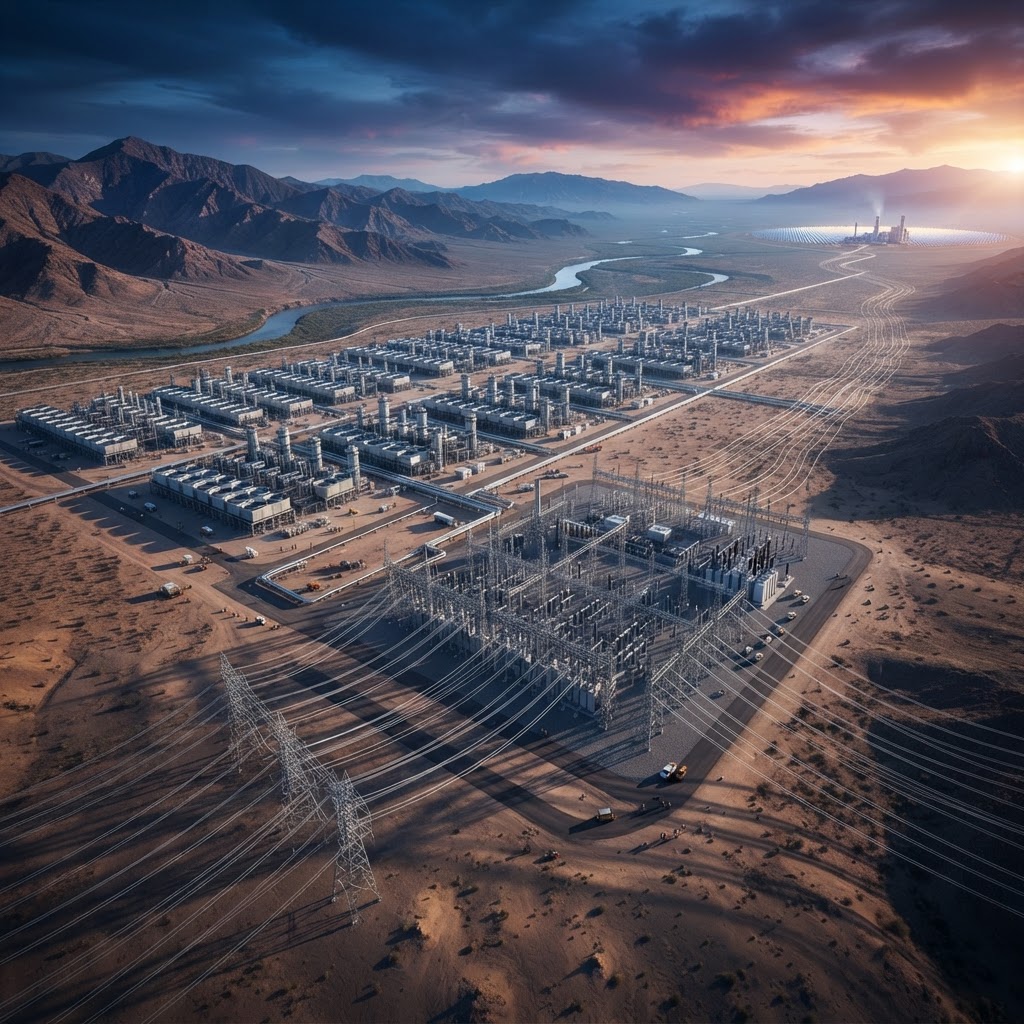
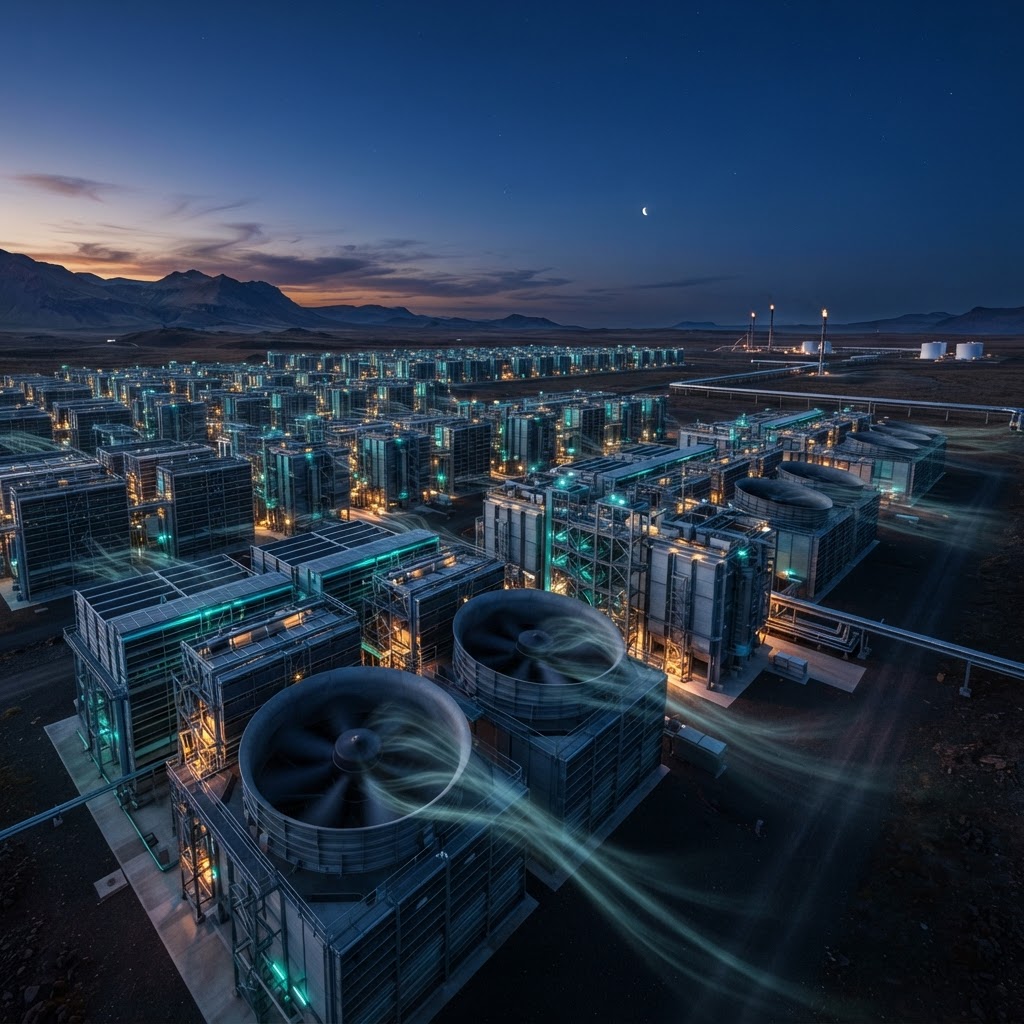
Begin with the number that decides everything else. To pull one tonne of CO₂ out of the air, a direct air capture plant typically needs on the order of 1,000 to 2,000 kilowatt-hours of energy — heat to release the captured gas from its sorbent, electricity to drive the fans and pumps, and more work still to compress the CO₂ for transport and burial.
That is roughly the electricity a Minnesota home burns in one to two months — spent to remove a single tonne of a gas that humanity emits at a rate of about forty billion tonnes a year. The World Resources Institute puts the at-scale figure near 2,000 kWh per tonne. Company disclosures and recent life-cycle analyses place the best commercial solid-sorbent plants at the low end of that range, but only when low-carbon waste heat is available and the plant is mature.
Scale that to climate targets and the arithmetic turns blunt. A widely discussed goal is removing five to ten billion tonnes of CO₂ per year by mid-century, on top of emissions cuts. At an average of 1 MWh per tonne, ten gigatonnes a year would demand about 10,000 terawatt-hours — roughly 40% of all the electricity the world generates today. At a more realistic 2–3 MWh per tonne, the same removal would consume 80–120% of today's global generation. Direct air capture at scale is not a marginal energy add-on. It is a parallel energy civilization.
If you generate that energy by burning coal, you are better off shutting the coal plant down than using it to run the air-capture machine.
That line, from climate scientist Andrew Dessler, is the whole argument in one sentence. The energy that powers the sink has to be cleaner than the carbon the sink removes, or the sink is a mirage.
Hidden Cost Two — The Thermodynamic Tax
Why does it take so much energy? Because of a number most people have never thought about: carbon dioxide is dilute.
Today's atmosphere holds about 420 parts per million of CO₂ — four hundredths of one percent. To capture a tonne of it, a plant must move roughly a million cubic metres of air through its contactors. The image Klaus Lackner and others have used is apt: it is like filtering a single marble out of a stadium full of sand. Not impossible. Just expensive in the only currency the universe truly deals in — work.
Thermodynamics sets the floor. The minimum work to unmix CO₂ from air — the ideal, best-case, no-losses figure — is about 500 kilojoules per kilogram, or roughly 140 kWh per tonne. That is the irreducible tax the second law of thermodynamics levies on the act of unmixing. Even at this perfect, unattainable floor, scrubbing all forty gigatonnes of our annual emissions would demand about a terawatt of continuous power — around 6% of everything humanity currently uses.
Real machines pay far more. A 2011 analysis by Kurt House and colleagues, published in the Proceedings of the National Academy of Sciences, compared air capture to existing industrial gas-separation systems and found that real processes are likely to require more than 400 kilojoules of work per mole of CO₂ — over a thousand kWh per tonne — unless they dramatically outperform every comparable separation system ever built. Company estimates near 2,000 kWh per tonne are about ten times the thermodynamic limit. That gap — between the floor the universe sets and the ceiling engineering can reach — is where the entire difficulty lives.
Then comes storage. Once captured, the CO₂ must be compressed, transported, and injected deep underground. Isothermal compression to a hundred atmospheres alone adds another slug of energy — Dessler estimates roughly 320 GW of continuous power for the full forty-gigatonne case. The sink does not end at the fan; it ends in a borehole a kilometre below the surface.
Hidden Cost Three — The Planetary Buildout
Energy is the running cost. Infrastructure is the capital cost, and it is staggering.
The largest direct air capture plants in development today aim to capture about one million tonnes of CO₂ per year. To remove a single gigatonne annually — one-fortieth of what we emit — would require roughly a thousand such plants. To reach the five-to-ten-gigatonne targets floated for mid-century means thousands of facilities, each the size of a small chemical complex, plus the pipeline networks to carry their compressed product, the injection wells to bury it, the monitoring systems to prove it stays buried, and — underneath all of it — the clean-energy supply to power every step.
As of 2022, the International Energy Agency counted eighteen DAC plants operating worldwide, together capturing on the order of 0.01 million tonnes a year — a rounding error against the gigatonnes discussed. The distance between today's fleet and the one the climate targets assume is not a matter of building more of what exists. It is a matter of inventing an industry the size of today's oil and gas sector, pointed in the opposite direction.
Deployment on any significant scale requires significant infrastructure, energy, and land — not at the margin, but at the planetary.
That is the National Academies' 2019 assessment of negative emissions technologies, and it is the least quoted sentence in the carbon-removal debate. The land footprint alone varies by design: a single adsorption plant might capture between 200 and 1,370 kilograms of CO₂ per square metre per year. Multiply that across thousands of plants and the land, water, sorbent supply, and clean-power siting all become their own constraints — the kind that do not show up in a cost-per-tonne headline but decide whether the headline is real.
The Two Bottlenecks, Side by Side
Lay the two sinks next to each other and the symmetry becomes exact.
Aspen-FACE showed that a forest can store more carbon — but only when the air is clean. Raise the CO₂ and the trees grow faster; raise the ozone alongside it and the stored carbon disappears back into the same sky it came from. The forest's service is real, large, and free in dollars — but it is conditional on a pollutant we barely discuss. Its bottleneck is the atmosphere's chemistry.
Direct air capture showed that a machine can store carbon — but only when the power is cheap and clean. Run the fans and the chemistry works; power them with coal and the operation emits more than it removes. The machine's service is reliable, measurable, and controllable — but it is conditional on an energy bill we have not agreed to pay. Its bottleneck is the atmosphere's physics.
This is why the two pieces had to be written together. A carbon budget that assumes the forest will keep absorbing — without accounting for the ozone capping it — is a budget built on wishful chemistry. A carbon budget that assumes the machine will scale — without accounting for the energy and infrastructure capping it — is a budget built on wishful thermodynamics. Both assumptions fail for the same reason: they treat a conditional service as an unconditional one.
What the Atmosphere Actually Cares About
Step back from both sinks and the view clarifies. The atmosphere is not interested in our categories. It does not distinguish between a tonne of CO₂ absorbed by a birch tree in Wisconsin and a tonne captured by a contactor in Iceland. It keeps a single ledger: how many molecules are in the air, and how fast they are coming and going.
That ledger is governed by physics, and physics has rules. Unmixing a dilute gas costs work; there is no negotiating the second law. Growing a forest costs sunlight and nutrients; there is no negotiating the nitrogen cycle. Storing carbon underground costs compression and monitoring; there is no negotiating the geology. Every line item in the carbon budget is a thermodynamic transaction, and every transaction has a price.
The honest position is not that carbon removal is impossible, nor that it is a panacea. It is that removal is a service the atmosphere will render — at a rate and a cost set by physics, not by rhetoric. The forest renders it cheaply but conditionally. The machine renders it reliably but expensively. A serious climate strategy uses both, understands the cap on each, and never lets either one's promise cancel the other's constraint.
The Open Negotiation
The deepest question is not technical. It is allocative. Every watt of clean energy we point at a direct air capture plant is a watt we did not point at replacing a coal furnace or a gas turbine. Every hectare of forest we count on as a sink is a hectare whose service can be revoked by a pollutant we still emit. How do we divide the scarce clean power between decarbonizing the energy we already use and removing the carbon we already emitted? How do we keep the air clean enough for the forest to keep doing its job while we build the machine to do the job the forest cannot finish?
No experiment answers that. Aspen-FACE ran for eleven years and told us what the forest can do. The air-capture engineers have run their plants for a few years and told us what the machine can do. The negotiation between them — the one that decides whether the carbon budget closes — is the work of the next half-century.
It will be a negotiation with thermodynamics, and thermodynamics, as the saying goes, may not tell you what you can do — but it is iron-fisted about what you cannot. The forest and the machine are both real. Both are capped. And neither, in the end, is free.