What’s new
Research over the past decade has pushed the vagus nerve — long known as a bi-directional communicator between gut and brain — into sharper focus as a set of specialized sensory channels that transduce chemical and mechanical information from the gut and, in doing so, influence affective state. Recent studies combine single-cell transcriptomics, causal animal experiments and nascent human neuromodulation trials to recast vagal afferents as precise mediators of mood-relevant signals rather than a unitary ‘calming’ nerve.
How the signaling works
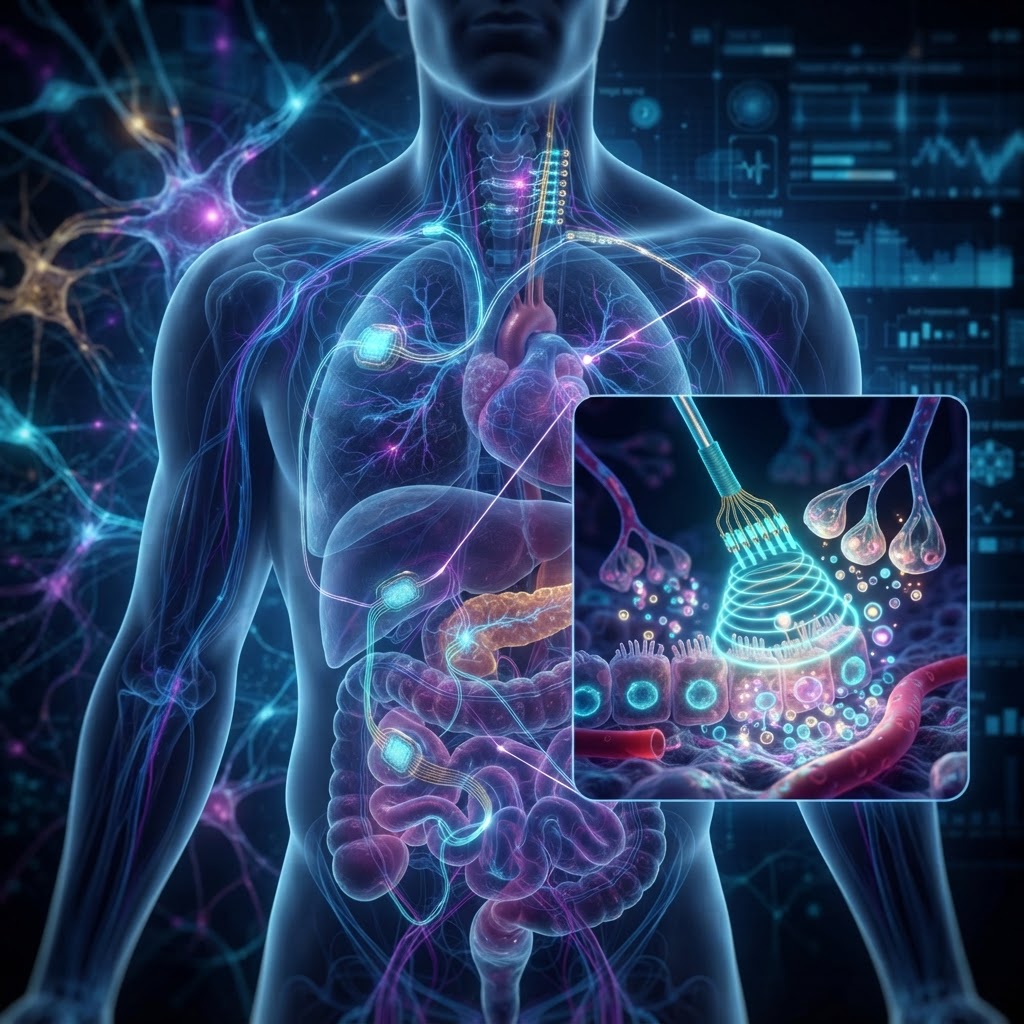
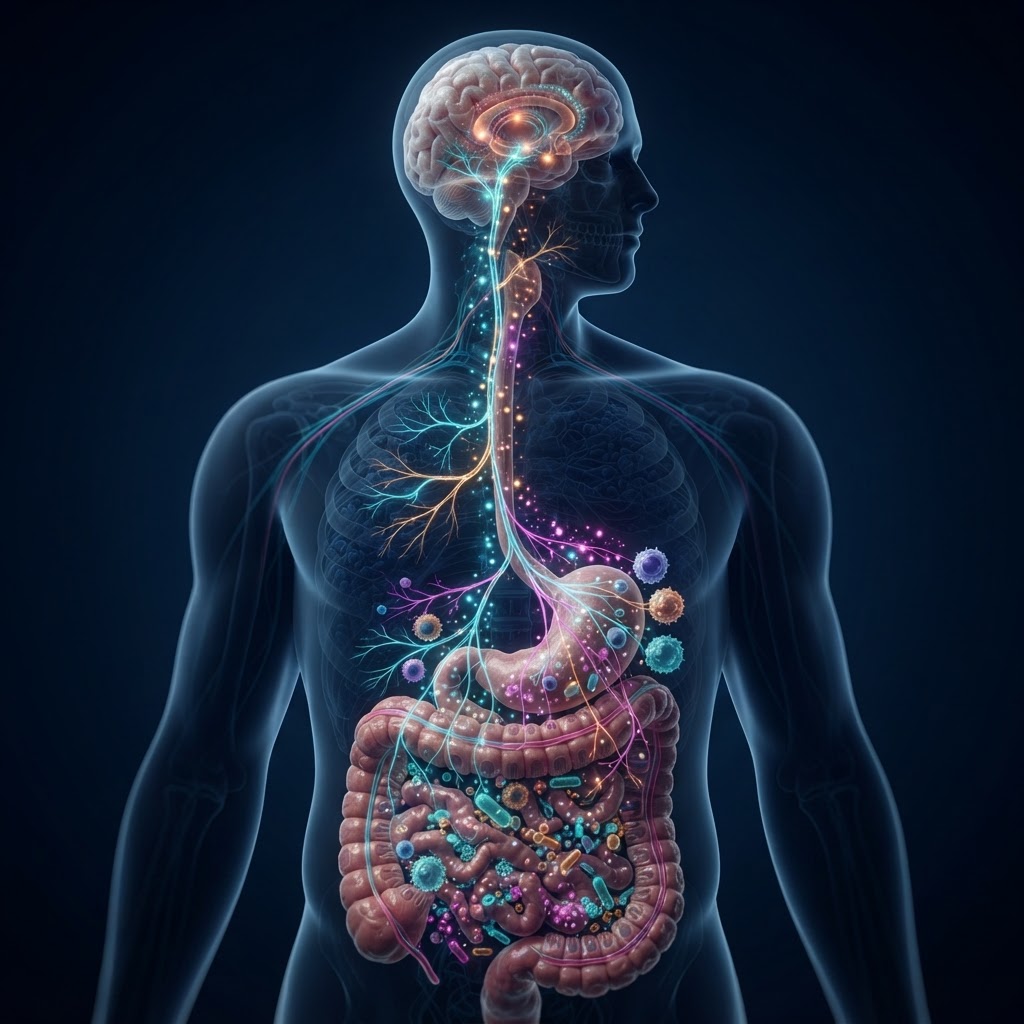
Vagal afferents (sensory fibers projecting from the gut to the brainstem) receive input from multiple sources: microbial metabolites, enteroendocrine cells that detect nutrients, immune mediators and mechanical stretch. Landmark experiments showed that specialized epithelial “neuropod” cells form fast synapse-like connections with vagal endings and can relay nutrient signals to the brain in milliseconds. At the same time, work in rodents demonstrates that certain probiotic strains and short-chain fatty acids alter behavior through vagus-dependent routes — surgical vagotomy abolishes those behavioral effects in many models.
Why this matters for mood
Vagal afferent signaling converges on brainstem nuclei (notably the nucleus tractus solitarius) that project to limbic circuits involved in anxiety and reward. This anatomical route explains how peripheral changes — shifts in gut microbial composition, a meal’s macronutrient content, or local intestinal inflammation — can translate into changes in serotoninergic and noradrenergic tone, stress-hormone release, and ultimately affect. Clinically, that translation matters: vagus nerve stimulation (VNS) is an established option for treatment-resistant depression, and noninvasive transcutaneous auricular VNS (taVNS) has produced promising signals in small randomized trials and mechanistic neuroimaging studies.
New tools, new specificity
- Molecular mapping: Single-cell sequencing of nodose ganglion neurons reveals molecularly distinct vagal subclasses tuned to chemicals, stretch or enteroendocrine cues. This heterogeneity offers a path to targeted interventions.
- Opto/chemogenetics and neuropod biology: Manipulating defined sensory circuits in rodents produces bidirectional effects on anxiety-like and depressive-like behaviors, strengthening causal claims.
- Human neuromodulation: Noninvasive taVNS devices are being refined to target auricular branches that preferentially engage afferent pathways; early trials suggest modest antidepressant effects and measurable changes in limbic connectivity.
Where the debate remains
Despite progress, several crucial gaps persist. We do not yet have a comprehensive map linking specific microbial metabolites or enteroendocrine signals to identified vagal subtypes and downstream mood circuits in humans. Likewise, clinical trials of VNS and taVNS vary in stimulation parameters and patient selection, producing heterogeneous outcomes. The field must also sort correlation from causation in human microbiome–mood associations and determine whether dietary, probiotic or device-based interventions can produce robust, durable antidepressant effects.
The near-term horizon
Expect accelerated translation along two routes: precision neuromodulation that targets defined vagal afferent populations, and molecular interventions (diet, metabolites, engineered probiotics) designed to bias gut signaling toward mood-stabilizing profiles. Both paths will require rigorous, mechanism-focused human trials that combine peripheral biomarkers, brain imaging and standardized clinical endpoints.
In short, the vagus is no longer a blunt instrument in brain–gut talk. It is emerging as an anatomically and molecularly tractable set of sensory channels — and a promising lever for mood regulation.