One idea, a century of impact
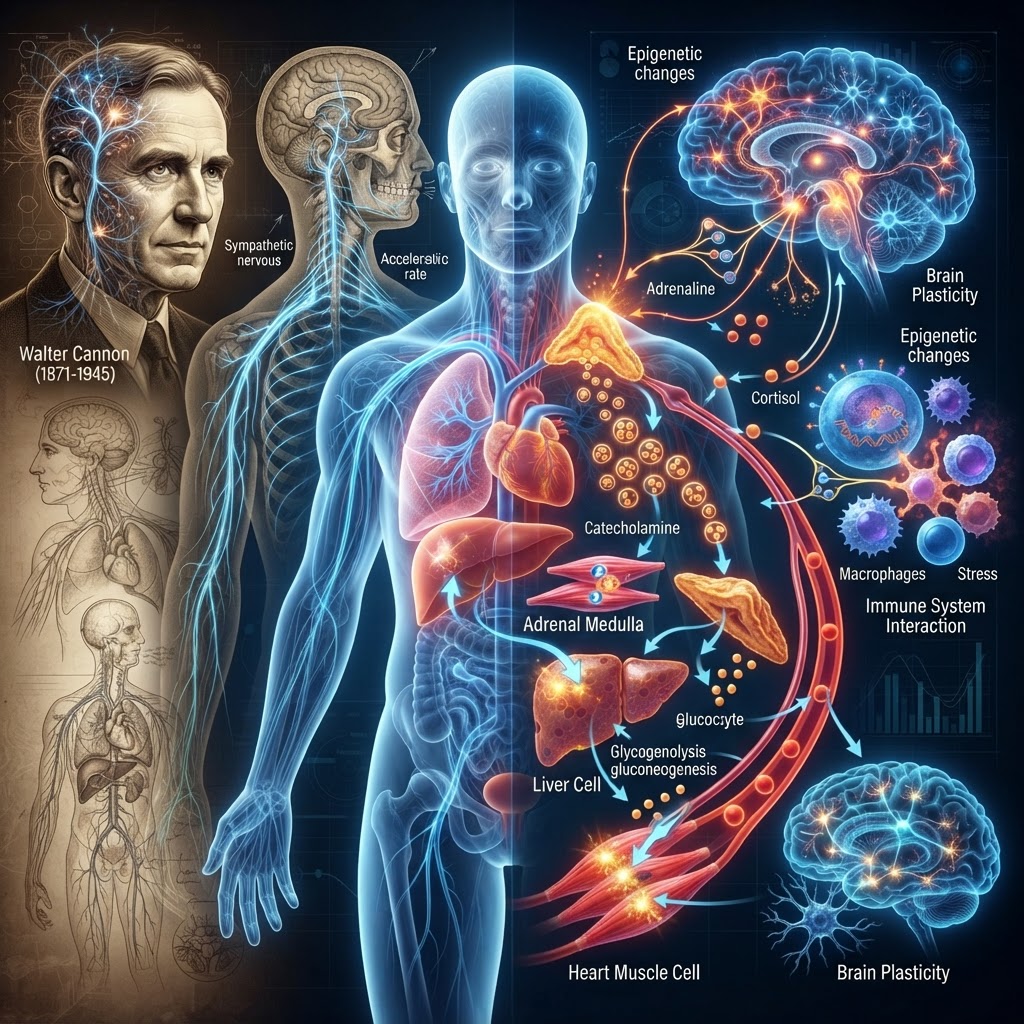
When Walter B. Cannon described the "fight-or-flight" response in the early 20th century he did more than label a reflex: he articulated how a single, rapid sympathetic-adrenal orchestration preserves internal stability in the face of threat. That neural and hormonal coordination—fast heart, dilated pupils, diverted blood flow—became the backbone of how physicians and scientists think about acute stress.
What’s new — not a replacement, but a remapping
Recent advances do not overturn Cannon so much as place his insight inside a richer, multi-layered system. Functional imaging, molecular endocrinology and clinical cohorts have clarified three axes that Cannon’s model did not and could not fully capture:
- Parallel stress systems: The sympathetic-adrenal-medullary (SAM) axis that Cannon emphasized acts in seconds, but the hypothalamic–pituitary–adrenal (HPA) axis and slower immune signaling extend and modulate the response over minutes to hours.
- Context and calibration: Modern work on allostasis shows the body actively anticipates and adjusts to stress; repeated activation produces wear—"allostatic load"—with distinct long-term pathophysiology.
- Autonomic nuance: Polyvagal and related frameworks reveal that vagal (parasympathetic) tone, social engagement, and threat appraisal shape whether a stress response looks like fight-or-flight, freeze, or a prosocial mobilization.
These insights are not academic. They explain why two people exposed to the same acute threat can diverge—one recovers, the other accrues risk for hypertension, depression or inflammatory disease.
Clinical and public-health relevance today
That Cannon’s model persists is evident in contemporary medicine. Acute sympathetic surges remain central in emergency care (trauma resuscitation, anaphylaxis, arrhythmia management) and in everyday therapeutics: beta blockers blunt peripheral manifestations, and behavioral interventions target the central appraisal that triggers the cascade. At the population level, large epidemiological studies link repeated activation of these stress networks to cardiovascular disease, metabolic syndrome and immune dysregulation.
New clinical concerns have sharpened attention too. Post-viral syndromes and long COVID have surfaced autonomic dysfunction—orthostatic intolerance, inappropriate tachycardia, and chronic fatigue—that read like a chronic misfiring of Cannon’s protective machinery. Similarly, psychiatric diagnoses such as PTSD exemplify how acute threat memory can perpetuate hyperarousal and autonomic dysregulation.
Tension points and active debates
Several debates are active and consequential:
- Mechanistic translation: How precisely do repeated bursts of SAM and HPA activity cause vascular remodeling, metabolic change, or immune priming? The molecular chain from neurotransmitter surge to chronic disease is incompletely mapped.
- Individual differences: Genetics, early-life environment and social factors shape calibration of stress circuits—who is resilient, who accumulates allostatic load.
- Treatment gaps: Pharmacologic dampening of sympathetic output helps symptoms, but long-term disease modification requires upstream interventions in appraisal, behavior and social context.
Where this leads
Cannon gave medicine a mechanistic vocabulary to describe acute threat. Today’s work is less interested in replacing his phrase than in specifying the circuits, timescales and societal inputs that turn a lifesaving surge into chronic harm. That translation—from acute physiology to chronic pathophysiology, from molecules to public health—will determine whether the fight-or-flight concept remains merely iconic or becomes a scaffold for preventing stress-related disease.